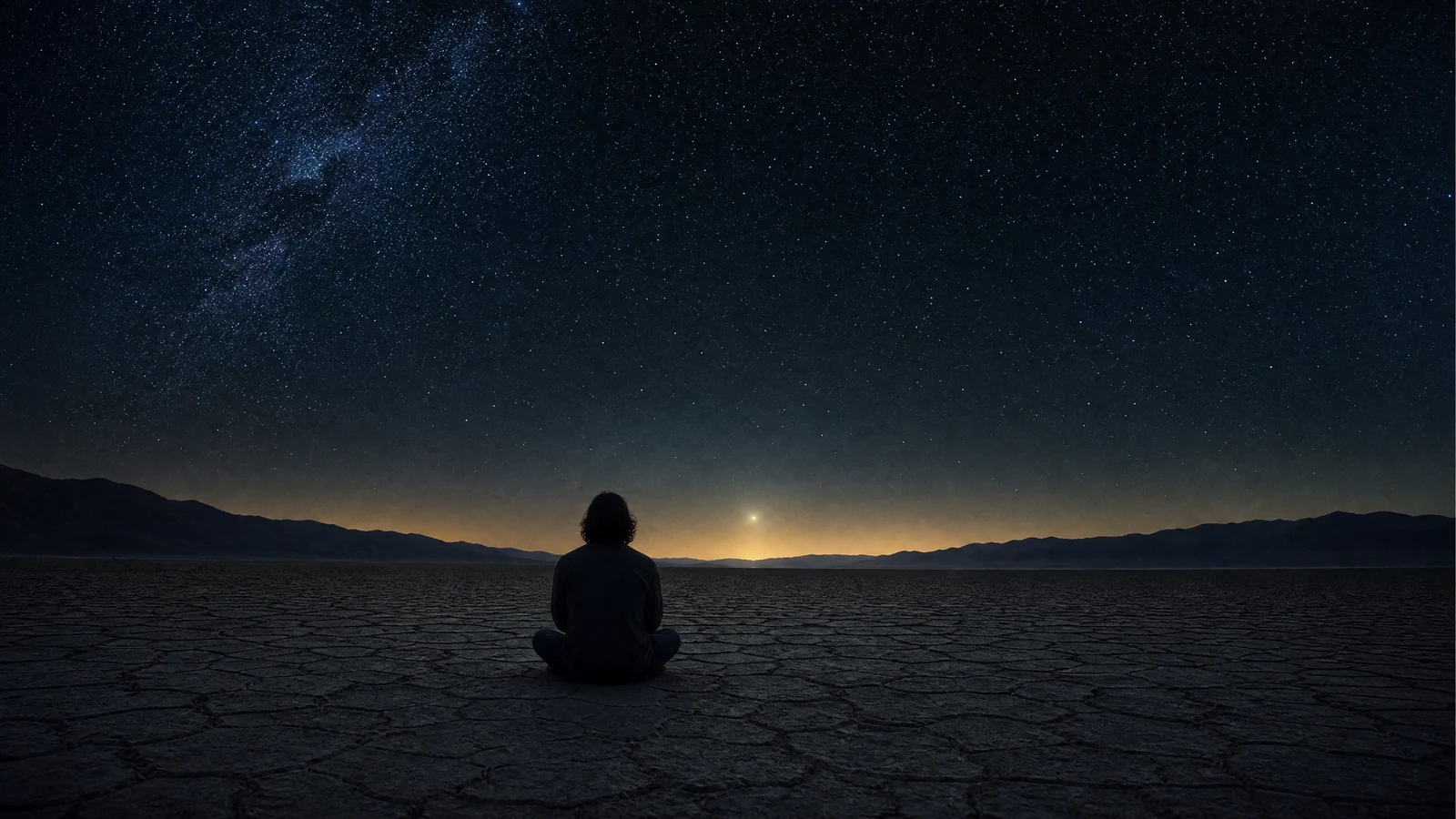
There is a particular kind of silence in the desert at night. Not empty. Full. The kind of quiet that presses against your ears and makes you aware of your own pulse. Somewhere out there, right now, a small group of people is sitting in that silence with their faces turned up to the dark. They breathe. They settle. They wait. And they believe that if they do it correctly, something will answer.
Yesterday we released a film about those people.
It is called Psionics: The Minds That Summon UFOs, and it is the first feature documentary from Vetted. I am its Executive Producer, which is a polite way of saying I am the person who decided this story was worth the risk. I still believe that. More now than when we started.
The corner nobody wanted
For years the conversation about UFOs has lived inside a very narrow lane. Sightings. Whistleblowers. Government files. Radar returns. Grainy footage and Senate hearings. Serious men in suits saying serious things in measured voices. It is a respectable conversation, and like most respectable conversations, it has a velvet rope around the part everyone is afraid to enter.
That roped-off corner is the psionics movement. The CE-5 community. The contact experiencers. The people who claim that consciousness itself is part of the equation, and that the phenomenon will show up if you know how to call it. No other UFO show would touch it. The documentaries leave it out. The mainstream treats it as the embarrassing cousin who does not get an invitation to dinner.
So we took the cameras, and we walked straight into the room.
I have spent a long time now writing about institutions that tell people where they are allowed to look. My own great-grandfather was handed a Redeverbot, a speaking ban, by a regime that had very firm opinions about which questions were permitted. I carry that with me. So when an entire field quietly agreed that one subject was off-limits, my instinct was not to nod along. My instinct was to point a camera at it.
What we actually did
We did not go in to prove anyone right. We did not go in to debunk. We went in to see what happens when the cameras are rolling and nobody knows what will come out of the sky.
No expert voiceover telling you what to think. No clever framing device steering you toward the safe conclusion. Just the people, the cameras, and whatever the night decided to give us. The experiencers. The practitioners on rooftops and in deserts. The researchers. The skeptics. All of them on camera, all of them on the record, all of them treated as adults capable of holding a strange idea without flinching.
The film is built in three movements. The Phenomenon, asking what the thing actually does and why it seems to respond to attention. The People, the community itself in their own words. And The Question, the one that does not let go of you afterward. If consciousness really is part of the equation, what does that do to everything else we thought we understood?
The hands that made it
A film is only as honest as the people who make it, and I was lucky here. It was directed by Glenn Barden, an award-winning documentary filmmaker who produced the Emmy-nominated One Strange Rock for Nat Geo and Disney and directed The Brain with Dr David Eagleman for the BBC. It is presented by Patrick Scott Armstrong, who has spent nearly three years covering every major story in this field, daily, on Vetted. Stephen Reynolds cut it. Santiago Glaser, Ron James, and Paul Riedel lent their names to it as associate producers when names still meant taking a chance. The full credits live on its IMDb page.
These are not people who needed to make this film. They chose to. That choice is stamped into every frame.
Two films, over three hours, and where to find them
When you buy Psionics you do not get one film. You get two. The feature itself runs one hour and forty-eight minutes. Alongside it sits Psionics: Extras, a second feature of extended and additional interviews, another hour and a half of material that never made the main cut but earned its own life. Over three hours in total.
For now, all of it lives in one place. The film is available right now, exclusively at psionics.film. The feature will arrive on Amazon and Apple TV later this summer for anyone who prefers to watch it there. The Extras will not. That second film stays here, permanently, only for the people who came directly to the source.
There is something fitting about that. A film about people who go looking for what others ignore should reward the ones who come looking for it themselves.
Why I am glad we made it
I make my living helping people step outside the lines other people drew for them. Borders. Tax codes. The quiet assumptions about where a life is permitted to happen. This film is a different subject entirely, and somehow it is the same one. It is about curiosity that refuses to ask permission. It is about taking the questions everyone agreed to leave alone and turning the lights on.
You do not have to believe a word of what the people in this film believe. I did not ask you to. I only ask that you watch it with your eyes open and decide for yourself. That is the whole point. That was always the whole point.
The sky has been there the entire time. We finally turned the cameras toward the people who are talking back to it.
*Watch Psionics now at psionics.film.*
Life is short and fleeting. One shot. Make it count.