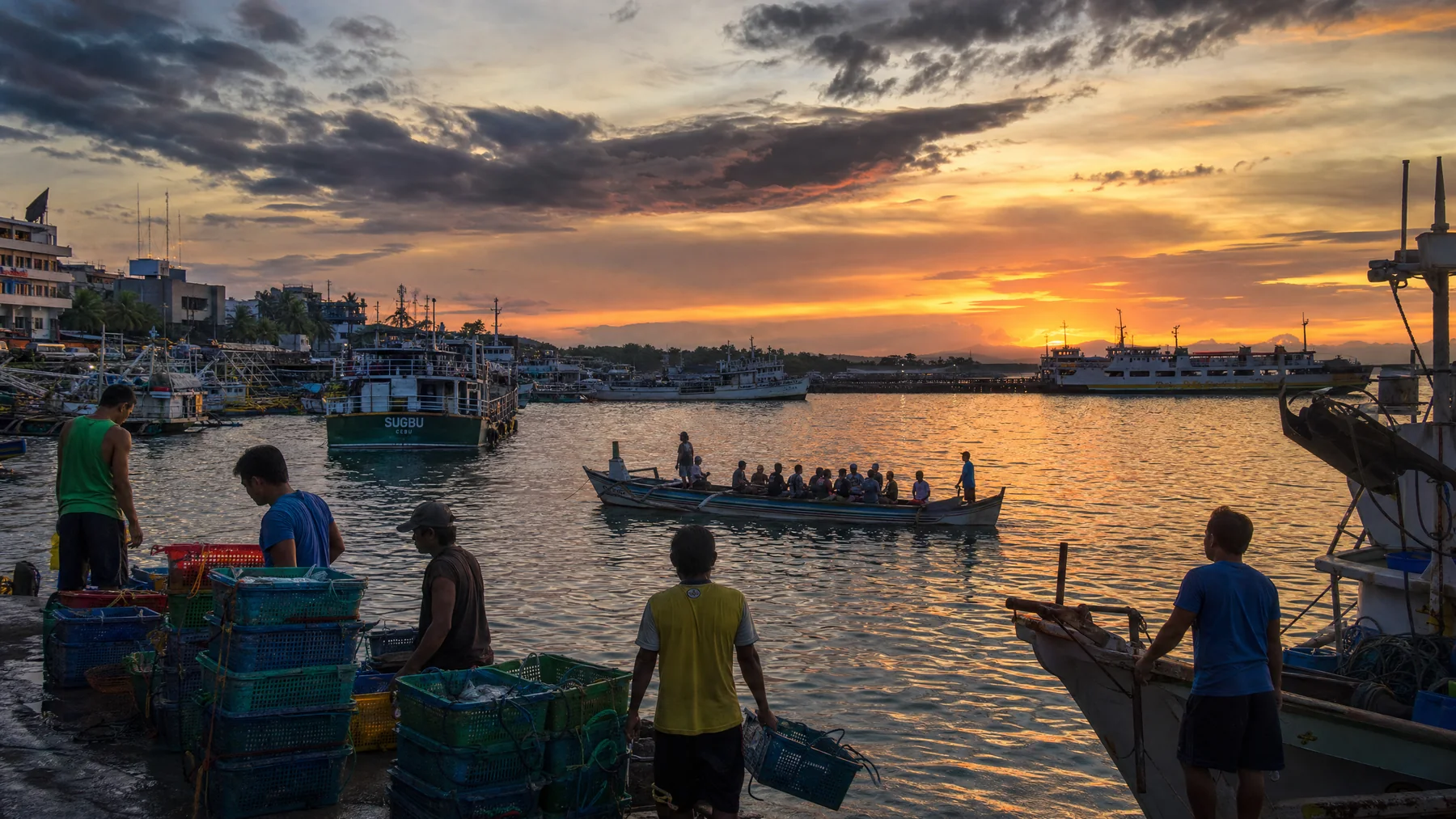
A ROPAX ferry sank near Basilan in the southern Philippines on January 26, killing at least 18 people, with 316 rescued and ten missing. Basilan is an island province in the Bangsamoro autonomous region of Mindanao.
I want to write about this because I have an office in Davao and I have been advising clients on Philippines residency for years, and I think honest commentary on incidents like this one is more useful than the promotional content that dominates the expat Philippines space.
What Actually Happened
Ferry accidents are, unfortunately, a recurring feature of Philippine maritime life. The archipelago's geography — 7,641 islands connected almost entirely by sea — means that ferries are the primary mode of inter-island transport for the majority of Filipinos. There are thousands of ferry crossings every day. The safety record varies enormously between operators, routes, and seasons.
Basilan, where this accident occurred, is in the southwestern Mindanao region — an area that has historically had security challenges related to the Abu Sayyaf group and other armed factions, in addition to the maritime risks associated with the Moro Gulf and Sulu Sea.
What This Means for Prospective Residents
I have been consistent in my guidance on the Philippines: the country's advantages are real, but they require intelligent geographic choices. And intelligent geographic choices require local knowledge that most people researching the Philippines online do not have.
Davao, which is where we have our office, is a different proposition from Basilan in almost every relevant respect. Davao City is one of the safest cities in Asia by crime statistics. The mountains that protect it from typhoon tracks also reflect a geographic positioning that is, overall, more stable and more accessible than the western Mindanao regions.
The ferry accident near Basilan does not change my assessment of Davao. But it reinforces a point I make consistently: the Philippines is not one place. It is an archipelago of 7,641 islands with enormous variation in safety, infrastructure, governance, and livability.
Choosing the Philippines as a base means choosing which Philippines. The difference between those choices is significant.
The Broader Infrastructure Point
Beyond the specific geography question, the ferry accident is a reminder that the Philippines' infrastructure, while improving, is not European in standard. The maritime safety regulatory framework has improved significantly over the past two decades, but implementation is uneven. The roads, power grid, and telecoms are developing but not reliable by the standards that my European clients are accustomed to.
This is not a disqualification. It is a calibration. People who move to the Philippines and thrive are people who have realistic expectations about infrastructure, who have planned for its limitations, and who have the adaptability to function in an environment that is less predictable than Europe or Singapore.
People who move to the Philippines expecting European infrastructure and European safety standards will be frustrated and potentially exposed to risks they did not anticipate.
Our Presence in Davao
We have had an office in Davao for years. Our team there lives and works in the city. They know which neighbourhoods are safe, which banks are reliable, which hospitals are acceptable, which infrastructure is functional.
That ground-level knowledge is the thing that expat YouTube content cannot provide. It is the thing that makes the difference between a successful relocation and an expensive mistake.
If the Philippines is on your serious consideration list, come and talk to us before you make any commitments. The opportunity is genuine. The local knowledge required to capture it properly is not available from a brochure.
If the Philippines is part of your planning and you want an honest, current assessment based on people who are actually there, let's talk. Our Davao office is the difference between informed decision-making and expensive improvisation. Book a consultation.