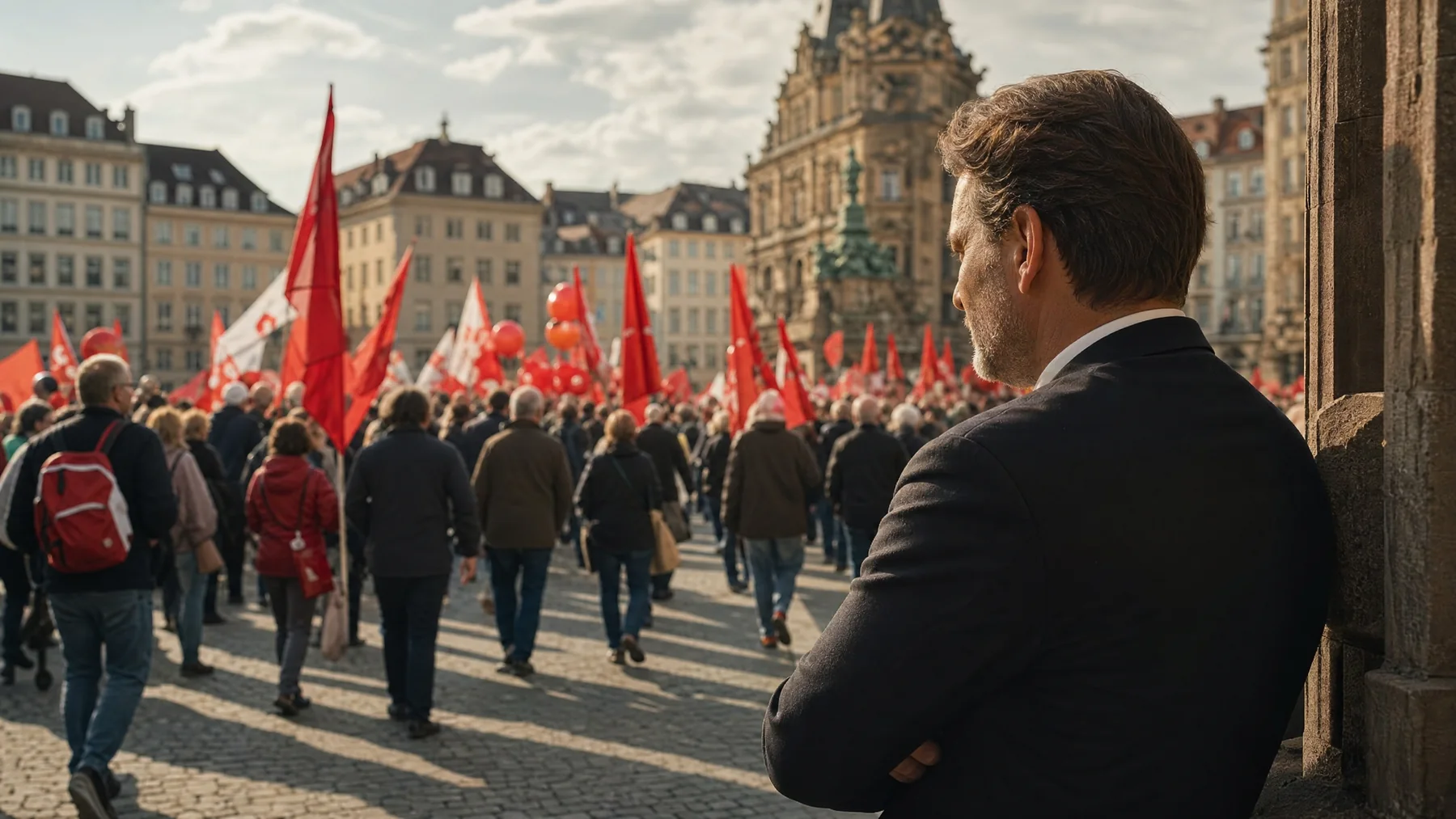
Today is May 1. International Workers' Day. Labour Day. The day that socialist movements established in the late nineteenth century to commemorate the Haymarket affair in Chicago in 1886, when a bomb killed police officers during a labour demonstration, and which became the annual international celebration of the labour movement.
I want to say something honest about this, because the honest position is complicated.
What the Labour Movement Got Right
The industrial capitalism of the nineteenth century produced extraordinary wealth. It also produced conditions for working people that were, in significant sectors and regions, genuinely appalling. Fourteen-hour working days. Child labour. Zero job security. No compensation for workplace injuries. Company towns where workers were economically trapped. The abuses were real, documented, and in many cases defended by the same intellectual tradition that I generally find myself aligned with.
The labour movement's core demand — that workers should have the legal right to organise, to collectively bargain, to be protected from the most extreme forms of employer exploitation — was a legitimate demand. The weekend, the eight-hour day, workplace safety regulations, the prohibition of child labour — these are achievements of the labour movement and they are genuine goods.
I benefit from them, as does everyone who works in a modern economy. To pretend otherwise would be dishonest.
What the Labour Movement Got Wrong
The labour movement's mistake was not its initial demands but its subsequent politics — the extension of the collectivist logic from workplace rights into the broader organisation of society, the embrace of state ownership and central planning, and the conviction that capital and labour are permanently in conflict rather than fundamentally interdependent.
Capital without labour is inert. Labour without capital is unproductive. The most successful economies in history have been the ones that found ways to align the interests of both — through property rights, through profit-sharing, through the legal structures that allow workers to accumulate capital of their own through savings, investment, and entrepreneurship.
The question that May Day never asks is: what would it take for a worker to become a capital owner? Not through redistribution — taking from one to give to another — but through the conditions that allow ordinary people to save, invest, and build?
That is the question I find more interesting than the annual theatre of labour solidarity. Not who gets what from the pie, but how the pie grows large enough that everyone can have a genuinely adequate share.
What This Means Practically
I have built businesses. I employ people. I take the responsibility of employment seriously — it is one of the most significant things an entrepreneur does, to take on the obligation that another person's livelihood depends on your decisions.
And I have tried to build those businesses in ways that create genuine opportunity for the people in them. Not out of ideological commitment to labour rights — though I believe in fair treatment — but because businesses that align the interests of the people who work in them with the interests of the business as a whole are simply more durable and more effective.
May Day's underlying insight — that labour deserves dignity and respect — is correct. Its political programme — that the state should manage the relationship between labour and capital — is wrong.
Dignity and respect are delivered not by the state but by the culture of the organisation, the integrity of the employer, and the conditions in which work happens. Government sets a floor. Everything above the floor is the responsibility of people who actually run things.
Work with Sebastian
If you are building a business across multiple jurisdictions and thinking about how to structure employment, equity sharing, and operational arrangements internationally, let's talk. Book a consultation.