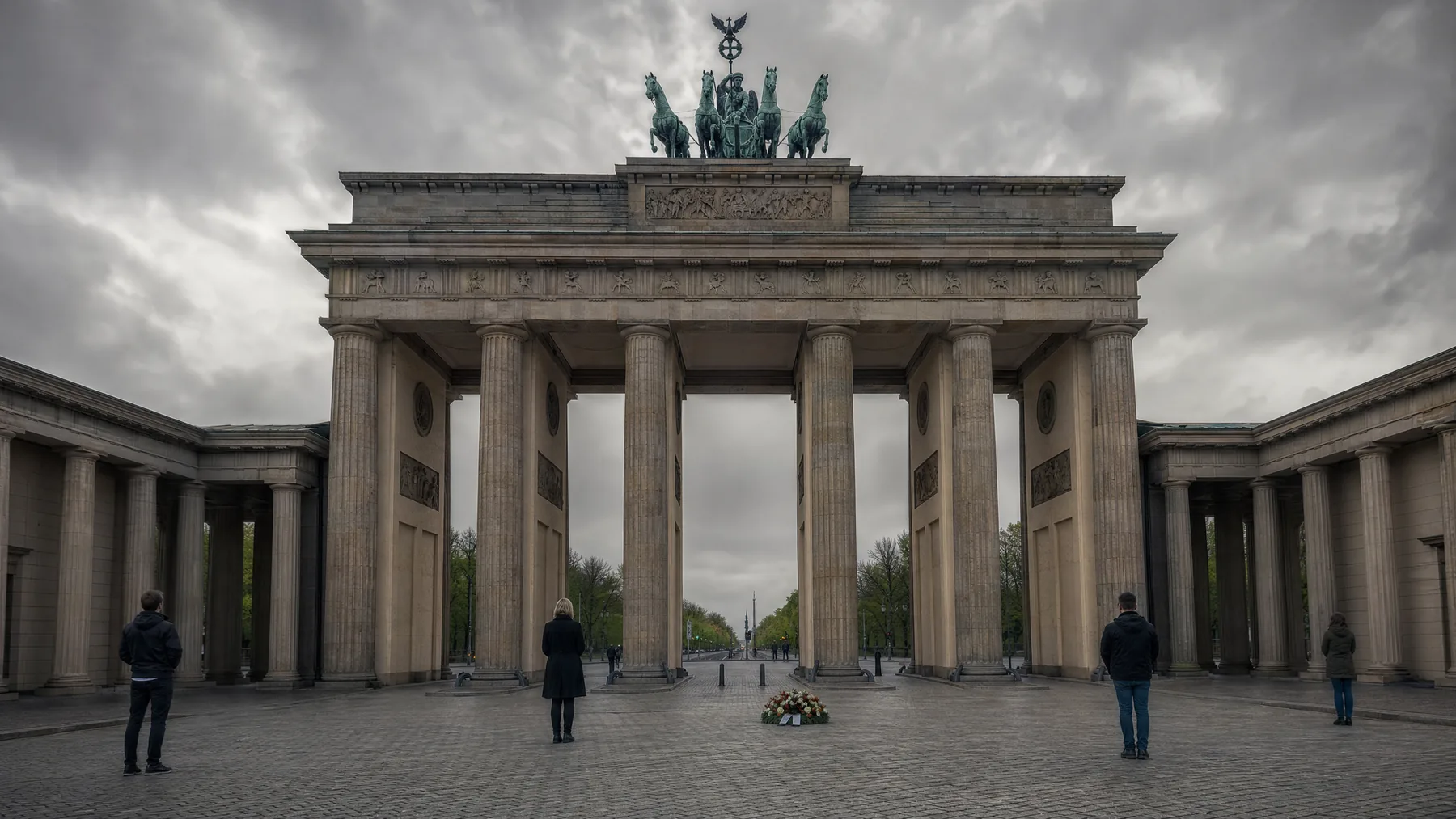
Today is May 8. Eighty-one years since Nazi Germany surrendered to the Allies. The day that ended the most catastrophic political experiment in modern European history, a regime that industrialised murder, enslaved nations, and killed tens of millions in the name of a racial ideology so depraved it still defies full comprehension.
There is nothing to relativise here. The crimes were real, documented, and without parallel in modern European history. The liberation of 1945 was a genuine liberation, whatever it cost and however imperfect the liberators.
I am a German who left Germany in 2000. I have lived in Switzerland, the UK, Ireland, the United States, and Malta. I love my country, its history, its culture, its particular genius for philosophy, music, engineering, and rigorous thought. I am also clear-eyed about its pathologies, of which the twelve years between 1933 and 1945 are the most extreme expression.
I am writing this because my LinkedIn feed today is full of posts like the one I am looking at from a well-known German civic figure, sincere, well-intentioned, historically accurate, and making an argument that I think has become, in its current form, something other than what its authors intend.
What I Agree With
The Holocaust happened. Its perpetrators were German. The institutional and cultural conditions that allowed it to happen were German. The German state has a permanent and non-negotiable obligation to remember, to educate, and to ensure that the next generation understands what happened and why.
Richard von Weizsäcker’s 1985 speech, cited in the LinkedIn post I am looking at, was one of the great acts of political courage in post-war German history. He said what no German leader had said clearly: May 8 was a day of liberation, not of defeat. He was right. It took courage to say so, and Germany was a better country for hearing it.
The monuments, the school curricula, the Stolpersteine embedded in the pavements of German cities, these are right and necessary. The generation that survived the camps is almost gone. The generation that perpetrated the crimes is gone. The obligation to remember does not die with them.
Where I Begin to Have Questions
Here is what I notice, after twenty-five years of watching German public life from the outside.
Erinnerungskultur has become, in certain of its expressions, a ritualistic end in itself, not unlike a lapsed believer who still attends church because that is what you do, even if the underlying purpose has become unclear. The annual posts on May 8. The performative denunciations of anyone who questions any aspect of current progressive orthodoxy as a relativiser of Nazi crimes. The deployment of historical guilt as a political silencer.
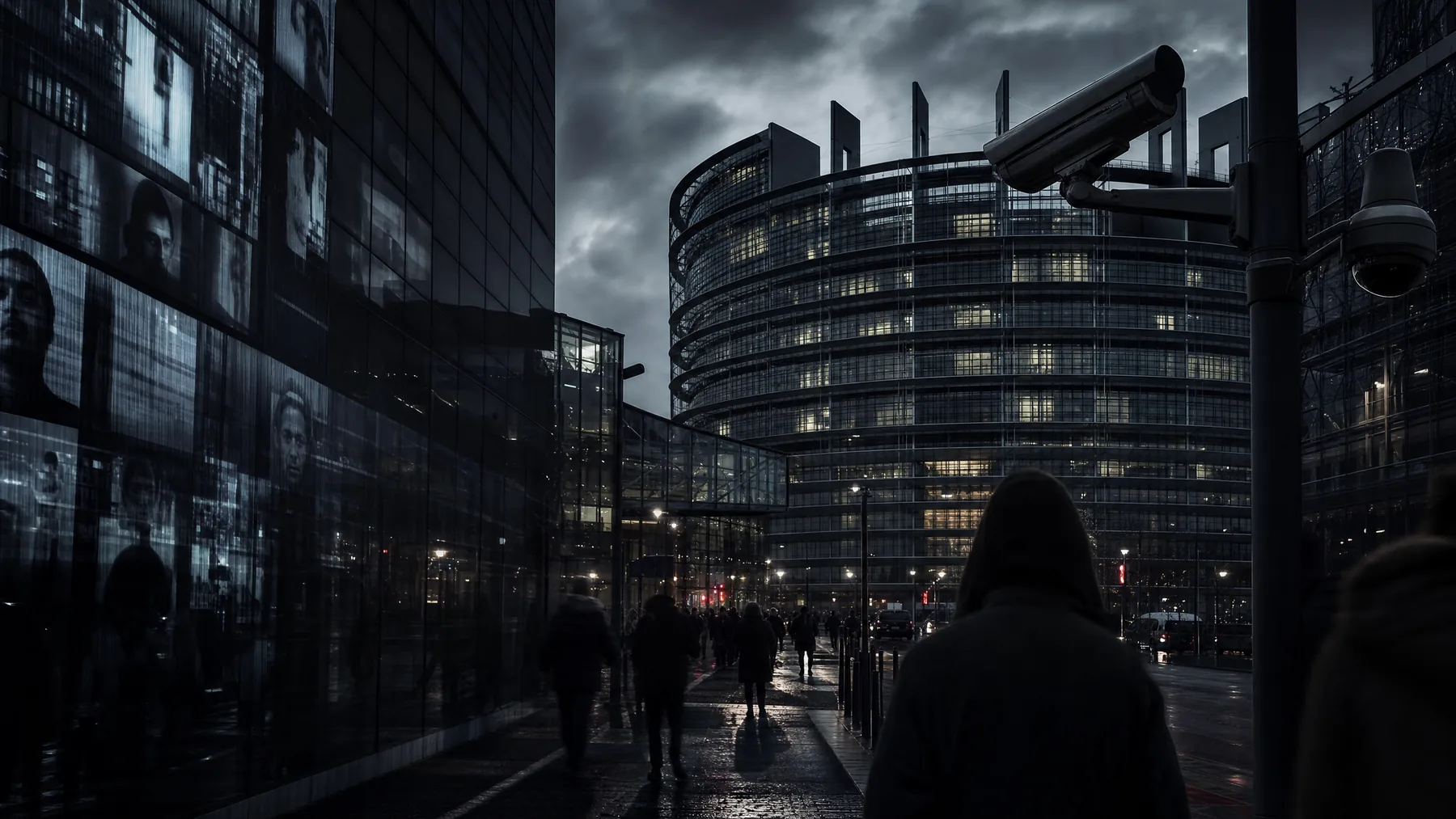
The specific move I find most troubling is this: the conflation of historical remembrance with contemporary political conformity. The suggestion that because the Nazis were right-wing nationalists, anyone who questions mass immigration, or the EU’s democratic deficit, or the weaponisation of speech codes, or the growth of the surveillance state, is somehow on a continuum with what happened between 1933 and 1945.
This is not a logical argument. It is a rhetorical manoeuvre. And it is doing genuine damage.
The Lesson I Take From 1933
The most important lesson of how the Nazis came to power is not that nationalism is inherently evil. It is that totalitarian movements of any ideological colour share a common methodology: they divide people into categories of the pure and the impure, they silence dissent through social and legal pressure, they capture institutions from within, and they construct an atmosphere in which certain questions cannot be asked without social destruction following.
That methodology is not the exclusive property of the far right. It has been deployed by communists, by theocrats, by progressive movements, and by conservative ones. The specific ideology varies. The mechanism does not.
The point of Erinnerungskultur, properly understood, is not to redeem collective German identity. It is to understand the atrocious things that happened and derive lessons for contemporary German society.
Those lessons, derived honestly, apply universally. Not just to movements that call themselves nationalist. To any movement that demands ideological conformity, suppresses heterodox speech, assigns collective guilt by group membership, or regards the questioning of its assumptions as moral transgression.
What Collective Guilt Does to the Living
The perpetrators of the Nazi crimes are dead. The generation that actively participated, that voted for Hitler, that staffed the camps, that looked the other way, is also largely dead. What remains are their children’s children, now raising their own children, who had no say in what happened in 1933 to 1945 and cannot be meaningfully held responsible for it.
Collective guilt, the inheritance of guilt across generations by virtue of national or ethnic membership, is itself a form of categorical thinking. It assigns moral status not on the basis of individual action but on the basis of group membership. That is precisely the logic that the Nazi ideology deployed, in a catastrophically more extreme form. The fact that it is deployed now in service of anti-Nazi sentiment does not make the underlying logic sound.
This is not a comfortable thing to say. I say it anyway because intellectual honesty requires it even when the conclusion is inconvenient.
What True Vigilance Actually Requires
True vigilance, the Wachsamkeit that the May 8 posts correctly invoke, means watching for the mechanisms of totalitarianism, not merely its previous manifestation.
It means watching for the erosion of free speech, wherever it comes from. It means watching for the capture of institutions by ideological movements, whatever the ideology. It means watching for the assignment of collective guilt by group membership, regardless of which group is being assigned which guilt. It means watching for the construction of official orthodoxies that cannot be questioned without social exclusion following.
These things are happening today in Western Europe. Some of them are happening in Germany. They are not happening at the scale of 1933. They are not remotely equivalent in their consequences. But the mechanisms are recognisable to anyone who knows what to look for.
May 8 should be the day we commit to recognising those mechanisms wherever they appear. Not the day we deploy the memory of 1945 as a cudgel against people who ask uncomfortable questions about 2026.
The Germany I Love, And What My Family Paid For It
I grew up in Freiburg. I carried my father’s coffin. I speak German at home. My formation is German in ways that twenty-five years of living abroad have not erased.
I want to say one more thing before I am accused of speaking from comfortable distance.
My great-grandfather was Nikolaus Ehlen. He is not a name I drop casually, he has streets and schools named after him in Germany. He was a Catholic philosopher, teacher, and committed pacifist, a man who ran as leading candidate for the radically pacifist Christlich-Soziale Reichspartei in the 1928 Reichstag elections, who published a journal called Lotsenrufe dedicated to the reconciliation of nations, and who spent his life arguing that peace was a moral imperative rooted in the Catholic understanding of human dignity.
When the Nazis came to power, they did what they always did with people who would not fall into line. They taunted him. They detained him in 1933. They imposed a Redeverbot, a formal ban on public speech and writing, because his voice was considered too dangerous to permit in the public square. In 1939, they banned his journal entirely. He remained, in the words of those who documented his life, unbroken. He could not be made to recant. He simply was not the kind of man who could be made to say what he did not believe.
He died in 1965. The Germany that outlived the regime eventually honoured him as it should.
I do not invoke him to claim victim status or to immunise myself from criticism. I invoke him because my family knows, not as an abstraction but as lived memory passed down across generations, what it actually looks like when a state decides that certain voices must be silenced. When a man who argues for peace and reconciliation is told by the government that he may no longer speak or publish, because his ideas are inconvenient.
The lesson of what was done to Nikolaus Ehlen is not “silence the right people.” It is “silence no one.” Ever. Regardless of the ideology doing the silencing. Regardless of how righteous the cause in whose name the silencing is performed.
That is the lesson I carry. It is why I write what I write. It is why I will not be quiet about speech suppression even when, especially when, the people doing the suppressing believe themselves to be on the right side of history.
The Germany I love is not the Germany of 1933. It is the Germany of Schiller and Beethoven, of Max Planck and Konrad Adenauer, of the Trümmerfrauen who rebuilt a country from rubble, of Helmut Schmidt and Richard von Weizsäcker and the millions of ordinary Germans who built a functioning liberal democracy on the ruins of catastrophe.
That Germany is worth defending. Not through ritual guilt, but through the genuine, universal, daily work of protecting the freedoms that make a decent society possible.
The future is decided in 2026. Not in 1945. Remember the past. Build the future. And apply the lessons universally, without exception.
Work with Sebastian
If the direction of German political and regulatory culture is part of your thinking about whether Germany remains the right place to build and hold wealth, that is a legitimate and serious planning question. Let’s talk. Book a consultation.