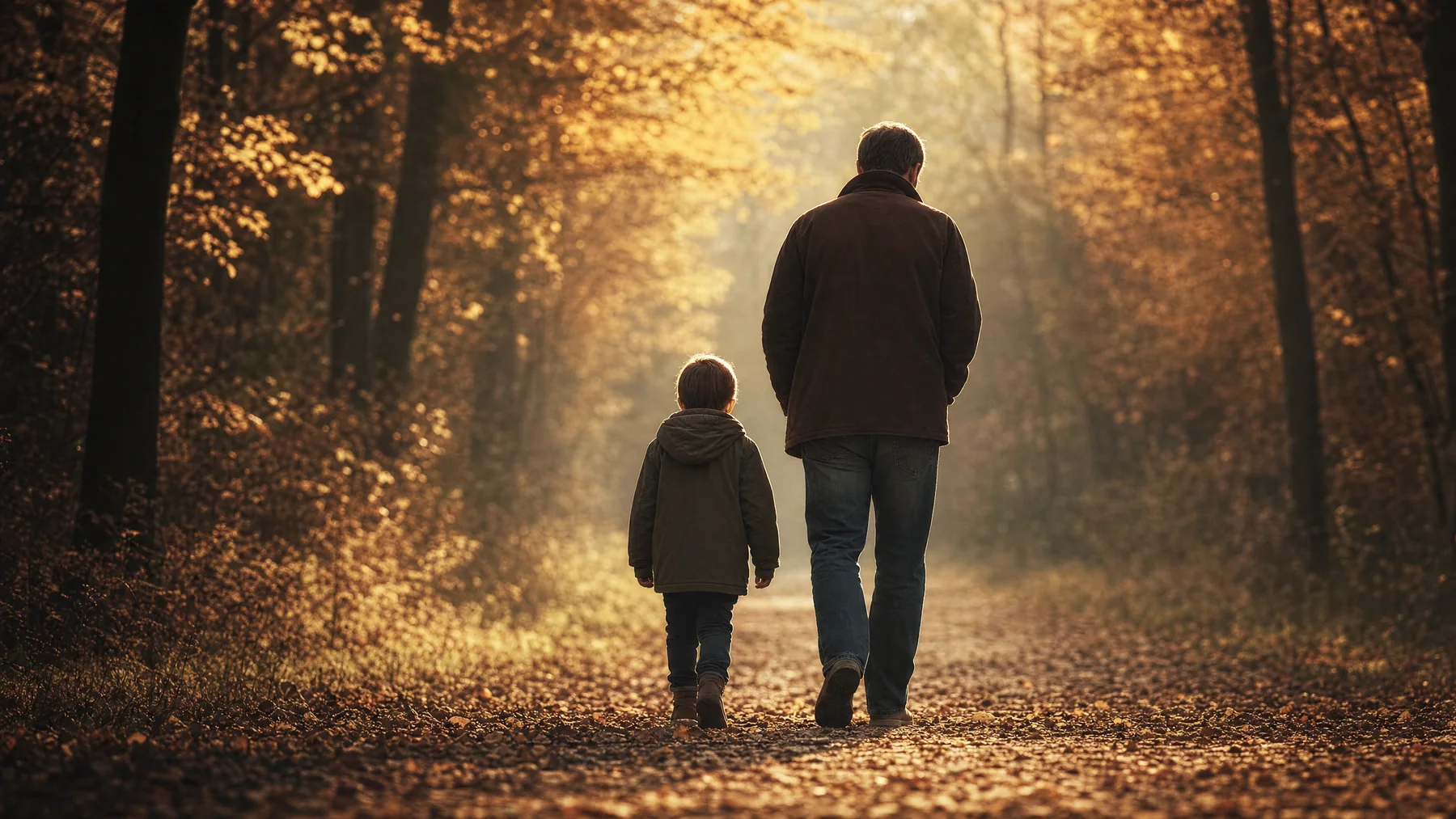
My father Martin was born on January 26, 1953, in Bremen. He died on July 14, 2012, in Karlsruhe. He was 59 years old.
The cause was an aortic aneurysm – but the story is not as simple as that clinical word suggests, and I think honesty requires telling it properly.
He had been having severe back pain for some time. The kind of pain that a man who knows his own body should recognise as a warning. He did nothing. He was that kind of man – stubborn in the particular German way, convinced that his constitution was stronger than the evidence, unwilling to be seen as someone who went to doctors. His good friend Martin – yes, another Martin – eventually managed to drag him to hospital. It was there, in the hospital, that the aneurysm burst. Too late for surgery. Too late for anything.
He was 59.
What makes this harder to carry, thirteen years later, is that it was not the first warning. Two years before his death, my father had survived a brain aneurysm. A miraculous survival – the kind of thing that leaves doctors shaking their heads, the kind of thing that a man of faith ought to receive as an unmistakable message from God about how he is living his life.
He smoked 80 cigarettes a day. He did not stop. Not after the brain aneurysm. Not after his doctors told him what it meant. He simply did not stop.
Today would have been his 73rd birthday.
The Things Nobody Tells You About Losing a Father
The first thing nobody tells you is that grief does not follow a schedule. You think you have processed it – a year out, two years out – and then something entirely unrelated breaks it open again. A smell. A certain quality of winter light. A moment with your own children that you wish he could have seen.
The second thing is that the relationship does not end at death. It changes. But it does not end. I find myself, still, measuring things against what I think he would have thought. Wondering whether he would have been proud, or disappointed, or characteristically complicated. He is present in my thinking in a way that is hard to describe to someone who has not experienced it.
The third thing is that you become him in ways you did not expect and could not prevent. I hear him in my voice sometimes when I am talking to my children. I see him in the way I approach a problem – from too many angles at once, with too much reading and not enough sleep, with an intensity that can exhaust the people around me.
What I Know About His Death That I Could Not Accept Then
My father died younger than he should have because of how he lived. He was brilliant and undisciplined. He ate badly. He smoked 80 cigarettes a day and would not stop for anyone – not his doctors, not his children, not a brain aneurysm that should have killed him two years before it finally was too late.
The aortic aneurysm that killed him did not come from nowhere. These things are associated with chronic high blood pressure, with atherosclerosis, with the accumulated physiological cost of sustained smoking over decades. He had been told. He had been warned. He had been given a second chance so improbable that a man of lesser faith than my father would not even have been able to account for it.
And he still did not stop.
I could not accept this for a long time. It felt like blaming him for dying. And he was my father – I did not want to see him clearly, I wanted to miss him uncritically.
But clarity is a form of love too. And the honest acknowledgment that he contributed to his own early death is not a diminishment of him. It is a fact that I have had to make peace with, and that has changed how I live.
I think about my body. I think about sleep. I think about the signals the body sends that a man ignores at his peril. My father had every signal and overrode every one of them. I try, imperfectly, not to.
What He Gave Me
He gave me books. He gave me Karl May – the adventure stories of the American West that made me dream of Texas before I had ever seen a map of it. He gave me Ronald Reagan, improbably, as a political hero. He gave me a hunger for America that I eventually fed by actually going there.
He gave me the Pfadfinder – the scouts – where I learned at fifteen that I could lead, that I could think ahead, that I could bring a weaker team to victory if I planned carefully and moved at the right moment.
He gave me the conviction that a man's life is his own work. That you are not the sum of what happened to you but of what you chose to do about it.
He gave me ten grandchildren he never met. I wish he had.
On Fathers and Sons
The relationship between a father and a son is one of the most complex and consequential relationships a man will have. It shapes things that cannot be easily named – the quality of your ambition, your relationship to authority, your capacity for both stubbornness and tenderness.
My father and I had unfinished business when he died. Not hostility – we were not estranged. But things unsaid, conversations not completed, an understanding that I think we would eventually have reached, given time.
Time was not given. He had been given time – extraordinary time, a second chance that most men do not receive – and he did not use it differently.
That is the hardest part. Not that he died. That he could have lived longer and chose, in the most practical sense, not to.
If your father is alive and you have things unsaid, say them. Not dramatically. Not with ceremony. Just say them. Over dinner, on a walk, in the car.
And if your father is still smoking, or drinking, or ignoring the pain in his back, or refusing to go to the doctor – tell him what it costs. Tell him what it costs the people who will still be here after he is gone.
The conversations you keep postponing are the ones you will wish, most bitterly, that you had not.
Happy birthday, Papa. I think about you more than I let myself say. I wish you had looked after yourself. I wish you had listened. I wish you were here.
Work with Sebastian
No sales pitch today. This one is personal. Book a consultation when you are ready.