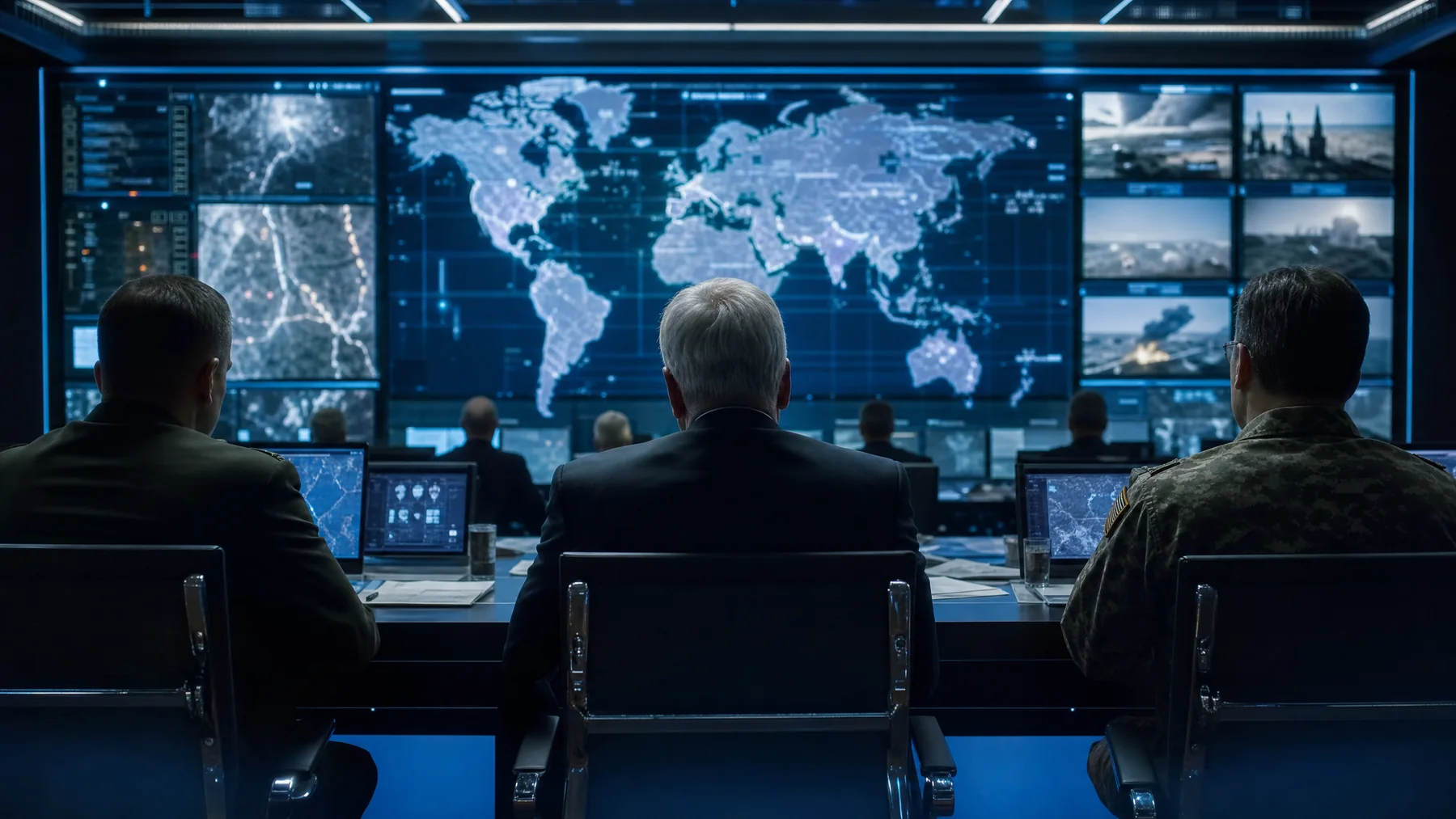
A week into the Iran war, a conditional ceasefire is reportedly being discussed, with Pakistan as mediator. The immediate intensity of the strikes is reducing. The oil market, while elevated, has not produced the catastrophic spike that some predicted. Israeli air defences have performed well against the missile salvoes. Iranian counter-strikes have been painful but not existential.
Let me tell you what I think comes next. And what I think nobody is saying out loud.
What Is Likely
A ceasefire — conditional, fragile, and contested — is the most likely near-term outcome. Both sides have incentives to pause.
The US has achieved its primary stated objective: the decapitation of the regime's supreme leadership and significant degradation of nuclear infrastructure. The marginal return on continued strikes diminishes as the high-value targets are hit and the remaining ones become harder to reach. Domestically, the American public has not signed up for an extended war and the administration knows this.
Iran has demonstrated that it can impose real costs — on Israel, on US bases, on shipping. But it is also absorbing damage at a rate that a regime managing internal unrest simultaneously cannot sustain indefinitely. And the succession crisis triggered by Khamenei's death requires internal focus.
A ceasefire does not mean peace. It means a pause in which both sides regroup, reassess, and position for the next phase.
What Nobody Is Saying Out Loud
The thing that is not being discussed clearly in Western media is the question of what Iran becomes now.
The Islamic Republic, as it has existed since 1979, is likely finished. Not immediately — regimes do not collapse the day their leader dies. But the combination of mass internal protest, economic crisis, military degradation, and now the death of the figure who embodied its ideological continuity creates conditions in which transformation is possible.
What replaces it is genuinely unknown. The optimistic scenario is a transition toward something more democratic, more market-oriented, and more integrated with the international community — Iran has a large, educated, relatively westernised middle class that has been waiting for this moment. The pessimistic scenario is a military government, or a succession of Mojtaba Khamenei who is more radical and more militarised than his father in an attempt to prove legitimacy through confrontation.
The United States and Israel have achieved regime change as a military objective. They have not achieved it as a political reality. The second part is harder than the first and is essentially outside their control.
The Investment Implication
Iranian reconstruction — if the optimistic transition scenario plays out — will be one of the largest investment opportunities in the region since the post-Gulf War reconstruction of Kuwait. A country of 85 million people with significant oil and gas reserves, a large educated population, and decades of accumulated infrastructure deficit, emerging from sanctions and war, is an enormous potential market.
The timeline for that opportunity is not 2026. It is 2028-2030 at the earliest, conditional on the transition going well, which is not guaranteed.
But the entrepreneurs and investors who are thinking about this now — who are building relationships, watching the situation, positioning themselves to move early if the conditions emerge — will have significant first-mover advantages over those who engage only when the opportunity is obvious.
Watch carefully. Move early. The window, if it opens, will not stay open long.
Work with Sebastian
If Middle Eastern geopolitics is a dimension of your investment thinking and you want to discuss how to position intelligently for multiple scenarios, this is exactly the kind of long-horizon conversation I value with clients. Book a consultation.