I am writing this from London on the evening of February 27. The news is moving quickly and I want to capture what I think before events overtake the analysis.
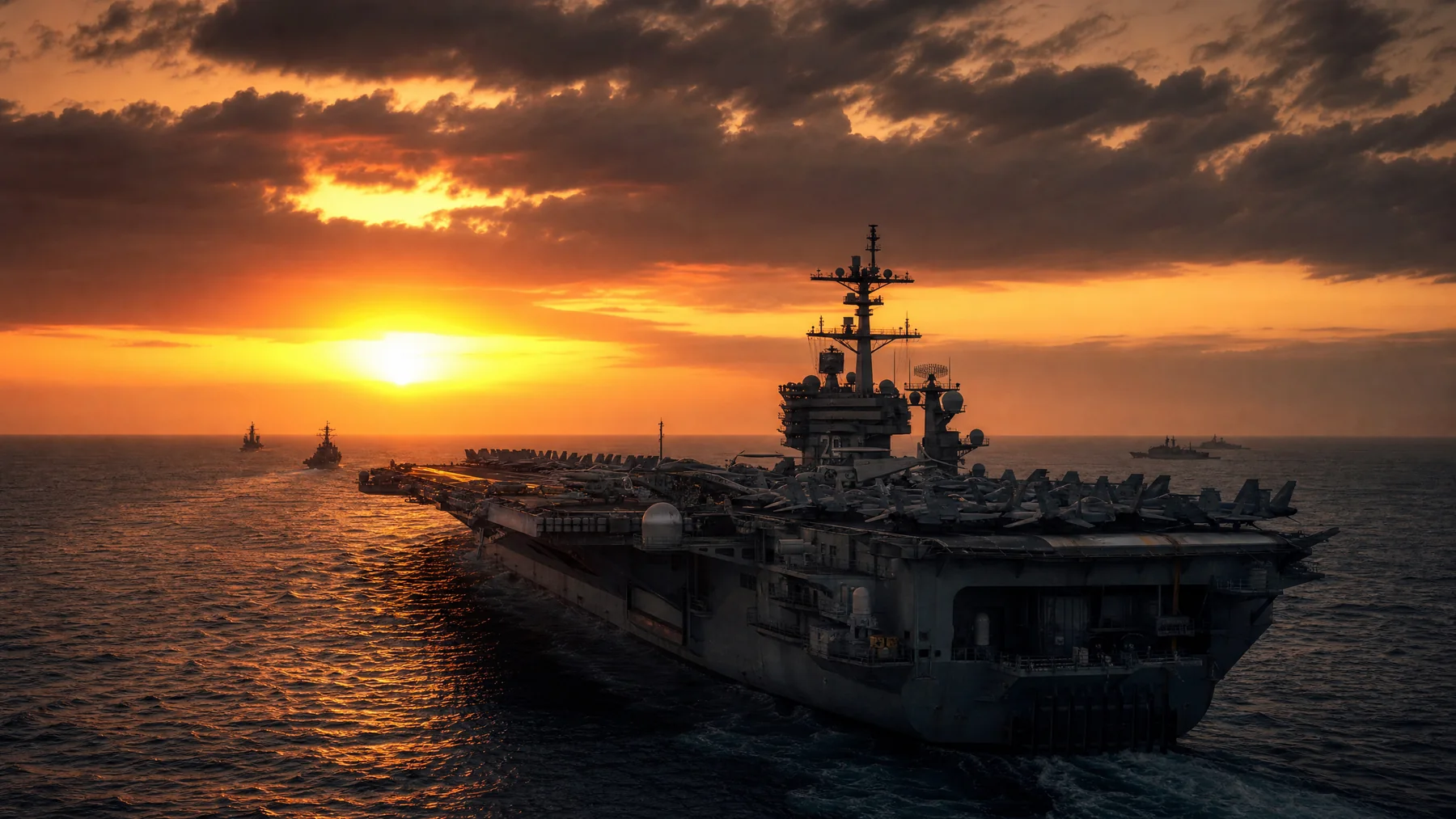
The United States has been moving Navy and Air Force assets to the Middle East for weeks. Trump told reporters this week that Iran needed to give into a list of demands related to nuclear disarmament and that "time was running out." Secretary of State Rubio told the Senate he could not rule out military intervention in Venezuela — which is significant partly because it tells you something about the administration's general appetite for direct action.
The Iranian nuclear negotiations have collapsed. The protests inside Iran have killed thousands. The regime has been weakened by the Israeli strikes in June 2025 and the subsequent Twelve-Day War. And an American president who spent his first term threatening action and his second term actually taking it is looking at a regime that may be at its most vulnerable moment since 1979.
I think something is going to happen. I want to be honest about that before it does, rather than pretend to have predicted it afterward.
What the Stakes Are
If the United States and Israel act militarily against Iran in the coming days, the consequences will be extraordinary.
Iran controls the Strait of Hormuz — the narrow waterway through which approximately 20% of the world's oil passes. Any serious military action against Iran will almost certainly involve Iranian attempts to close or disrupt that strait. The economic consequences would be severe and immediate. Oil prices would spike. European energy markets, already fragile after the Russia-Ukraine disruption, would face a second major supply shock.
Khamenei, if targeted, is a figure who has led the Islamic Republic for thirty-five years. His death would create a succession crisis inside a regime that is already managing mass protests and economic collapse. Whether that produces democratic transition or a violent power struggle is genuinely uncertain.
Iranian proxy forces — Hezbollah in Lebanon, the Houthis in Yemen, various Iraqi militias — would be activated. Israeli cities would face sustained missile attack. US bases across the region would be under fire. The conflict would not stay contained.
What I Think of the Case for Action
I want to be honest about this, because I think the honest position is complicated.
The Iranian nuclear programme represents a genuine threat. A nuclear-armed Iran would be an existential threat to Israel and would fundamentally alter the regional balance in ways that make Middle Eastern stability more difficult for everyone. The argument for preventing this by force, before the capability is fully developed, has been made seriously by serious people for twenty years.
The argument against military action is equally serious. Wars initiated by aerial bombardment rarely achieve their stated political objectives. Iraq. Libya. The earlier Israeli strikes on Iran in 2025, which degraded but did not eliminate the nuclear programme. Bombing a country's nuclear infrastructure is not the same as ending its nuclear ambitions.
And the costs — oil disruption, regional war, civilian casualties on multiple sides, the precedent of decapitation strikes on sovereign leaders — are not abstract.
I do not have a clean answer to this. I am not sure anyone does. What I am sure of is that tomorrow's world may look very different from today's.
What You Should Be Doing Tonight
If you have not yet thought about what a significant Middle Eastern war means for your energy costs, your portfolio, your supply chains, and your jurisdictional exposure, tonight is a good time to start.
Gold will likely spike. Oil will spike. European equities will fall. Energy-intensive businesses will face immediate cost pressure.
These are not reasons to panic. They are reasons to make sure your structures are positioned for volatility rather than assuming calm.
Work with Sebastian
If the deteriorating geopolitical environment has not yet prompted a serious review of your financial and jurisdictional structures, it should. Let's talk before events force the conversation. Book a consultation.