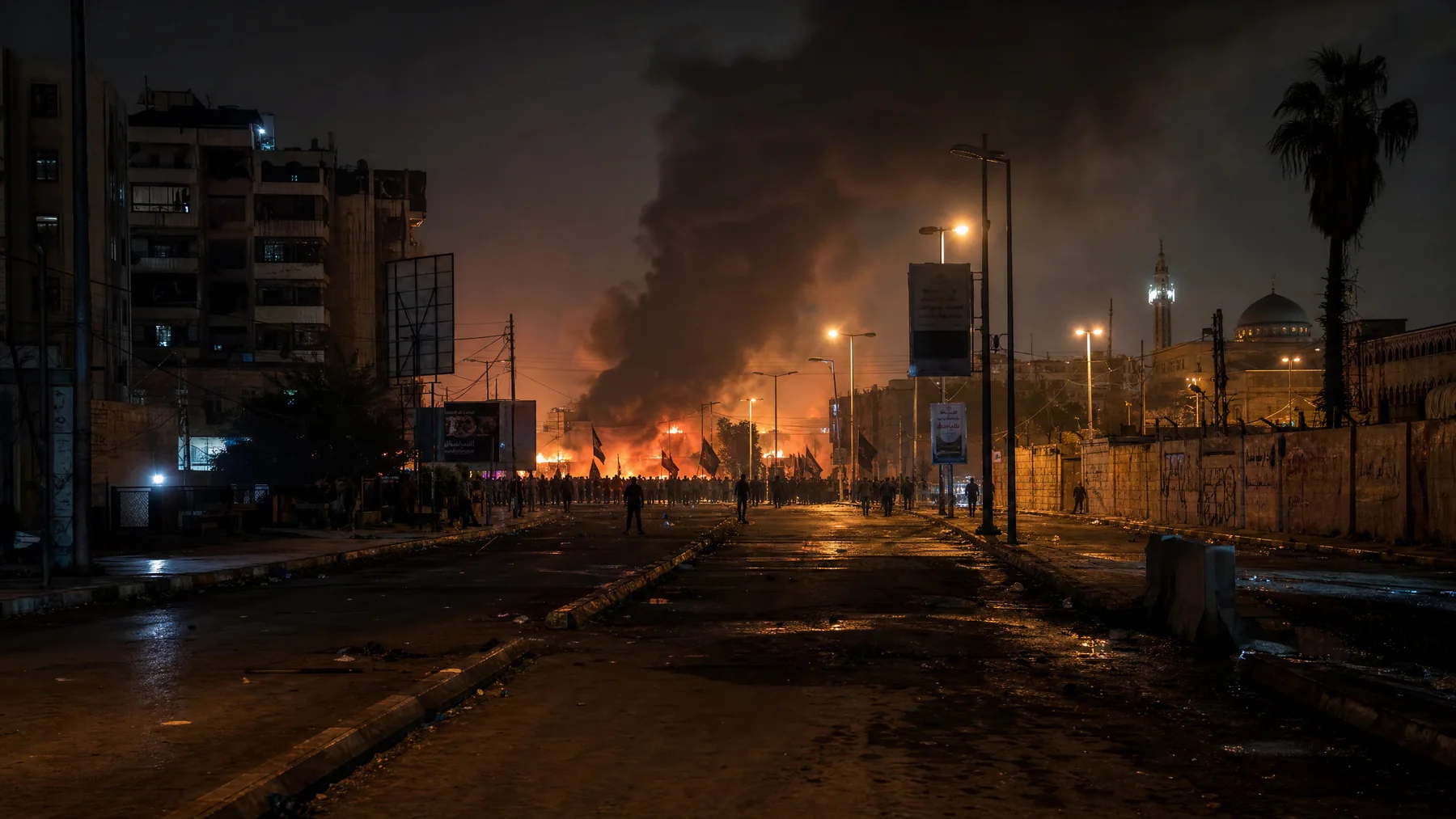
The protests that began in Iran in late December have now, according to the human rights organisation HRAI, killed at least 2,000 people — with independent activist sources claiming the figure may be as high as 12,000 to 20,000. The Iranian government has shut down the internet. It has shut down Starlink for the first time. It is killing its own citizens in numbers that, if independently verified, would represent one of the worst episodes of state violence against a civilian population in the Middle East since Syria.
The international response has been, by any reasonable measure, inadequate.
I want to think through what is happening in Iran and why it matters — not primarily for the Iranians, whose suffering speaks for itself, but for the geopolitical architecture that affects every client I work with who has exposure to the Middle East, energy markets, or European security.
What Is Actually Happening
The current wave of protests is the most serious challenge to the Islamic Republic since the 1979 revolution that established it. That is a large claim. Let me explain why I believe it is accurate.
Previous protest waves — 2009, 2019, 2022 — were suppressed with force. The regime has always been willing to kill to survive. What is different about the current situation is the combination of factors converging simultaneously.
The Israeli strikes on Iranian nuclear facilities in June 2025 and the subsequent Twelve-Day War degraded both Iran's military capacity and, perhaps more importantly, its domestic credibility. The regime's central claim — that it is the defender of Iranian sovereignty against foreign aggression — is difficult to sustain when foreign aggression has demonstrably damaged your nuclear programme and you were unable to prevent it.
Economically, Iran is in genuine distress. The rial has lost most of its value. Inflation is severe. The middle class, which was the backbone of previous protest movements, has been economically destroyed. There is nothing left to lose.
And the security forces, which previous waves of protest never seriously tested, are showing signs of fracture. Reports of soldiers refusing orders, of regional commanders negotiating rather than shooting, of the Revolutionary Guard being deployed selectively because its loyalty cannot be assumed everywhere — these are the signs that a regime is approaching its limits.
What This Means for the Region
If the Islamic Republic falls — and I am not predicting this, I am assessing the possibility more seriously than I have at any previous point — the implications for the Middle East are extraordinary.
Iran is the primary state sponsor of Hezbollah, Hamas, the Houthis, and a range of other armed groups that have shaped conflict across Lebanon, Gaza, Yemen, and Iraq. The collapse of Iranian state support for these organisations would not eliminate them, but it would fundamentally alter the regional power balance.
Saudi Arabia and the Gulf states would be the primary beneficiaries. Israel would be a beneficiary. Turkey's regional position would become more complicated. Russia, which has depended on Iranian cooperation in Syria, would lose a significant ally.
For energy markets, the implications cut both ways. Iranian oil, currently flowing to China in defiance of sanctions, could re-enter global markets under a new government, potentially suppressing prices. But the transition period itself would likely be chaotic, with the risk of supply disruption during any period of genuine instability.
What Smart Investors Are Watching
For my clients with exposure to energy, Middle Eastern real estate, or businesses dependent on regional stability, the Iranian situation is one of the most important variables of 2026.
I am not advising anyone to make investment decisions on the basis of a political prediction. I am advising everyone with significant exposure to the region to ensure that their structures are resilient enough to absorb a range of outcomes — including ones that seemed implausible eighteen months ago.
The Middle East of 2028 may look very different from the Middle East of 2023. The people who have positioned themselves correctly will be the ones who were thinking about this now.
Work with Sebastian
If you have significant exposure to Middle Eastern markets, energy, or regional real estate and want to think through how your structures hold up across different scenarios, this is exactly the kind of conversation I have with clients who are taking the long view. Book a consultation.