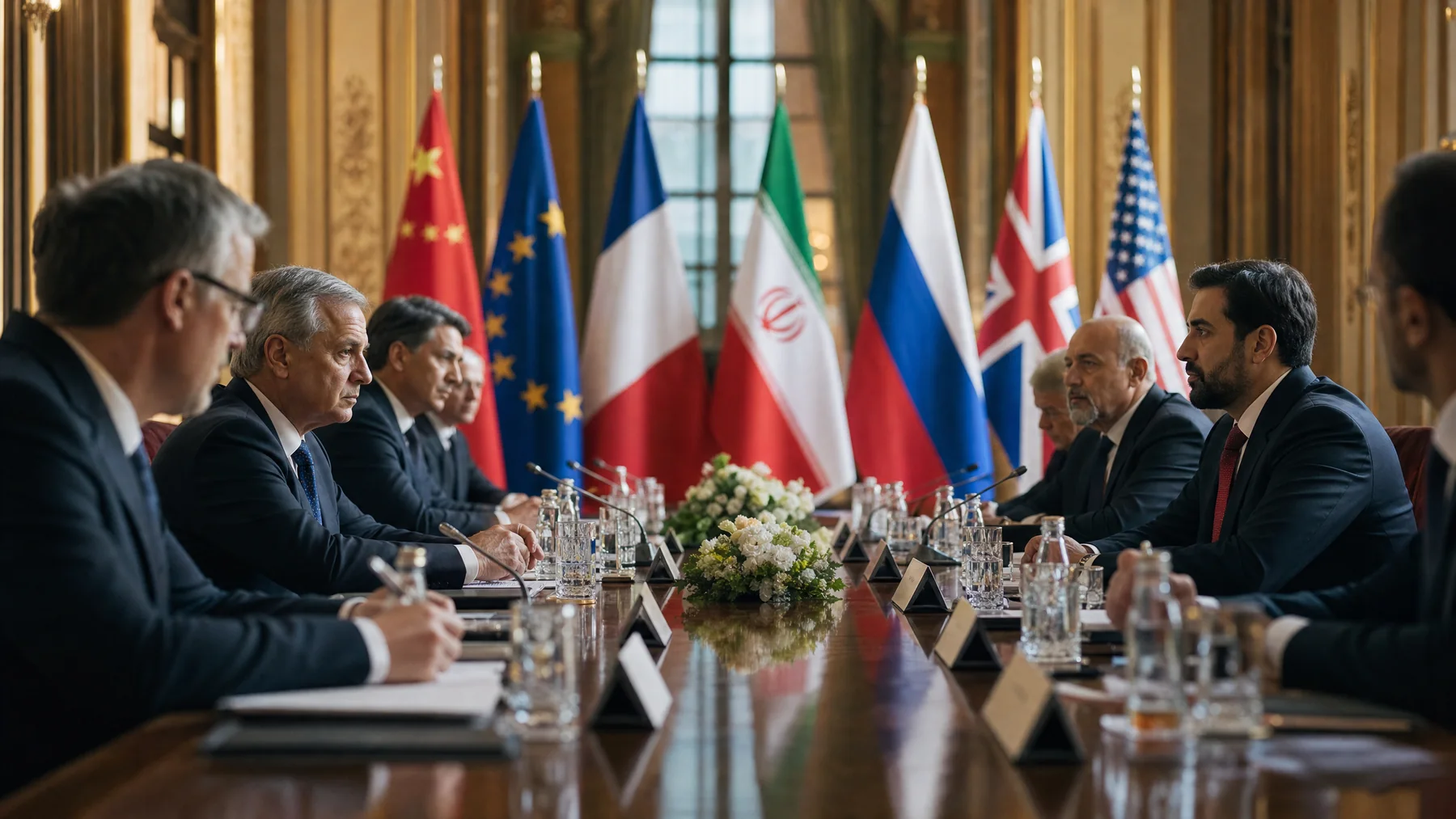
Iranian Foreign Minister Abbas Araghchi confirmed a two-week ceasefire between Iran and the United States this week, including the reopening of the Strait of Hormuz. Negotiations between Iran and the US are set to begin in Islamabad, led on the American side by Vice President JD Vance alongside Jared Kushner and special envoy Steve Witkoff.
The ceasefire is fragile. The negotiations will be difficult. But the Strait is open, oil prices have come off their peak, and the immediate catastrophic scenario has been avoided.
I want to think about what this actually means and what comes next.
What the Ceasefire Actually Represents
The ceasefire is not a peace agreement. It is a pause in which both sides are trying to extract the best possible terms from a situation that neither fully controls.
The United States has achieved significant objectives — Khamenei is dead, the nuclear programme is degraded, the regime is weakened. But it has not achieved regime change, and the Iranian military, while damaged, is not destroyed. The Islamic Republic, now led by Mojtaba Khamenei, has strong incentives to negotiate a settlement that allows it to claim some form of victory for domestic purposes.
Iran has demonstrated that it can impose real costs on US allies in the Gulf and on global energy markets. But it is simultaneously managing mass internal protests, economic crisis, and military attrition. It cannot sustain the war indefinitely.
The ceasefire reflects the genuine exhaustion of both sides, not a resolution of the underlying dispute.
The Negotiations in Islamabad
The choice of Pakistan as mediator and Islamabad as venue is significant. Pakistan has relationships with both sides — it has been a US ally while maintaining significant ties to Iran and the broader Muslim world. It is also a nuclear power with a complex relationship to both Washington and Tehran.
Vance and Kushner leading the US side is an interesting signal. Vance has been the administration's most sceptical voice on Middle Eastern entanglement. Kushner has the Abraham Accords as his primary regional credential and a personal relationship with the Gulf monarchies. Together they represent a combination of "we want out" and "let's make a deal."
What Iran will demand, at minimum: lifting of the US naval blockade, cessation of Israeli strikes, some form of compensation or acknowledgment. What the US will demand: permanent end to the nuclear programme, verifiably, with inspection. The gap between those positions is enormous. But it is not, in principle, unbridgeable.
What This Means for the Gulf
The reopening of the Strait is the most immediately important practical development. Oil prices will begin to ease. Shipping insurance costs will reduce. The energy supply shock that was beginning to compound into European industrial costs will partially reverse.
For UAE residents and Gulf-based businesses, the ceasefire provides breathing room. The missile attacks of the past weeks have tested the UAE's air defence systems — and those systems have performed — but the psychological cost of operating in a region under active missile attack is real and has had observable effects on business activity and expatriate confidence.
The breathing room is real. But the underlying regional instability that made the war possible has not been resolved. The Gulf in 2027 is not the Gulf of 2023. Anyone positioning there needs to factor that into their planning.
Work with Sebastian
If the Gulf situation has prompted a review of your regional exposure and you want to think through what resilient positioning actually looks like from here, let's have that conversation. Book a consultation.