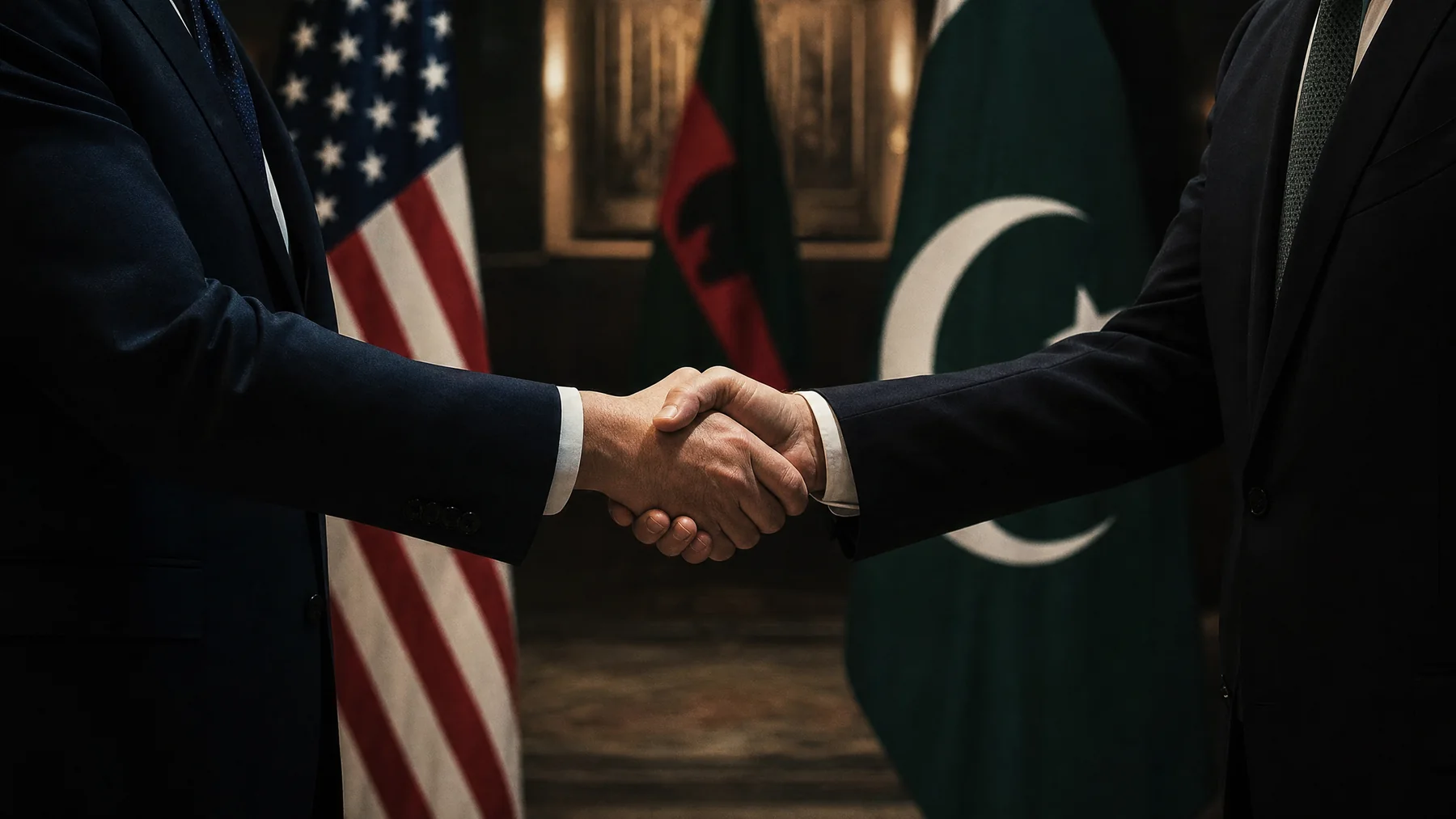
US President Trump announced an indefinite extension of the Iran ceasefire on April 21, easing fears of an immediate return to conflict. Peace talks remain stalled — Iran has not yet responded formally and is insisting the US lift its blockade as a condition for negotiations. But the guns are quiet and the Strait is open.
I want to use this moment to think about what peace actually requires — not the absence of shooting, which is where we are now, but the genuine resolution of the underlying dispute.
What Peace Would Actually Look Like
The core dispute between the US-Israel coalition and Iran is about the nuclear programme. Iran has been pursuing uranium enrichment for decades, against international sanctions and repeated warnings, toward a capability that would allow it to build nuclear weapons within a short period if it chose to do so.
Israel considers a nuclear-armed Iran an existential threat. The US considers it a catastrophic failure of non-proliferation policy. Both have been willing to use force to prevent it, as the February 28 strikes demonstrated.
For peace to be genuine rather than a pause, Iran needs to give up the nuclear programme verifiably. Not freeze it, as the 2015 JCPOA did. Not limit enrichment levels, as intermediate proposals have suggested. Give it up. With inspections that are sufficient to catch any attempt to restart.
The problem is that the nuclear programme is not merely a strategic asset for the Iranian regime. It is a domestic legitimacy claim. It is the thing that allows the regime to tell its people that it stood up to the great powers and did not capitulate. Giving it up — genuinely, verifiably — may be impossible for any Iranian government to sell domestically, particularly one that has just watched its supreme leader assassinated by the country demanding the concession.
What Is More Likely
What is more likely than genuine peace is a managed ambiguity — a framework that allows both sides to claim they got what they needed, that delays the nuclear question rather than resolving it, and that provides a period of relative stability during which Iran rebuilds economically and the new regime consolidates power.
This is not nothing. Managed ambiguity is what the 2015 JCPOA was, and it produced a decade of relative stability. The question is whether either side has the patience and the political will to accept ambiguity as a temporary outcome rather than demanding a definitive victory.
Trump, characteristically, will want to claim a deal. The Iranian side, characteristically, will want to extract maximum concessions in exchange for minimum compliance.
The betting position is that some form of deal gets announced, both sides claim victory, the nuclear programme is constrained but not eliminated, and the underlying tension resumes building within five to seven years.
That is not pessimism. That is history.
The Middle Eastern situation, however it resolves, has demonstrated the importance of building financial structures that are not entirely dependent on any single region's stability. Let's talk about what that means for your specific situation. Book a consultation.