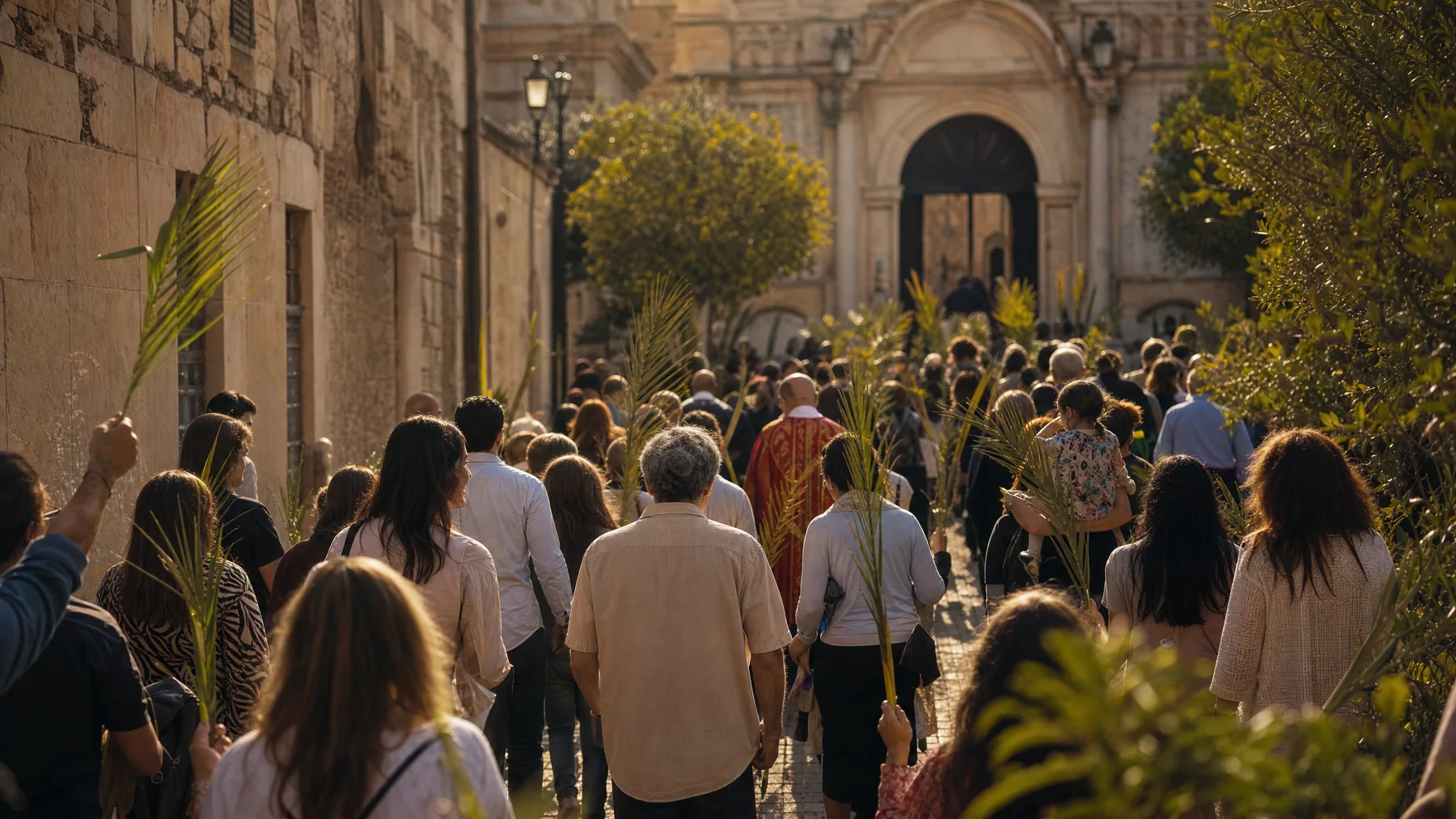
Yesterday was Palm Sunday. Holy Week has begun.
For Christians, this is the most solemn week of the year — the days between the triumphant entry into Jerusalem and the resurrection. The days of the betrayal, the trial, the torture, the death. The days when everything seemed to have gone catastrophically wrong.
I want to write about suffering. Not as a therapeutic exercise. As a theological and practical matter.
What the Church Says About Suffering
The Christian tradition does not pretend that suffering is good. It does not say that pain is pleasant or that tragedy is secretly a blessing in disguise. It is more honest than that.
What it says is that suffering is not meaningless. That the worst thing that has ever happened — the torture and murder of God himself in human form — was not the end of the story. That even this could be, in ways that exceed our comprehension, part of something that leads somewhere worth going.
This is not a comfortable claim. It is not meant to be. It is a claim about the nature of reality — that reality is not random, that suffering is not the final word, that the darkness through which we are passing is genuine darkness but is not the whole of what is real.
Why This Matters to Me Personally
I have had, by the standards of the comfortable Western professional class I move in, a reasonably difficult life. A marriage that broke down catastrophically. A father dead at 59. A son who struggles. Business failures and rebuildings. The particular loneliness of a man who is publicly successful and privately aware of how much has gone wrong.
None of this is extraordinary suffering by the scale of human history. People in Myanmar this week are digging their families out of rubble. People in Iran are navigating the aftermath of a war in which their country's leadership was killed. The Iran war has produced suffering that dwarfs anything in my biography.
But the theology of Holy Week is not a competition for who has suffered most. It is an insistence that suffering, wherever it occurs and at whatever scale, is not meaningless. That the God who entered human history as a vulnerable child also entered human suffering as its victim. And that therefore no human suffering is outside the scope of his presence.
I find this genuinely consoling. Not as a solution to suffering — it is not a solution. As a frame within which suffering can be endured without despair.
For Those in the Dark
If you are in a dark place — professionally, personally, financially, medically — and you are reading this: Holy Week exists for you.
Not to tell you everything is fine. It is not fine. The disciples standing at the foot of the cross did not think things were fine. They thought everything was over.
But everything was not over. The week that begins with palm branches and ends on Good Friday does not end on Good Friday. There is a Sunday coming.
I believe this. Not as a coping mechanism. As a fact.
Hold on.
No business today. Book a consultation whenever you are ready.