Today is Good Friday.
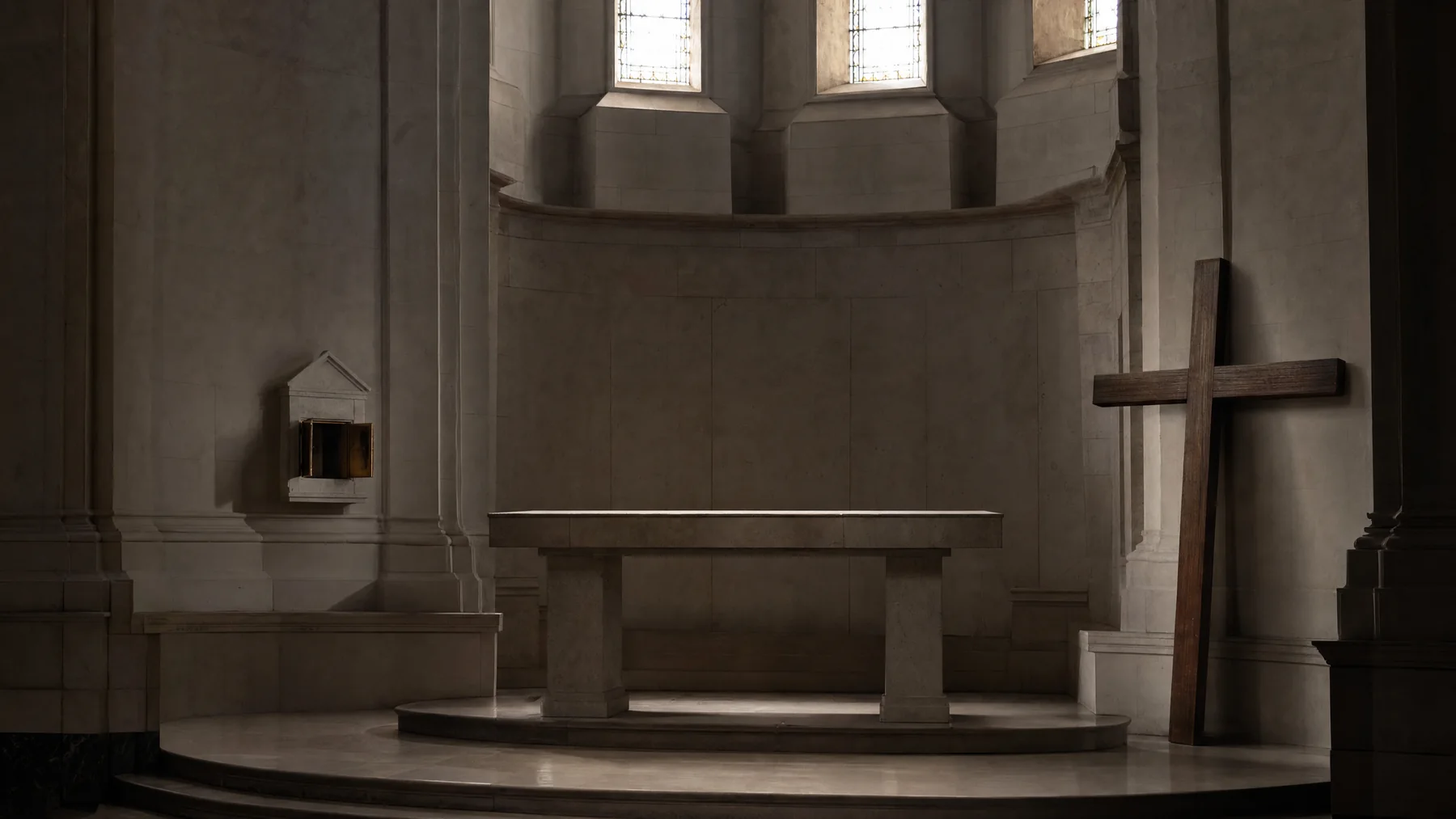
The Catholic Church's liturgy on Good Friday is unlike anything else in the liturgical year. There is no Mass. The altar is stripped bare. The tabernacle is open and empty. The organ is silent. The priest prostrates himself before the altar in silence.
The service that does take place — the Celebration of the Lord's Passion — ends without a blessing. The priest and ministers leave in silence. The congregation leaves in silence.
The Church does not soften this. It does not rush to reassurance. It sits in the darkness of Friday and allows it to be what it is.
What Good Friday Is
It is the day of the death. Not a symbol of death. Not a theological abstraction. The actual, historical, physical death of Jesus Christ on a Roman cross, by crucifixion — one of the most painful and degrading forms of execution ever devised by human cruelty.
He was thirty-three years old. He had spent three years teaching, healing, and gathering a community of followers who believed that something new was happening in the world. And then, in the space of a week, he was betrayed by one of his own, arrested, tried in a corrupt process, tortured, and publicly executed while his followers hid or watched from a distance.
By every human measure, it was a failure. Complete and total.
Why the Church Does Not Skip This Day
It would be theologically easier, in some ways, to move directly from the triumph of Palm Sunday to the triumph of Easter. To elide the death. To emphasise the resurrection and treat the cross as merely the price that had to be paid.
The Church refuses to do this. It insists on Friday. It insists on the darkness and the silence and the emptiness of the tabernacle and the bare altar.
Because the resurrection means nothing if the death was not real. Because hope that skips over genuine suffering is not hope — it is denial dressed in religious language. Because the people who need Easter most are precisely the people who are living in their own Friday and need to know that Friday is known from the inside, not merely observed from a safe distance.
God died. That is what Friday says. Not metaphorically. Actually. Whatever Easter means, it must be adequate to that fact.
A Personal Note
I have had my own Fridays. I have sat in the ruins of things I built and watched them be over. I have stood at a graveside for a man I was not finished talking to. I have watched a child struggle and been unable to fix it.
Good Friday is the day I feel most understood by the religion I was born into. Not because God magically fixes things — he does not, or at least not on the schedule or in the way that would be most convenient. But because the tradition insists that he knows what this is. That he has been here. That Friday is not the end.
Saturday is the hardest day. The day of waiting, with no sign of what is coming. The disciples spent Saturday not knowing there would be a Sunday.
We know. And it makes Friday bearable.
Work with Sebastian
Nothing today. Book a consultation when you are ready.