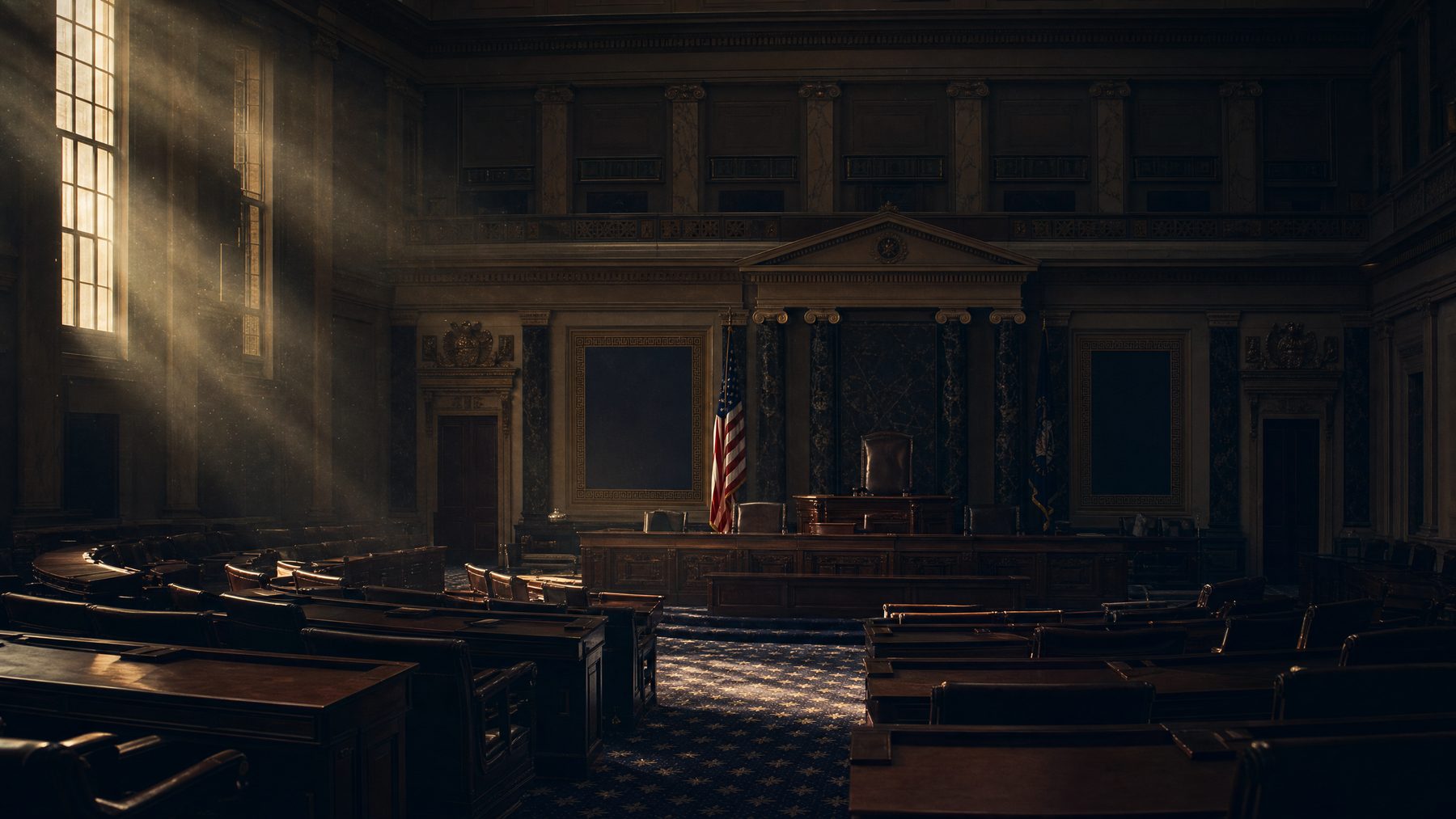
Dick Cheney died this month at 84.
The obituaries split along predictable lines. The right mourned a statesman and defender of American power. The left denounced a war criminal and architect of the surveillance state. Both sides are right about some things and wrong about others.
I want to say something different.
What Cheney Actually Built
Cheney was, without question, one of the most consequential American politicians of the last half century. Not in a good way, mostly. But consequential.
After September 11, he drove the construction of a domestic surveillance apparatus that fundamentally changed the relationship between the American state and its citizens. The Patriot Act. Warrantless wiretapping. The NSA's mass data collection programmes, which Edward Snowden eventually exposed. The infrastructure he built in the name of security has never been dismantled. It has only expanded.
He made the case for the Iraq War on the basis of weapons of mass destruction that did not exist. 4,500 American soldiers died. Hundreds of thousands of Iraqis died. The region is still living with the consequences. He never expressed genuine remorse.
And yet. He was also the man who, in 2004, when asked about his daughter Mary's homosexuality, said he supported the right of same-sex couples to form relationships — a genuinely courageous position for a Republican politician at that time, at real personal political cost.
He was a man of serious conviction, serious error, and serious consequence.
What His Legacy Actually Is
Here is what I think matters most about Cheney's legacy, from the perspective of anyone who cares about individual freedom:
He demonstrated that crisis is the friend of state power.
September 11 was a genuine catastrophe. But the response to it — the Patriot Act passed in 45 days, the surveillance architecture erected without serious democratic debate, the wars launched on the basis of manipulated intelligence — was a masterclass in how governments use emergency to permanently expand their authority.
The emergency ends. The powers do not.
The NSA is still collecting your metadata. The surveillance infrastructure is still running. The legal frameworks that authorised mass data collection without individual warrants are still on the books.
Twenty-four years later. Still there.
The Lesson for Today
I wrote recently about the EU's digital prison — the eIDAS wallet, the Digital Euro, the Chat Control proposals, the biometric databases being quietly assembled across the continent.
Cheney's legacy is the reminder that this is not unique to Europe. It is not unique to authoritarian governments. It happens in democracies. It happens with the best of stated intentions. And it is almost impossible to reverse once it is in place.
The question is not whether your government might abuse the powers it is building. The question is whether you are willing to bet your freedom on the answer being no.
I am not.
On the Iraq War Specifically
I want to say this clearly because intellectual honesty requires it, even when it is uncomfortable for people on my side of the political spectrum.
The Iraq War was a catastrophic moral and strategic failure. The weapons of mass destruction did not exist. The intelligence was manipulated. The consequences — the destabilisation of the entire region, the rise of ISIS, the hundreds of thousands of deaths — were entirely foreseeable and were, in fact, foreseen by many people who were ignored.
Being pro-American, as I am, does not mean being uncritical of what America does. It means holding America to the standard it claims for itself.
Cheney fell well short of that standard. History will not be kind to him on Iraq, and it should not be.
But he was also a product of his time and his world — a world where the state's power to protect its citizens was assumed to be legitimate, expandable, and essentially unlimited in the face of threat.
That assumption is what I spend my professional life arguing against.
Work with Sebastian
The architecture of state surveillance is not theoretical. It affects where your money can go, what you can say, and ultimately how free you are. If you want to understand how to structure your affairs beyond the reach of any single government, let's talk. Book a consultation.