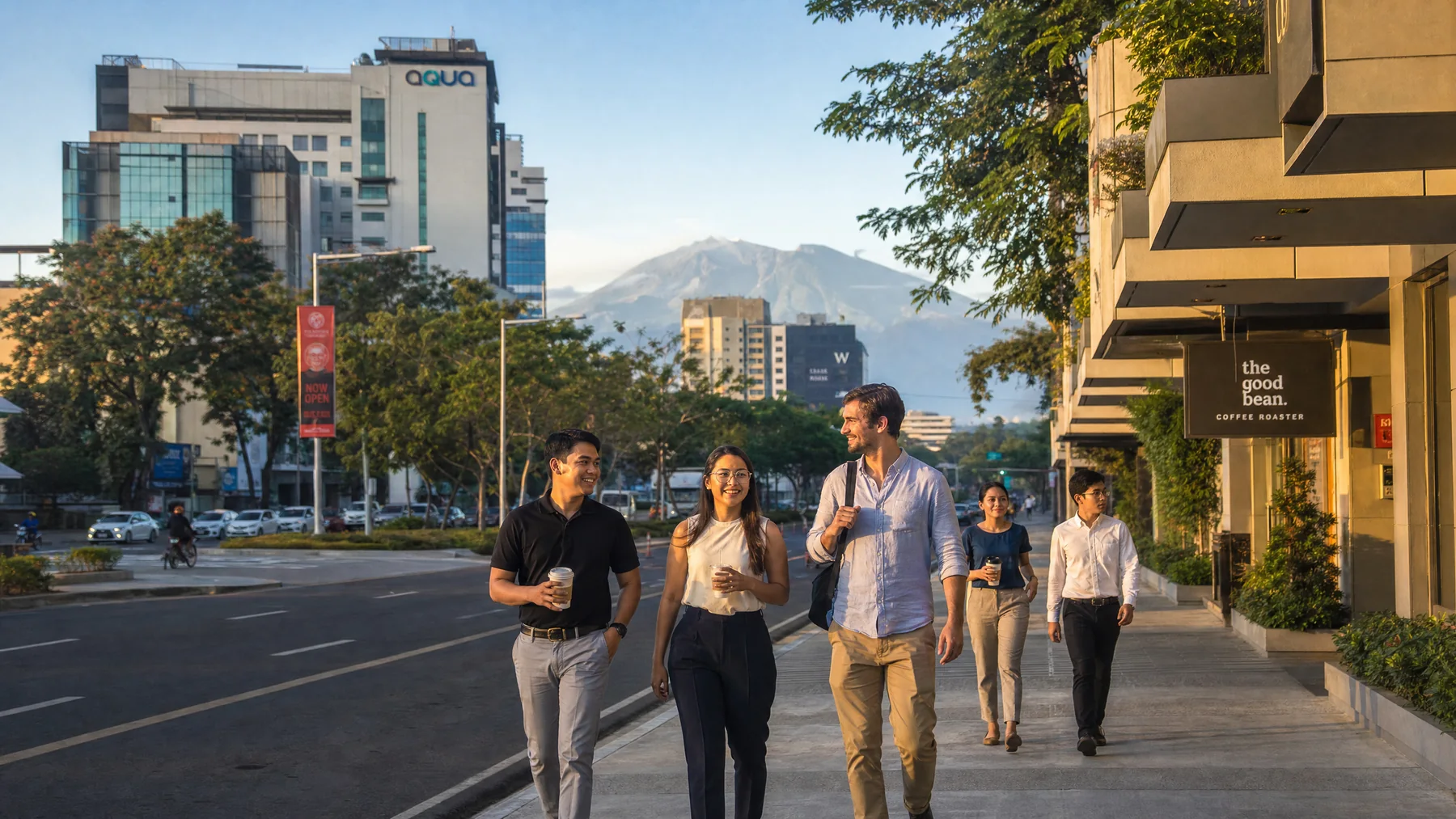
When I tell people we have an office in Davao, the reaction is usually one of two things. Either they have never heard of it, or they know it primarily as the city that Rodrigo Duterte ran for over two decades before becoming president.
Both responses miss what Davao actually is. Let me tell you.
The City
Davao is the largest city in Mindanao, the second largest island in the Philippines, and the third largest city in the country by population. It sits on the eastern coast of Mindanao, facing the Pacific, protected from the west by the Cordillera mountain ranges that shield it from the typhoon tracks that make much of the archipelago dangerous and unpredictable.
This geographic protection is not incidental — it is one of the primary reasons we chose Davao. The typhoons that devastate Cebu, the Visayas, and northern Luzon track westward across the Pacific and are deflected or weakened by the mountain barrier before they can reach Davao. The city is not immune to severe weather, but its exposure is materially and measurably lower than most of the rest of the country.
For a family, for a business with physical infrastructure, for anyone considering a long-term base rather than a holiday destination, that difference in risk profile is significant.
The Safety
Davao under Duterte became known internationally for its brutal anti-drug policing, which I have written about separately. The relationship between those tactics and the city's safety statistics is genuinely complicated — the moral cost was real, and I do not dismiss it.
But the outcome — Davao consistently ranking among Asia's safest cities by independent crime index measurements — is also real. The city functions. Street crime is low by regional standards. The enforcement culture that Duterte established has left an institutional legacy that his successors have maintained, in somewhat modified form.
For a family considering a base in Southeast Asia, this matters. Manila is exciting. It is also chaotic, congested, and crime-affected in ways that require constant vigilance. Davao is not those things.
The Business Environment
The Philippines does not participate in the OECD Common Reporting Standard. This is a fact that is underappreciated in the expat planning space. It means that Philippine bank accounts are not automatically reported to participating jurisdictions — a genuine and significant distinction from most other jurisdictions my clients consider.
Foreign-sourced income is not taxable in the Philippines. A German entrepreneur who is a Philippine tax resident and whose income comes from a business operating outside the Philippines pays zero Philippine income tax on that income.
English is an official language and the language of business, law, and professional services. Contracts are in English. The legal system is common law-derived. The professional class is educated in English to international standards.
Our Davao team are not consultants who flew in and set up a website. They live there. They have relationships, local knowledge, and the kind of institutional understanding of how things actually work — which banks, which immigration officers, which processes are reliable and which require persistence — that you cannot get from research.
Why Most People Get the Philippines Wrong
Most people researching the Philippines as a base find Boracay or Palawan on Instagram and assume those are the options. Or they find Manila and are overwhelmed by the scale and the chaos.
Davao is neither of those things. It is a working city with a large, educated middle class, good hospitals by regional standards, international schools, direct flights to Singapore and Hong Kong, and a cost of living that makes London feel like a hallucination.
The durian is an acquired taste. The traffic, while real, is manageable by Southeast Asian standards. The heat is constant and genuine.
But if you are looking for a Southeast Asian base that combines tax efficiency, English-language environment, genuine safety, and a manageable lifestyle at a fraction of European costs, Davao is underrepresented in the conversation. We are trying to fix that.
Work with Sebastian
If the Philippines and specifically Davao are on your serious consideration list, come and talk to us. We have people on the ground, relationships in place, and the local knowledge to make the difference between a successful relocation and an expensive mistake. Book a consultation.