For ten years, I was exactly the user Facebook claimed it wanted.
I never argued about politics. I never picked fights in comment sections. I never shared a single conspiracy theory, hot take, or angry rant. I did one thing, and I did it with love: I posted photographs of my family.
Understand what that meant for a man like me. I left Germany in 2000 and never moved back. My life unfolded across Switzerland, London, Malta, Ireland, Texas. My mother stayed behind. My extended family stayed behind. And Facebook, whatever else you want to say about it, became the bridge across that ocean. Every carefully edited photo of my children on a Maltese beach, every curated album from an Irish autumn or a Texan summer, landed in my mother's feed like a postcard that arrived the same day it was written. She loved it. The whole family did. Even now, thinking back on those years makes me genuinely melancholic, the way you feel about a house you once lived in and can never enter again.
And there is a deeper layer to this story, one I rarely tell. After my divorce, I kept posting. During a period when my oldest son stayed back in America while the rest of us had to leave temporarily for visa reasons, those simple, warm, everyday family scenes did quiet work I could not do in person. They told him, week after week, in pictures rather than words: the family is still here, still whole, still yours. I know for certain those images warmed his heart during our separation. That is not a "social media use case." That is a father holding a thread across an ocean.
I even ran a fair amount of advertising through the platform. I was, in every measurable sense, a model citizen of Zuckerberg's empire. A paying one, at that.
The Gut Punch
Then, a few years ago, the empire banned me.
Violation of community guidelines. That was the entire explanation. No specifics. No example. No human being. Just a wall of automated text and a decade of family history sealed behind it.
I was genuinely shocked. Not annoyed. Shocked. What guideline? Which photo? A birthday cake? A beach in Gozo? I protested, of course. I verified my identity, uploaded documents, jumped through every hoop the machine placed in front of me. The verdict came back the way these verdicts always come back: final, faceless, and unexplained.
If you think my case is unusual, it is not. Thousands of ordinary users have reported waking up to accounts suddenly banned by Meta with no explanation and no meaningful way to reach a human being, their appeals reviewed and rejected within minutes by what is quite obviously software talking to software. Businesses erased. Memories confiscated. Livelihoods suspended by an algorithm that answers to no one.
I was lucky in one respect: I never trusted a platform with my only copy of anything. Every photograph lived in my own cloud storage as well. The pictures survived. But it still felt like a gut punch, because the photos were never really the point. The point was the living connection they carried, and Meta severed it without so much as a sentence of justification.
That day, I made a vow, and I am a man who keeps his vows. I would never create another Facebook account. Ever. I had done the same thing with PayPal a decade earlier, after their endless carousel of verifications finally exhausted my patience. I swore them off, and ten years later that oath still stands, unbroken and unregretted. When a company treats you like a suspect instead of a customer, you do not negotiate. You walk, and you never look back.
Then Musk Bought Twitter
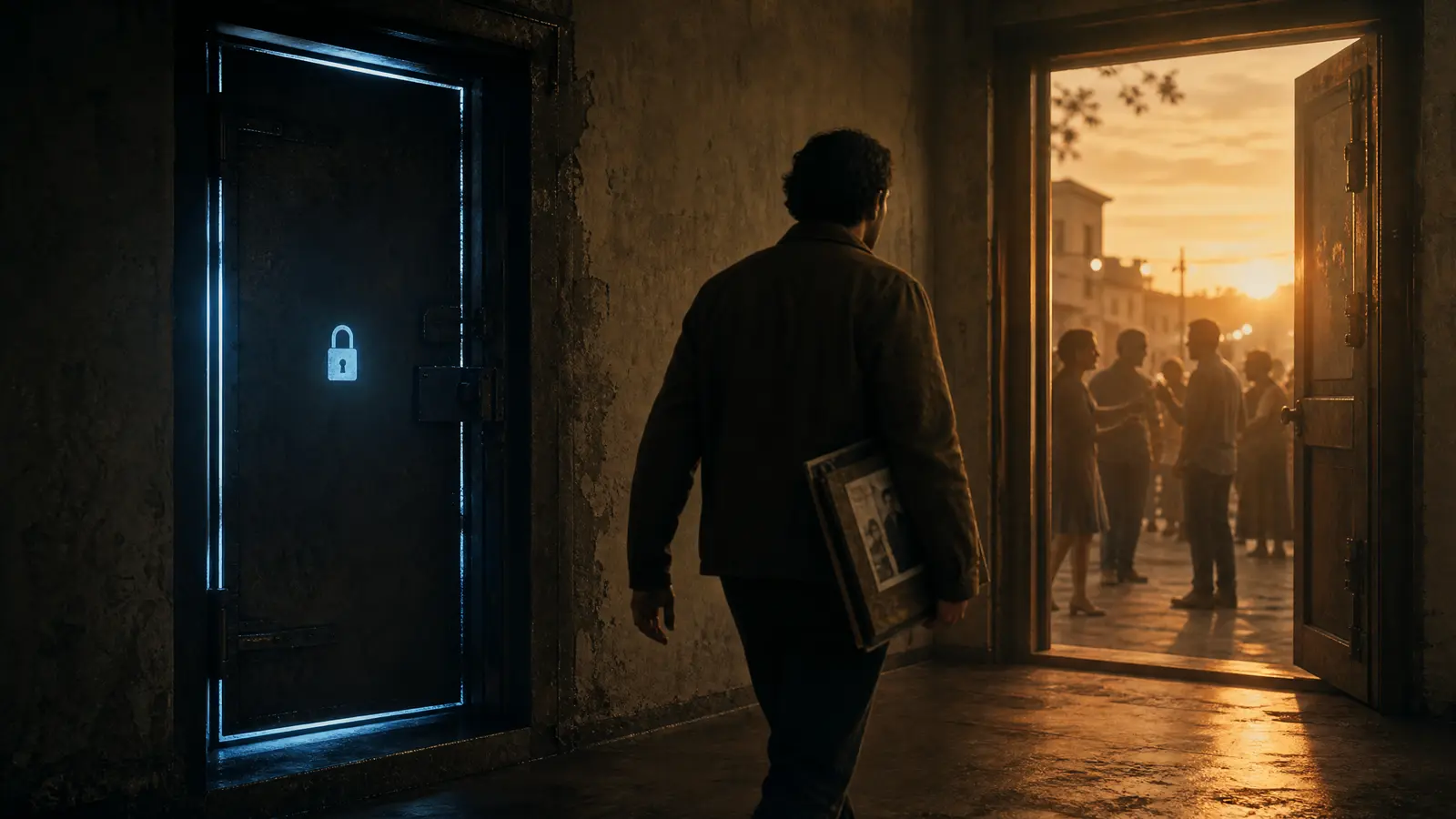
Here is where the story turns, because at almost exactly the moment Meta slammed its door in my face, another door was being kicked open.
Elon Musk's takeover of Twitter was, for me, one of the most bracing corporate spectacles of the decade. And I loved every chaotic minute of it. I loved that he opened the platform and released the internal files showing how speech had quietly been throttled and shadow-banned. I loved that he gutted entire departments whose only discernible output was deciding which opinions the rest of us were permitted to read. Whole floors of people whose job was to be offended on your behalf, gone. The building kept standing. The platform kept running. Funny, that.
And I loved, above all, that he chased the censorious spirit out of the machine. Call it what you like. I watched an institution that had appointed itself the hall monitor of global conversation get turned back into what it should have been all along: a noisy, glorious, unpredictable public square.
I have used X heavily ever since. Not so much to post, if I am honest. I still have not found my voice on the platform, and I am comfortable admitting that. But I read it constantly, and it feels refreshing in a way Facebook never did, even in the good years.
The Odd Uncle at the Family Party
Now, let us be honest with each other. Is there rubbish on X? Of course there is. Oceans of it. But here is what I have learned, and it is a truth almost nobody says out loud: the algorithm is largely a mirror. If you wallow in filth, it serves you filth. If you engage with substance, it learns, and it serves you substance. My own feed today is almost eerily relevant: sharp, current, useful material from the digital nomad and mobile entrepreneur scene. Many of the articles on this very blog were sparked by a single post I stumbled across on X. As a working tool, as an engine of inspiration, it has given me more in a few years than Facebook gave me in ten.
And this brings me to censorship, because the whole debate rests on a picture of humanity I simply do not recognize.
Think of any family party. Any village pub. Since the beginning of time there has been the odd middle-aged uncle in the corner, two drinks in, peddling some conspiracy or talking plain rubbish about the moon landings or the local council. Every family has one. Every village has one. Remember the proverbial Catholic nutter at the parish fete? Communities have always been made up of characters, and some of them are odd.
Now ask yourself the question that demolishes the entire censorship industry: would you expect the host to shut him up? To un-invite him? To tape his mouth at the dinner table? Of course not. You would roll your eyes, pour yourself another glass, and talk to someone else. If the whole family were like him, fine, you might skip next year's gathering. But one strange voice in a crowd of normal ones? We have handled that for ten thousand years without a Trust and Safety department. The human race is not so fragile, and we are not so easily manipulated as the censors insist we are. Their entire business model is built on the flattering lie that they are immune to bad ideas while you, poor thing, must be protected from them.
Grok, the Sober Man at the Bar
There is one feature on X I have come to genuinely love: the ability to ask Grok, the platform's built-in AI, whether a post is actually true. Say what you want about it, but in my experience Grok is relentlessly, almost boringly matter-of-fact. It checks, it weighs, it answers without theatrics. And here is the delicious irony: I regularly watch commenters explode in fury at Grok for being, in their eyes, too soft, too establishment, too woke. When both wings of the aviary are screeching at the referee, the referee is probably doing something right.
That is what an open platform looks like. Not a sanitized garden where an unseen committee decides what you may see, but a living, brawling, self-correcting marketplace where the odd uncle gets his say, the fact-checker gets his say, and you, a grown adult with a functioning mind, get to weigh it all yourself.
No Replacement. Something Better.
So no, X did not replace Facebook for me. Nothing will. Facebook was the family album, and Meta burned my library card without telling me which book I had supposedly damaged. That chapter is closed, sealed by a vow I intend to carry to the grave.
But X gave me something Facebook never did: inspiration, edge, and the daily company of people building unconventional lives across borders, exactly the world I live in and write about. One platform treated a loyal, paying, harmless user as disposable. The other trusts me to be an adult.
Life is short and fleeting. One shot. I will not spend it begging an algorithm for readmission to my own memories. I choose the open door, the loud room, and the odd uncle in the corner. Every single time.