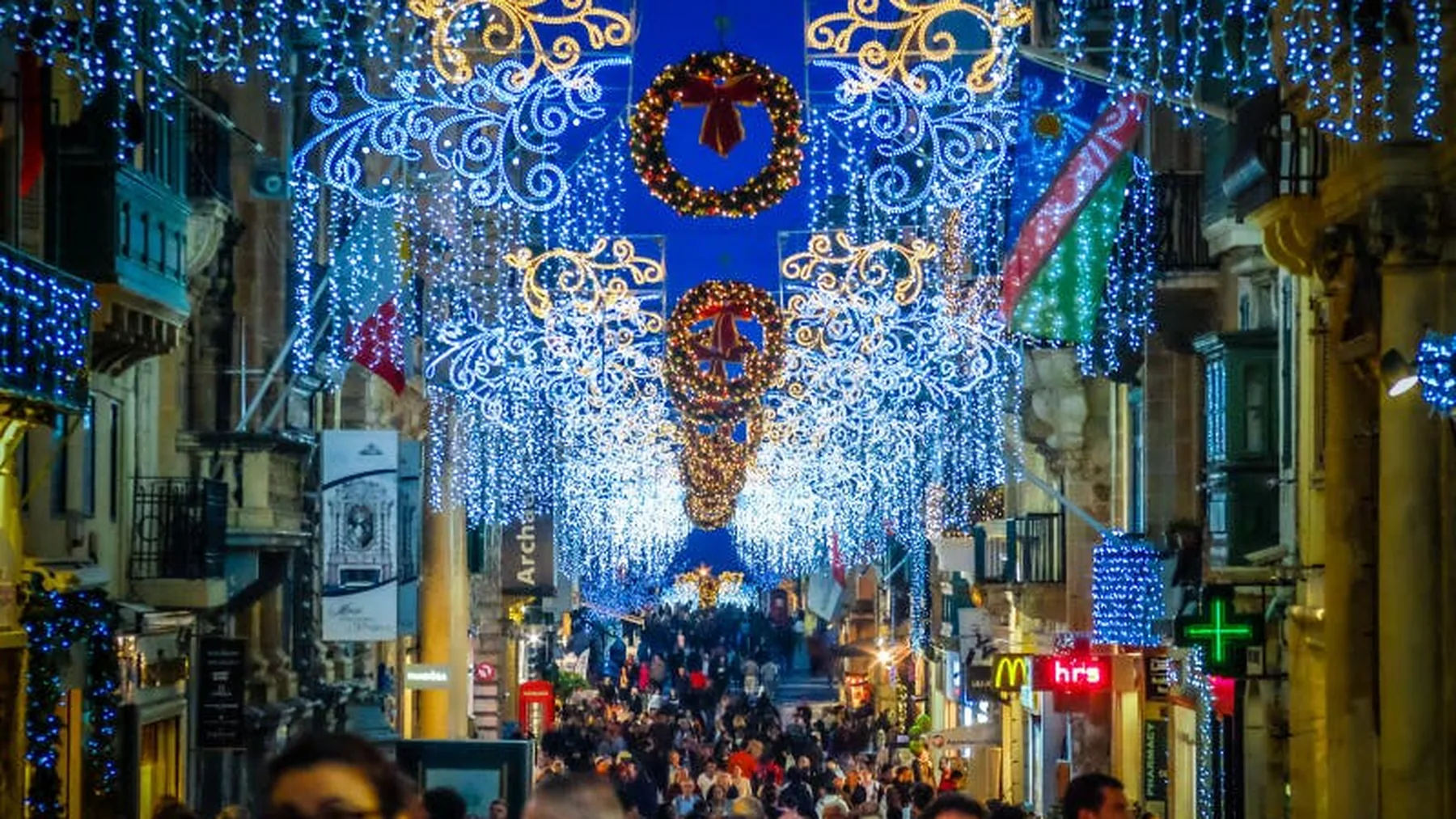
There is a moment that happens to people who spend their first Christmas in Malta. It tends to happen on Christmas Eve, somewhere around midnight, standing outside a Baroque church with hundreds of other people waiting for the doors to open for Midnight Mass.
You realise: this is what Christmas used to look like.
Not the retail version. Not the Instagram version. The version that existed before the secular world decided that December was primarily a commercial event with some carols attached. The version that remembers what it is actually about.
I am a Catholic. That matters to how I experience Malta. But I have watched clients who are not particularly religious arrive for their first Maltese Christmas and leave shaken — in the best sense — by what they found.
The Presepju
The presepju — the Maltese nativity scene — is taken seriously in a way that has no equivalent in Britain, Australia, or North America.
Maltese families build presepji in their homes, often covering an entire wall or room, sometimes years in the making, with intricate landscapes of limestone rock, running water, lights, and dozens of hand-painted figures. The tradition dates to the Franciscans bringing it from Italy in the medieval period and runs unbroken to the present day.
Villages and parishes compete — gently and not so gently — on the quality of their public presepji. Elaborate scenes are installed in churches, in village squares, in the lobbies of government buildings. Across Christmas, families take the children to visit them all.
This is not nostalgia. It is active, living tradition.
Midnight Mass
Malta’s churches fill for Midnight Mass. In Valletta, at St. John’s Co-Cathedral — one of the greatest Baroque interiors in the world, its floor a mosaic of 400 knights’ tombstones — the Christmas Eve Mass is an experience that stays with you.
But it is not only Valletta. Every village church, every parish, holds its Midnight Mass. The competition between villages that characterises the festa calendar does not stop at Christmas — parish pride extends to the quality of the nativity decor, the choir, the organ music.
For a Catholic family with children, Christmas in Malta is the clearest possible demonstration of what life in a genuinely Catholic country looks like. Faith is not a private matter here. It is the public architecture of the season.
The Liturgical Calendar as a Way of Life
Christmas in Malta is the culmination of a December that has been building since the beginning of Advent. The Feast of the Immaculate Conception on 8 December is a public holiday — offices close, families gather. The nine days before Christmas (il-Lejliet) are marked with special Masses at dawn, called is-Seba’ Ijiem, traditional to Malta and attended by people who then go to work or school.
What this means in practice: the rhythm of December in Malta is different from anywhere else in Western Europe. It is genuinely ordered around the liturgical season rather than the shopping season.
The Food
Christmas Maltese food is its own topic. Imbuljuta — a hot drink of chestnuts and cocoa served after Midnight Mass, sold from stalls outside churches. Christmas pudding with Italian panettone influence. Qubbajt — honey-and-sesame nougat, found at every Christmas market. The Christmas market in Valletta itself — small, not commercialised to the degree of Northern European equivalents, still with something real about it.
Rabbit (fenek) — Malta’s national dish — appears at Christmas lunch alongside Italian-influenced pasta dishes, fresh fish, and an excess of pastizzi. If you are joining a Maltese family for Christmas, come hungry and expect to stay until the late afternoon.
Why This Matters for the Decision to Move
I write about low tax, sovereign wealth, residency programmes, and corporate structures. That is what pays for the conversations. But when clients ask me — privately, after the numbers conversation — what Malta is like, this is what I tell them.
It is a place where Christmas still feels like Christmas. Where children see faith lived publicly rather than practiced privately, if at all. Where the calendar is ordered around something other than the next commercial event.
For families making a decision about where to raise their children — not just where to register a company or establish a tax base — this is not a footnote. It is a headline.
Book a consultation to talk about building a life in Malta, not just a tax structure.