Contents
- 1. Singapore: Country Overview
- 2. Putting Singapore on the Map
- 3. What Others Say About Singapore
- 4. Tax Benefits: What Singapore Has to Offer
- 5. Tax Rates at a Glance
- 6. Tax Residency: What Triggers It
- 7. Double Tax Treaties
- 8. Avoid Remaining Tax Resident at Home
- 9. Tax Considerations When Leaving Your Home Country
- 10. Company Setup & Corporate Tax
- 11. Who Should (and Shouldn't) Move to Singapore
- 12. Visas and Residence Permits
- 13. Path to Citizenship
- 14. Banking in Singapore
- 15. What Makes Singapore Genuinely Attractive
- 16. Cost of Living in Singapore
- 17. Buying Real Estate in Singapore
- 18. Retiring in Singapore
- 19. US Citizens: What You Need to Know
- 20. Correct Preparation
- 21. Automatic Exchange of Information (OECD CRS)
- 22. Further Relocation Formalities
- 23. How We Help With Your Move to Singapore
I.
Singapore: Country Overview
Singapore is a city-state of approximately 5.9 million people on a main island (709 square kilometres) and 63 smaller islands at the southern tip of the Malay Peninsula, connected to Malaysia by two bridges and the Johor-Singapore Causeway. It has been an independent republic since 1965, when it separated from Malaysia. Singapore's GDP per capita (approximately USD 88,000 in 2026) is among the highest in the world. It is consistently ranked first or second globally for ease of doing business, rule of law, and absence of corruption.
Singapore's tax system is territorial: income that accrues in or is derived from Singapore is taxable. Foreign-source income is generally not taxed when received by individuals in Singapore — the government's position is that it does not tax what was earned elsewhere, regardless of whether it is remitted into Singapore bank accounts. This is different from a remittance-based system: there is no requirement to keep funds offshore to avoid Singapore tax; foreign-source personal income is simply not in scope.
- ›Capital gains tax: none. Singapore has no capital gains tax on any asset class — shares, property, cryptocurrency (in most cases), art, or any other asset. This is a permanent feature of the system, not a time-limited concession.
- ›Dividend tax: none at the recipient level. Singapore operates a one-tier dividend tax system: dividends are paid out of after-tax corporate profits; there is no additional tax when received by shareholders. Foreign dividends remitted to Singapore by individuals are also generally not taxable.
No inheritance tax, no estate duty, no wealth tax.
- ›Personal income tax: Progressive from 0% to 24%. The 0% rate applies to chargeable income up to SGD 20,000 (~€13,800). The 24% rate applies only to income above SGD 1,000,000 (~€690,000). At SGD 150,000 (~€103,500) in chargeable income, the effective rate is approximately 10%. Singapore's tax rates are consistently among the lowest in Asia for professional and senior management income levels.
- ›Corporate income tax: 17% flat on chargeable income. New companies receive a 75% exemption on the first SGD 100,000 of chargeable income in the first 3 years. SME partial tax exemption: 75% on first SGD 10,000 and 50% on next SGD 190,000 of chargeable income annually.
What to be aware of: Singapore is one of the world's most expensive cities — housing costs (condo purchase or rental in the central districts) are very high, international school fees are substantial, and the overall cost of living is comparable to London or Zurich. The Employment Pass (the primary work visa) requires a minimum monthly salary of SGD 5,000 (higher for finance sector) and sponsor by a Singapore employer. The Overseas Networks and Expertise Pass (ONE Pass) allows autonomous residency for the very highly qualified. Singapore does not have a digital nomad visa or a passive income visa in the way some other jurisdictions do — residency requires either employment or investment in Singapore.
2026 Singapore wealth-management correction: Singapore is Asia’s leading family-office and fund-management jurisdiction, built on territorial taxation, FSIE, no capital gains tax, no dividend tax, no estate duty, no wealth tax, no CFC rules, no thin-cap rules, 17% CIT, 0%–24% PIT, 9% GST, AAA credit, common-law English-language infrastructure, and no exchange controls.
II.
Putting Singapore on the Map
Singapore — Southeast Asia; city-state; 709 km²; Asia-Pacific financial hub; equatorial climate
Singapore does not fit the scale of any other place in this hub. It is 710 square kilometres — roughly the size of Hong Kong — but it functions at the scale of a serious nation-state, with its own foreign policy, its own military, its own currency, its own central bank, and the institutional depth of a country many times its size. This is the achievement: the creation of first-world infrastructure, first-world governance, and first-world stability on an island with no natural resources, no agricultural land, no oil, and no fresh water that has to be purchased from Malaysia.
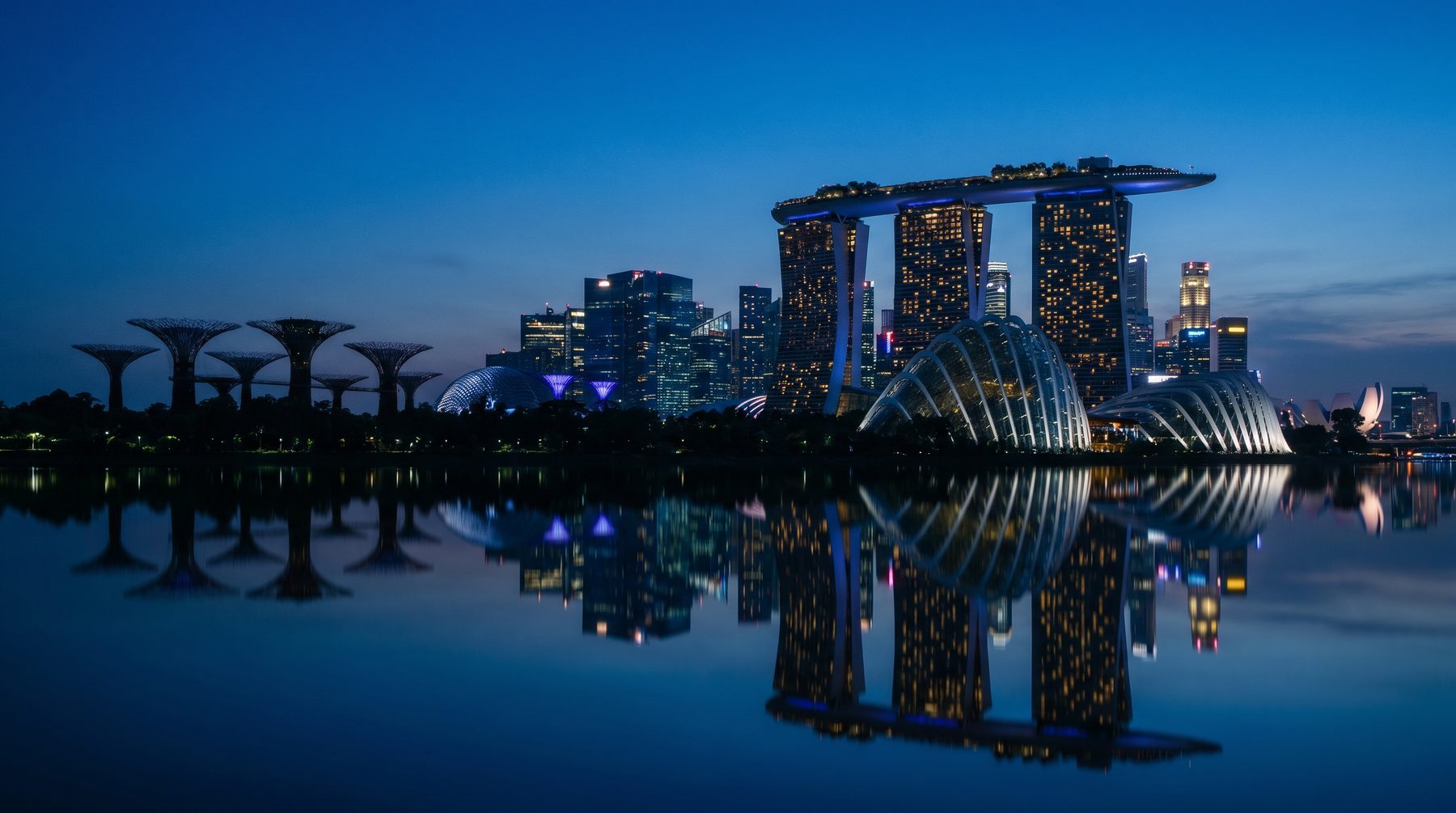
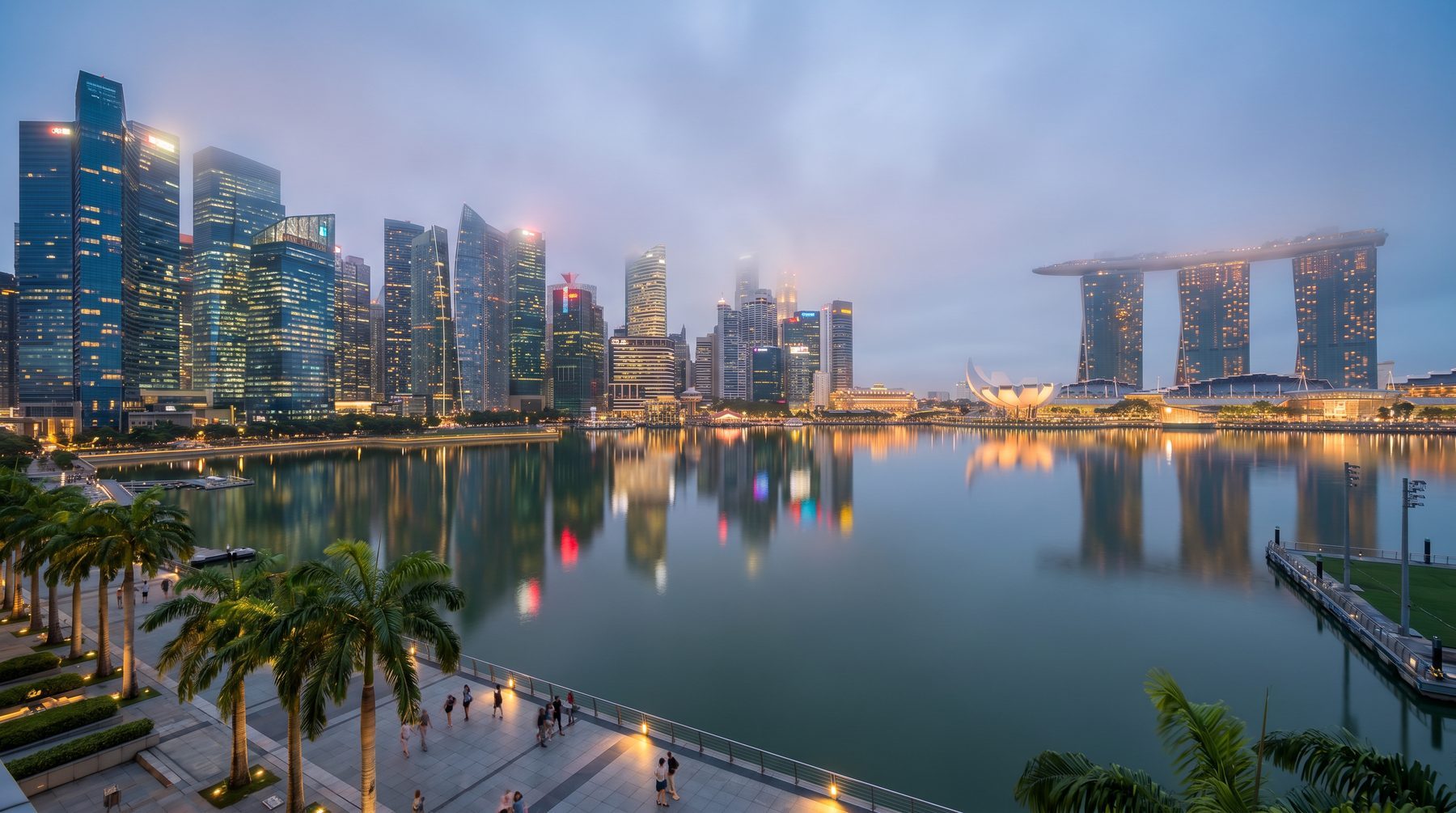
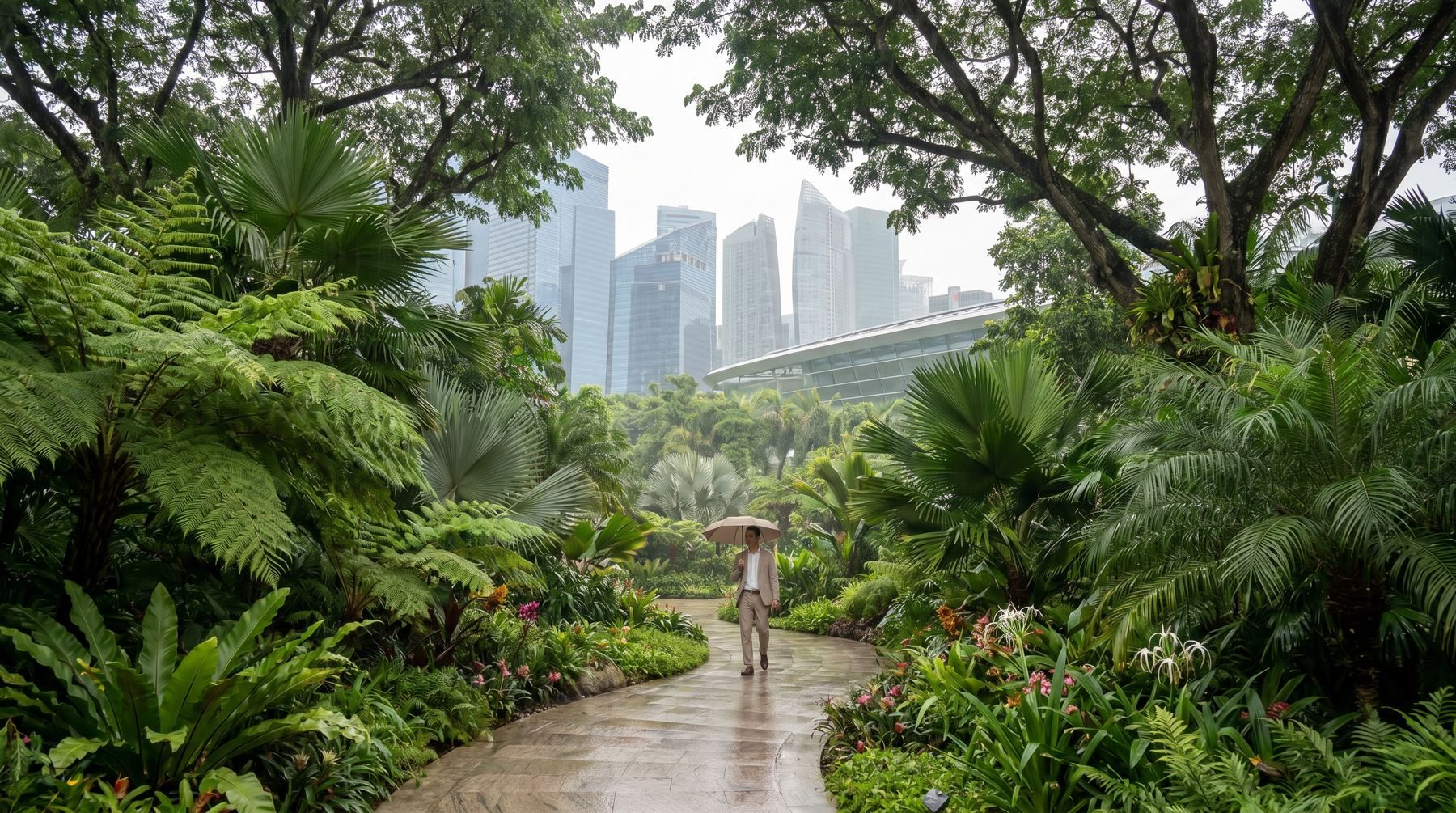
The urban environment is dense, vertical, and curated to a degree that other cities find either inspirational or oppressive depending on their temperament. The Marina Bay waterfront — the Sands integrated resort, the gardens by the Bay with their Supertree Grove, the financial district towers reflected in the water — is the postcard and also a genuine expression of a city that takes its own image seriously. The Botanic Gardens in Orchard Road — 183 years old, a UNESCO World Heritage Site, and a park where Singaporeans do tai chi at 6am — is the counterargument to the steel and glass: a city that also values its 500 species of orchid and takes seriously the business of being tropical.
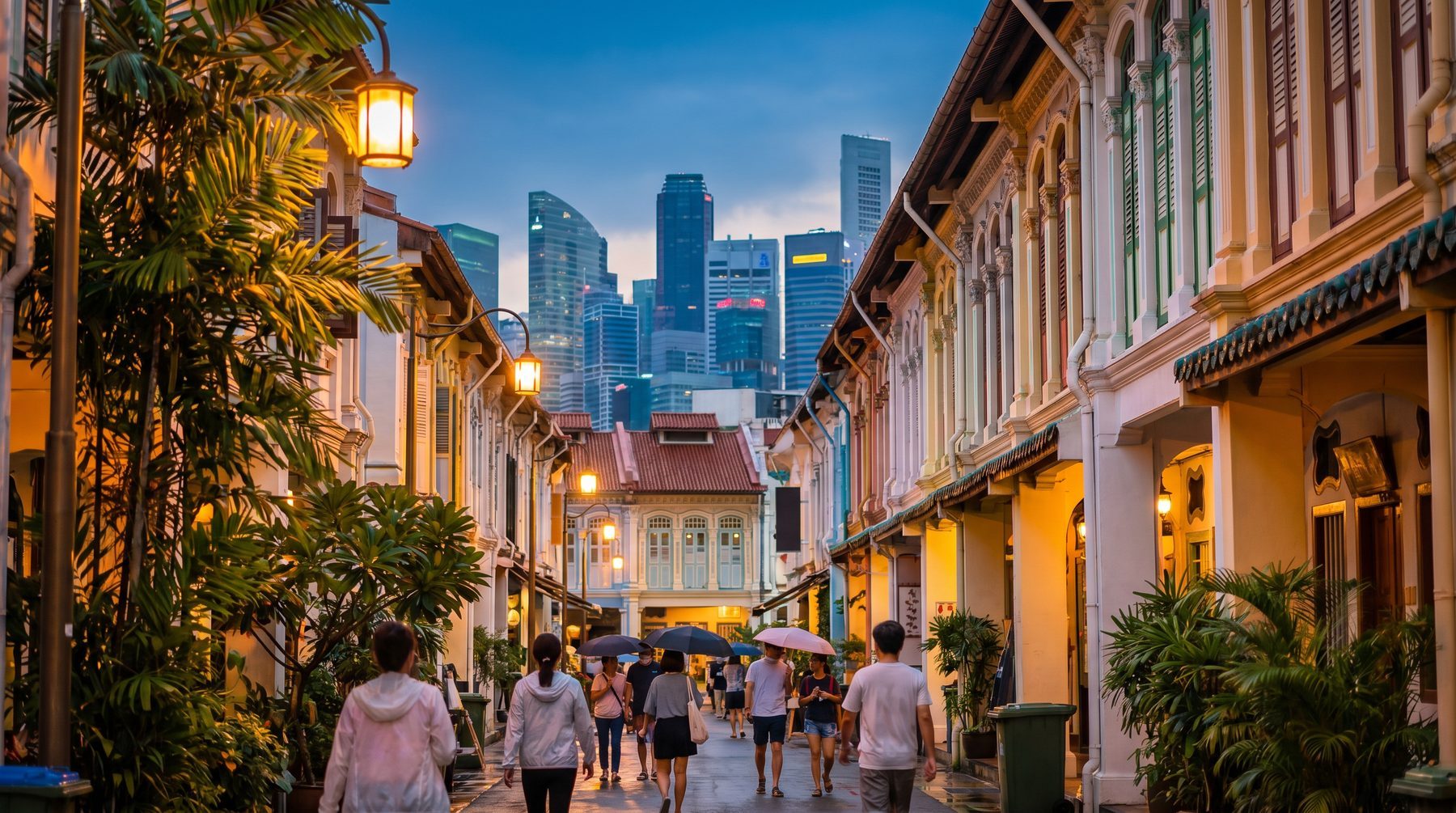
Orchard Road is the shopping district — 2.2 kilometres of malls that are air-conditioned to a temperature appropriate for the Norwegian winter — but the more interesting retail is in Haji Lane and Arab Street in the Kampong Glam district, in Tiong Bahru (a neighbourhood of modernist Art Deco housing blocks from the 1930s, now full of cafés and independent bookshops), and in the shophouses of Chinatown and Little India.
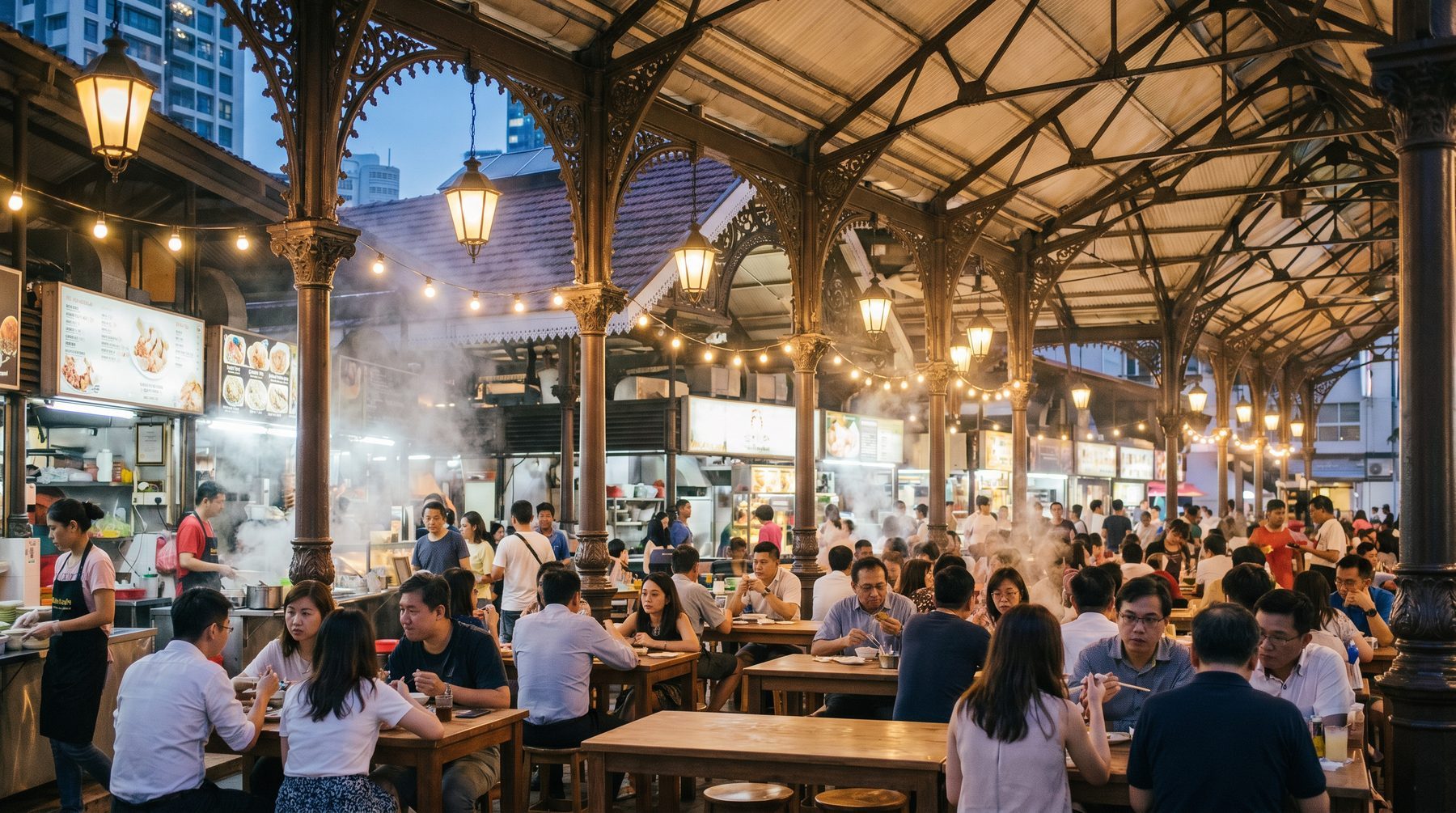
The food requires specific acknowledgement. Singapore's hawker culture — the network of open-air hawker centres where hawker stalls sell individual dishes of extraordinary quality at low prices — is one of the few places on earth where a Michelin star has been awarded to a stall selling chicken rice at SGD 3. The Lau Pa Sat hawker centre in the financial district, the Newton Food Centre, the East Coast Lagoon Food Village — each operates as a university of Southeast Asian cooking in miniature, with styles from Malay, Chinese (Hokkien, Cantonese, Teochew), Indian (Tamil, North Indian), and Peranakan traditions all available within 200 metres of each other.
Kuala Lumpur is 4 hours by road or 45 minutes by air. Bangkok is 2.5 hours. Jakarta is 1.5 hours. Tokyo is 7 hours. Singapore's Changi Airport (consistently rated the world's best) operates direct flights to virtually every destination of commercial significance on earth.
III.
What Others Say About Singapore
"Singapore is the future that works. It is what Dubai is trying to be, what Hong Kong was, and what everywhere else aspires to. It also has the best airport and the best hawker food."
— Richard Branson, entrepreneur, in various interviews, 2020s
"I have spent time in Singapore every year for 20 years. Every year it surprises me in a different way. The food gets better. The art gets more interesting. The city keeps finding reasons not to be complacent."
— Anthony Bourdain, Parts Unknown, Singapore episode, 2015
"Singapore is the only country I know of where the government is right about almost everything. This is unsettling if you believe governments should be wrong about almost everything, but it produces a very functional city."
— P.J. O'Rourke, Eat the Rich, 1998
IV.
Tax Benefits: What Singapore Has to Offer
Singapore is Asia's most sophisticated wealth-management jurisdiction and one of the world's most consistently competitive low-tax centres. The structural pillars: territorial tax system (foreign-source income generally not taxed unless received in Singapore — and even then, dividends, branch profits, and qualifying service income are typically exempt under section 13(8) ITA's Foreign-Sourced Income Exemption regime); NO capital gains tax; NO dividend tax (one-tier system); NO inheritance/estate tax (abolished February 2008); NO wealth tax; NO CFC rules. PIT is progressive 0%–24% (top rate raised to 24% on income above SGD 1M from YA 2024). CIT is 17% flat with a 40% rebate for YA 2026 (capped at SGD 30,000) and a generous Start-Up Tax Exemption yielding ~6.4% effective on first SGD 200K of chargeable income. Singapore's flagship family-office incentives — Section 13O (Single Family Office) and Section 13U (Enhanced Tier Fund) — provide tax exemption on specified income from designated investments for qualifying funds/family offices managed in Singapore. From YA 2026, Pillar Two implementation begins (15% DTT + MTT for MNE groups ≥€750M). GST is 9%. Non-residents: 15% flat on employment income (or resident rates if higher); 24% on other income. AAA sovereign credit; 80+ DTAs; English-language jurisdiction.
- ›Territorial tax system with Foreign-Sourced Income Exemption (FSIE) — Singapore taxes income arising in or derived from Singapore. Foreign-source income is generally taxable only when received in Singapore. Even when remitted, foreign dividends, branch profits, and qualifying service income received by Singapore-tax-resident companies are EXEMPT under section 13(8) ITA if (a) the income was subject to tax in the source jurisdiction, (b) the source jurisdiction has a headline corporate tax rate of at least 15%, and (c) IRAS is satisfied the exemption is beneficial. For individual residents, foreign-source income remitted to Singapore is generally not taxable (territorial principle).
- ›No capital gains tax; no dividend tax; no inheritance/estate tax; no wealth tax — Singapore has NO capital gains tax (subject to a narrow professional-trader exception). The one-tier corporate tax system means dividends paid by Singapore-resident companies are fully tax-free in shareholders' hands — no withholding tax. Inheritance and estate duty were abolished from 15 February 2008. No general annual wealth tax. No gift tax.
- ›Personal Income Tax progressive 0%–24%; top rate 24% on income above SGD 1M (from YA 2024); PIT rebate YA 2026 60% capped at SGD 200 — first SGD 20,000 not taxable; progressive brackets through to 24% above SGD 1,000,000. Top rate raised from 22% to 24% effective YA 2024. For YA 2026, individuals receive 60% PIT rebate capped at SGD 200 applied automatically. Non-residents: 15% flat on employment income (or resident rates if higher); 24% flat on other income types.
- ›Corporate Income Tax 17% flat; 40% YA 2026 rebate capped at SGD 30K; SUTE effective ~6.4% on first SGD 200K — flat 17% CIT for resident and non-resident companies with chargeable income in Singapore. YA 2026 CIT rebate of 40% of tax payable (capped at SGD 30,000), with minimum cash grant SGD 1,500–2,000 if at least one local employee in 2025. Start-Up Tax Exemption (SUTE — section 43(6A)): 75% on first SGD 100K + 50% on next SGD 100K for first 3 YAs (effective ~6.4% on first SGD 200K); excludes property/investment-holding companies.
- ›Section 13O Single Family Office and Section 13U Enhanced Tier Fund — flagship wealth-management regimes — Section 13O provides tax exemption on specified income from designated investments for qualifying funds managed by Singapore-resident family offices (minimum AUM SGD 20M, 2 investment professionals, SGD 200K local business spending). Section 13U provides equivalent exemption for qualifying funds with minimum AUM SGD 50M and 3 investment professionals, with broader investor scope. These are the structural reason Singapore is the leading family-office hub for HNW Asian and global capital.
- ›No CFC rules; no thin-cap; no fixed-ratio interest deductibility — Singapore residents are not taxed on retained profits of foreign subsidiaries (no CFC regime). Interest is generally deductible if wholly and exclusively incurred in production of income (subject to arm's-length on intragroup loans). No general thin-capitalisation rule. No general fixed-ratio interest deductibility limit. This contrasts sharply with most EU jurisdictions and the US.
- ›Pillar Two implementation from YA 2026 (15% DTT + MTT) for MNE groups ≥€750M — Singapore implements Pillar Two BEPS 2.0 rules from YA 2026: Domestic Top-Up Tax (DTT) and Multinational Enterprise Top-Up Tax (MTT) at 15% effective minimum for MNE groups with consolidated annual revenue ≥€750M. Most SMEs and HNW family offices are not affected. Implementation of Pillar Two is a meaningful planning consideration only for large MNE groups already operating in Singapore.
- ›GST 9%; SGD 1M registration threshold; 80+ DTAs; English-language jurisdiction; AAA credit; no exchange controls — GST raised from 8% to 9% on 1 January 2024; registration threshold SGD 1,000,000 annual taxable turnover. 80+ comprehensive DTAs including all major OECD economies, UK, Germany, France, Switzerland, Australia, Japan, China, India. CRS participating since 2017. Singapore Dollar (SGD) on managed float; AAA sovereign credit; no exchange controls; English is the working language and language of law.
V.
Tax Rates at a Glance
| Tax | Rate (YA 2026 / 2026) | Notes |
|---|---|---|
| Tax basis | Territorial | Foreign income taxed only when received |
| PIT — bottom bracket (resident) | 0% | First SGD 20,000 |
| PIT — top bracket (resident) | 24% | Above SGD 1M (raised from 22% in YA 2024) |
| PIT Rebate YA 2026 | 60% of tax | Capped at SGD 200 |
| PIT — non-resident employment | 15% flat | Or resident rates if higher |
| PIT — non-resident other income | 24% flat | |
| CIT — standard | 17% flat | Resident and non-resident |
| CIT Rebate YA 2026 | 40% of tax | Capped at SGD 30,000; minimum SGD 1,500–2,000 cash grant |
| SUTE (first 3 YAs) | 75% on first SGD 100K + 50% on next SGD 100K | Effective ~6.4% on first SGD 200K |
| PTE (non-SUTE) | 75% on first SGD 10K + 50% on next SGD 190K | |
| Pillar Two DTT + MTT (NEW YA 2026) | 15% effective | MNE groups ≥€750M |
| Section 13O (Single Family Office) | Exempt on specified income | Min AUM SGD 20M |
| Section 13U (Enhanced Tier Fund) | Exempt on specified income | Min AUM SGD 50M |
| FTC Incentive | 8% or 10% | Extended to 31 Dec 2031 |
| FSIE — companies (section 13(8)) | Exempt | If source rate ≥15% + subject to tax |
| FSIE — individuals | Generally exempt | Territorial |
| Capital Gains Tax | 0% | None |
| Dividend Tax | 0% | One-tier system |
| Inheritance / Estate Duty | 0% | Abolished 2008 |
| Gift Tax | 0% | None |
| Wealth Tax | 0% | None |
| CFC rules | None | |
| Thin-cap rules | None | |
| WHT — dividends | 0% | One-tier system |
| WHT — interest (non-resident) | 15% | DTA-reducible |
| WHT — royalties (non-resident) | 10% | DTA-reducible |
| WHT — director's fees (non-resident) | 24% | |
| GST | 9% | Raised from 8% on 1 Jan 2024 |
| GST registration threshold | SGD 1,000,000 | Annual taxable turnover |
| Property tax — owner-occupied residential | 0%–32% | Progressive on annual value |
| Property tax — non-owner-occupied residential | 12%–36% | Progressive |
| BSD (Buyer's Stamp Duty) | 1%–6% | Residential |
| ABSD — Singapore citizens (3rd+) | 20% | |
| ABSD — PR (2nd+) | 30% | |
| ABSD — foreigners | 60% | |
| ABSD — entities | 65% | |
| DTAs | 80+ | All major OECD economies |
| CRS | Participating | Since 2017 |
| Currency | SGD | Managed float; AAA sovereign |
| Exchange controls | None | |
| Tax year basis | Preceding-year YA |
VI.
Tax Residency: What Triggers It
Singapore tax residency for individuals is established if the individual: (1) stays or works in Singapore for 183 days or more in the calendar year preceding the Year of Assessment; or (2) is issued a work pass valid for at least 1 year; or (3) qualifies under the 2-year or 3-year administrative concessions (continuous employment straddling years).
Tax residents pay progressive rates (0–24%) on Singapore-source income and have access to personal reliefs. Non-residents pay 15% flat on employment income (or the resident progressive rate, whichever is higher) and 24% flat on other income types.
Foreign-source income: Both tax residents and non-residents generally do not pay Singapore income tax on foreign-source income — the territorial system applies regardless of residency status. Foreign-source income remitted to Singapore by individuals is generally exempt.
Key point: Singapore's territorial system means that a non-resident individual who has Singapore-source employment income pays 15% on that employment income, while foreign-source income is not taxable. A tax resident pays progressive rates (0–24%) on Singapore-source income, with foreign-source income also not taxable. The planning position for individuals with mixed Singapore and foreign income requires understanding which income streams are Singapore-source and which are foreign-source.
VII.
Double Tax Treaties
Singapore has approximately 100 active DTAs — one of the most comprehensive treaty networks in Asia and among the largest globally. The network covers the UK, USA, Germany, France, Japan, China, Australia, India, and virtually every significant economy.
- ›The Singapore-UK DTA governs UK-source income for British nationals. UK dividends and interest flowing to Singapore residents benefit from treaty-reduced withholding. UK pension income is allocated between the two jurisdictions under the pension article.
- ›The Singapore-Germany DTA governs German-source income. German dividends flowing to Singapore residents benefit from DTA-reduced withholding. German Rente paid to Singapore residents is governed by the DTA pension article.
- ›The Singapore-Australia DTA reflects the substantial bilateral economic relationship. Australian-source income flowing to Singapore residents is governed by this treaty.
- ›The Singapore-US DTA is comprehensive. It provides reduced withholding on US-source dividends and interest for Singapore residents. US citizens in Singapore cannot use the DTA to exempt themselves from US worldwide taxation — the savings clause applies.
- ›Singapore's treaty network is particularly valuable because it covers both inbound investment (facilitating Singapore as a holding structure jurisdiction) and outbound investment (reducing withholding on income flowing from Singapore's resident investors' foreign portfolios). The combination of Singapore's territorial system and its 80+ DTA network creates one of the most treaty-efficient tax environments in the world.
2026 treaty update: Singapore has 80+ comprehensive DTAs including all major OECD economies, the UK, Germany, France, Switzerland, Australia, Japan, China, India, Indonesia, Malaysia, and UAE. The Germany-Singapore DTA is material for DACH clients. Singapore does not have a comprehensive US DTA; the Singapore-US relationship is mainly FATCA plus a limited tax-information framework.
VIII.
Avoid Remaining Tax Resident at Home
Singapore's territorial system excludes most foreign-source income from Singapore tax for individuals. The planning benefit — zero Singapore tax on overseas investment portfolios, foreign business income, and foreign capital gains — is automatic for Singapore tax residents. But home-country tax residency must be genuinely severed for the full benefit to apply.
For German nationals, the §6 AStG exit tax on shareholdings of 1% or more applies at departure. The Germany-Singapore DTA is in force. For British nationals, the SRT governs the exit. The UK-Singapore DTA provides treaty protection. For Australian nationals, the Australia-Singapore DTA is in force and CGT Event I1 applies on departure from Australian tax residency.
IX.
Tax Considerations When Leaving Your Home Country
Before you relocate, you need to understand what tax consequences arise in your current country of residence at the point of departure. These rules vary significantly by country and must be assessed individually — there is no universal answer.
Many countries impose an exit tax or deemed disposal charge when a tax resident leaves. This typically applies to unrealised capital gains on shares, business interests, real estate, or other assets — taxing you as if you had sold everything on the day you departed. The rules differ widely: some countries apply this to all assets above a threshold, others only to substantial shareholdings or business interests. Some have look-back periods that can catch you even after you have left.
The timing of your departure, the structure of your assets, and the sequence of any business disposals all have material consequences. In some cases, restructuring assets before departure — or deferring the move by a few months — can make a significant difference to the tax outcome.
- ›Germany. The §6 AStG exit tax on shareholdings of 1% or more applies at departure from German tax residency. German dividends paid to Singapore residents benefit from DTA-reduced withholding under the Germany-Singapore DTA. German statutory pension income paid to Singapore residents is governed by the DTA.
- ›United Kingdom. SRT exit date must be established. CGT on departure. The UK-Singapore DTA provides treaty protection and tie-breaker rules. UK pension income flowing to Singapore residents is governed by the DTA.
- ›Australia. CGT Event I1 applies on departure from Australian tax residency. The Australia-Singapore DTA is a comprehensive instrument covering the trans-Pacific relationship. Australian superannuation treatment after departure requires specific advice.
- ›United States. US worldwide taxation applies regardless of Singapore residency. The US-Singapore DTA is in force. Singapore's territorial system means minimal Singapore tax on most passive income — limiting the Foreign Tax Credit available against the US liability.
⚠ Obtain Local Tax Advice in Your Home Country The information above provides a general overview of the departure tax rules that commonly apply when leaving high-tax jurisdictions. It is not legal or tax advice. The rules in your specific home country — Germany, Austria, Switzerland, the UK, the US, or any other jurisdiction — are complex, change frequently, and depend entirely on your personal circumstances: your nationality, the nature and location of your assets, your business structure, your family situation, and the timing of your departure. Before you take any steps to relocate, obtain written advice from a qualified tax adviser who is licensed in your home country and experienced in international relocations. A consultation with us is a good starting point — but it does not substitute for country-specific legal advice from a practitioner in your jurisdiction of departure. The cost of getting this wrong is almost always greater than the cost of getting proper advice upfront.
X.
Company Setup & Corporate Tax
Singapore's corporate tax environment is one of the most competitive in Asia: 17% flat rate with substantial exemptions, world-class legal and regulatory framework, full English legal system, and a reputation that opens doors globally. The Private Limited Company (Pte. Ltd.) is the standard vehicle. Incorporation time: 1–3 days. Foreign ownership: 100% permitted in most sectors.
- ›SME tax exemptions: For companies with chargeable income up to SGD 200,000: 75% exemption on first SGD 10,000 + 50% exemption on next SGD 190,000. Effective rate on SGD 200,000 of profit: approximately 8.5%.
- ›Start-up tax exemption (first 3 years): 75% exemption on first SGD 100,000 + 50% exemption on next SGD 100,000 of chargeable income.
- ›No withholding tax on dividends distributed by Singapore companies — distributions to shareholders (resident or non-resident) carry no Singapore withholding tax.
Learn more about our company setup services →
Permanent establishment risk: A foreign company is not a magical solution. If the company is effectively managed from your country of residence, or if staff, sales activity, or day-to-day control are located there, local tax authorities may still tax the profits locally. Structure follows substance. Genuine management, banking, contracts, and operational substance in the foreign jurisdiction are essential.
2026 corporate update: Singapore applies 17% flat CIT, a 40% YA 2026 CIT rebate capped at SGD 30,000, SUTE for the first three YAs, PTE for other companies, no CFC rules, no thin-cap rules, no fixed-ratio interest deductibility, and Pillar Two DTT/MTT from YA 2026 for MNE groups ≥€750M. A Singapore Pte Ltd is the standard vehicle, and Section 13O/13U are the flagship family-office and fund regimes.
XI.
Who Should (and Shouldn't) Move to Singapore
Section 11 is where the relocation decision becomes practical. Singapore can be an excellent fit for some profiles and a poor fit for others; the decisive question is whether the tax rules, lifestyle, residence requirements, banking, healthcare, and family situation point in the same direction.
Good Fit
- › International entrepreneurs and investors whose income structure actually benefits from Singapore’s tax and residence rules.
- › Remote professionals and business owners who can move their centre of life genuinely, not merely change an address on paper.
- › Families or individuals who value Singapore’s lifestyle, geography, safety profile, and cost structure as part of the overall decision.
- › People willing to handle local banking, residency, healthcare, and administration properly rather than improvising after arrival.
- › Those who understand that relocation is a full tax-residency project, not a holiday with a lower tax rate.
Poor Fit
- × Those who cannot genuinely spend enough time in Singapore to support a defensible tax-residence position.
- × People who need a zero-friction, Western-European administrative environment from day one.
- × US citizens who expect the move to eliminate US tax filing, FBAR, FATCA, or citizenship-based taxation.
- × Those with income, companies, or family ties that keep them clearly taxable in their previous Singapore.
- × Anyone choosing the jurisdiction only because it sounds attractive online, without testing housing, banking, healthcare, and lifestyle fit.
XII.
Visas and Residence Permits
- ›Employment Pass (EP): For foreign professionals, managers, and executives with a job offer in Singapore. Minimum salary: SGD 5,000/month (SGD 5,500 for financial services). Valid 2 years; renewable. Holder can apply for Permanent Residency (PR) after 2 years.
- ›ONE Pass (Overseas Networks and Expertise Pass): For globally outstanding individuals in tech, arts, sports, science, or business. Requirements: annual salary of at least SGD 30,000/month from current or future employer, OR demonstrated track record of exceptional achievement. Valid 5 years; no tied employer; allows multiple employment simultaneously. Introduced 2023.
- ›EntrePass: For entrepreneurs starting a business in Singapore. Requires minimum investment or track record of funding.
- ›Global Investor Programme (GIP): For investors who invest SGD 2.5 million or more in Singapore businesses, funds, or family offices. Provides Permanent Residency directly.
- ›Permanent Residency (PR): Typically available after 2 years of EP holder status for most applicants. Required for long-term life planning in Singapore.
- ›Singapore Citizenship: After 2 years of PR status. Singapore generally requires renunciation of previous citizenship. Singapore passport: visa-free access to approximately 196 countries — the world's most powerful passport (tied, as of 2026).
2026 residence update: Singapore routes include Employment Pass, EntrePass, Tech.Pass, Global Investor Programme, ONE Pass, and permanent residence after a period of employment or qualifying investment presence. CPF is mandatory for Singapore citizens and permanent residents only; Employment Pass holders do not contribute. Tax residency is generally triggered at 183+ days in the calendar year preceding the YA, subject to IRAS multi-year concessions.
XIII.
Path to Citizenship
Singapore citizenship requires approximately 4–6 years from arrival (EP → PR → citizenship). Singapore requires renunciation of previous nationality on taking Singapore citizenship — dual citizenship is not permitted. The Singapore passport provides visa-free access to approximately 196 countries — the most powerful travel document in the world.
XIV.
Banking in Singapore
Singapore is one of the world's premier international banking centres: DBS (Development Bank of Singapore), OCBC, UOB (major Singapore banks); plus the full range of international private banks — UBS Singapore, Credit Suisse Singapore (now UBS), Julius Bär Singapore, Citi Private Bank Singapore, HSBC Private Bank Singapore, Standard Chartered Private Bank, BNP Paribas Wealth Management Singapore.
Account opening: Personal account opening for Employment Pass holders is accessible through major Singapore banks. Private banking (DBS Private Bank, OCBC Premier, UOB Private Banking) typically requires minimum assets of SGD 2–5 million. International private bank minimums are typically higher.
For a relocation to Singapore, the local account is normally the operational account: rent, utilities, cards, domestic transfers, local tax or residence registrations, and evidence that the move is real. It should not automatically become the main wealth-management account unless the local banking system offers the depth, multi-currency capability, private-banking service level, and long-term stability required for the client's assets.
Account opening in Singapore should be treated as a compliance exercise, not as an administrative formality. Expect passport checks, proof of address, residence or visa documentation where applicable, tax-identification details, source-of-funds evidence, and sometimes in-person attendance or a local phone number. The easiest applications are those where the residence story, income source, and banking purpose are consistent before the first form is submitted.
Where to hold your main accounts
Singapore is itself the primary banking centre — there is no need to use a supplementary jurisdiction for wealth management purposes when in Singapore. Complementary banking for specific needs:
- ›Switzerland — European private banking for those with significant European investment portfolios
- ›Liechtenstein — for ultra-HNW clients wanting European privacy and foundation structures
- ›United States — USD accounts for US market exposure
Learn more about our offshore banking services →
Important: not all banks are compatible with all residencies. Some Swiss and Singaporean private banks have restrictions on clients resident in certain jurisdictions, and compliance requirements vary. Residency status, income profile, source of wealth, and business type all affect which institutions will accept you and on what terms. We help clients navigate this before they commit to any banking structure.
XV.
What Makes Singapore Genuinely Attractive
Singapore is attractive when it is judged as a complete relocation platform, not as a slogan. The point is not that Singapore is perfect for everyone. The point is that, for the right person, the combination of tax position, residence practicality, lifestyle, geography, banking, language, and long-term stability can produce a genuinely coherent base.
- ›Asia’s premium rule-of-law business hub. Singapore is attractive because it offers rule of law, banking depth, low corruption, excellent infrastructure, and one of the world’s strongest business ecosystems.
- ›The lifestyle case is not cosmetic. The lifestyle is safe, efficient, clean, and intensely urban. It is not cheap or spacious, but it is exceptionally functional.
- ›It can function as a real operating base. For entrepreneurs, investors, family offices, commodity traders, technology companies, and Asia-focused executives, Singapore is hard to beat.
- ›It rewards the right profile. It suits high earners and serious businesses that need credibility, banking, and Asian access more than low living costs.
- ›The attraction has to be handled honestly. Immigration is selective, housing is expensive, and substance matters. Singapore is a premium platform, not a casual relocation hack.
XVI.
Cost of Living in Singapore
Singapore is clean, safe and efficient — and expensive. Housing, schooling and cars are the decisive costs, while low tax and high infrastructure quality offset part of the pain for high earners.
Typical monthly costs for an internationally mobile professional or family in Singapore (2026 planning ranges):
| Category | SGD/month | GBP/month | USD/month |
|---|---|---|---|
| 1-bed apartment, desirable area | SGD 4,250–8,070 | £2,450–4,650 | $3,150–6,000 |
| 2-bed apartment / small house | SGD 8,260–16,420 | £4,750–9,500 | $6,100–12,150 |
| International school (annual per child) | SGD 13,360–41,040 | £7,700–23,700 | $9,900–30,400 |
| Private health insurance (annual individual) | SGD 2,530–7,900 | £1,450–4,550 | $1,900–5,850 |
| Restaurant meal, mid-range (per person) | SGD 50–120 | £50–50 | $50–100 |
| Monthly groceries, single person | SGD 1,820–3,860 | £1,050–2,250 | $1,350–2,850 |
| Utilities and internet, apartment | SGD 810–2,110 | £450–1,200 | $600–1,550 |
- ›Comfortable single professional (no children): SGD 10,120–17,550/month (£5,850–10,150 / $7,500–13,000)
- ›Family of four with private schooling: SGD 24,300–43,200/month (£14,050–24,950 / $18,000–32,000)
These figures are planning ranges, not promises. The actual budget in Singapore depends heavily on housing quality, neighbourhood, school choice, healthcare needs, car ownership, travel frequency, and whether you are trying to live like a local or maintain a Western expatriate standard.
XVII.
Buying Real Estate in Singapore
Buying real estate in Singapore can be useful for lifestyle, residence planning, and long-term anchoring, but it should not be treated as a simple shortcut to tax residence. Property is a factual tie; it can support a relocation story when used properly, but it can also create tax, inheritance, financing, and exit issues if bought before the wider plan is clear.
For internationally mobile buyers, the main points in Singapore are:
- ›Ownership rules: Foreigners face strict restrictions and high Additional Buyer’s Stamp Duty, especially for residential property.
- ›Transaction costs: Transaction costs can be very high once buyer stamp duty, ABSD, legal fees, agent fees, and maintenance are included.
- ›Market and rental profile: Condominiums are the usual foreign-buyer route; landed property generally requires government approval.
- ›Residence and tax angle: Singapore property is liquid and institutionally strong, but high taxes and entry costs mean it rarely makes sense without a clear residence or wealth-planning reason.
The practical approach is to decide first whether the property is primarily for living, residence support, rental yield, asset protection, or lifestyle. Those are different purchases. A good real estate decision in Singapore begins with title due diligence, tax-residence planning, inheritance review, and a realistic exit strategy — not with glossy developer brochures.
Transaction cost table (Singapore):
| Cost item | Typical amount | Notes |
|---|---|---|
| Buyer’s Stamp Duty / BSD | 1–6% | On first SGD 1.5m and above by tiers |
| Additional Buyer’s Stamp Duty / ABSD | 60% for foreigners | First residential purchase by non-PR foreigners |
| Legal / valuation fees | Additional | Usually small relative to stamp duties |
| Typical foreign-buyer friction | Very high | ABSD is the decisive cost item |

XVIII.
Retiring in Singapore
Retiring in Singapore can make sense for the right profile, but it should not be reduced to a simple tax headline. The real question is whether the country gives you the right combination of residence security, pension treatment, healthcare access, cost of living, climate, and day-to-day comfort. A retirement move is harder to reverse than a business relocation, so practical quality of life matters as much as tax.
For retirees considering Singapore, the main points are:
- ›Residence route: The practical route is usually the not a classic retiree destination because long-term residence usually depends on employment, family, investment, or permanent residence status. This should be confirmed before making property commitments or moving assets, because a pleasant destination is not useful if the residence basis is weak.
- ›Pension income: Singapore does not tax foreign-sourced income in many ordinary cases, but retirees need residence rights before tax benefits matter. The decisive point is often not only local tax, but whether the pension-paying country continues to tax the pension at source.
- ›Healthcare: World-class private and public healthcare, but expensive without insurance. Retirees should arrange private insurance or a clear local healthcare pathway before arrival, especially where pre-existing conditions are involved.
- ›Cost of living and lifestyle: Safe, efficient, english-speaking, and extremely convenient. The country can work well where the retiree’s lifestyle expectations match the local rhythm rather than an imagined expatriate brochure.
- ›Climate and practical fit: Hot, humid tropical climate year-round and high cost of living. Climate, language, bureaucracy, transport, and access to family often decide whether the move remains attractive after the first year.
Singapore should therefore be assessed as a full retirement platform, not merely as a tax jurisdiction. The best candidates are retirees who have stable foreign income, good health coverage, a realistic view of local bureaucracy, and a clear plan for where they will live, how they will receive care, and how their pension will be taxed both locally and at source.
XIX.
US Citizens: What You Need to Know
US citizens and long-term green card holders are taxed by the United States on their worldwide income, regardless of where they live. Relocating to Singapore does not end US tax obligations — it changes the picture, but does not eliminate it.
Key considerations for US citizens in Singapore:
- ›Foreign Earned Income Exclusion (FEIE): US citizens who qualify as bona fide residents of Singapore or pass the physical presence test can exclude a significant amount of foreign earned income from US federal income tax. This applies to wages and self-employment income — not passive income such as dividends, interest, capital gains, pensions, or rental income.
- ›Foreign Tax Credit: Income tax paid in Singapore can generally be credited against US tax on the same income, reducing or eliminating double taxation. The credit is particularly important for income not covered by the FEIE and for taxpayers whose income exceeds the annual FEIE threshold.
- ›Treaty position: Treaty relief between the United States and Singapore is limited or fact-dependent. Before relying on any treaty position, US citizens should confirm the current treaty status and the exact income category with a qualified US international tax adviser. A treaty does not automatically remove US filing obligations, and most treaties contain savings-clause rules that preserve US taxation of citizens.
- ›FBAR: US persons with bank accounts in Singapore exceeding $10,000 in aggregate must file FinCEN Form 114 (FBAR) annually. Failure to file can carry severe penalties, even when no tax is due.
- ›FATCA: US citizens may also need to report foreign financial assets on Form 8938. Banks in Singapore may separately identify US account holders under FATCA procedures and report account information through the relevant channels.
- ›Social Security and self-employment tax: The FEIE reduces income tax but does not automatically eliminate US self-employment tax. Whether US Social Security tax applies depends on employment status, entity structure, and any applicable totalization agreement.
US citizens considering Singapore should work with a qualified US international tax adviser alongside local counsel. The interaction between US tax law and Singapore tax law is manageable, but it requires careful planning before the move, not after the first filing deadline arrives.
XX.
Correct Preparation
- ›The Employment Pass is the gateway. Before any other planning, secure an EP sponsor — a Singapore employer or your own Singapore-incorporated company with genuine operations. Without EP or another qualifying pass, residency in Singapore is not straightforward.
- ›Recommended steps: 1. Secure Employment Pass (through employer) or identify qualifying ONE Pass criteria. 2. Incorporate Singapore Pte. Ltd. (if using own company as EP sponsor). 3. Home-country departure tax analysis — §6 AStG for Germans, SRT for UK nationals. 4. Open Singapore bank account. 5. Arrange accommodation — central condo rental is expensive; negotiate with EP employer for housing allowance. 6. Register with IRAS for income tax. 7. Apply for Permanent Residency after 2 years.
XXI.
Automatic Exchange of Information (OECD CRS)
Singapore participates in the OECD Common Reporting Standard (CRS), the global framework for automatic exchange of financial account information between tax authorities. Singapore has been exchanging information with partner jurisdictions since 2018.
In practical terms, this means: if you hold bank accounts or financial assets in Singapore, the financial institution in Singapore will report your account details — balance, income, and identifying information — to the local tax authority, which will then automatically share this information with the tax authority of your country of tax residence.
The key point is that CRS follows tax residence, not nationality or citizenship. For example, a Swedish citizen who has genuinely become tax resident in Singapore is treated, for CRS purposes, as a tax resident of Singapore — not as a Swedish reportable person merely because of the passport. The same principle applies to any non-US nationality: the account should be reported to the country of tax residence, not automatically to the country of citizenship.
CRS does not create a tax liability — it creates transparency. If you are properly tax resident in Singapore and have correctly severed residency in your home country, CRS reporting simply confirms what should already be declared. The risk arises when individuals attempt to maintain dual residency, leave old tax-residence indicators unresolved, or claim Singapore residency without genuinely living there.
US citizens are different. The United States does not participate in CRS in the same way. Americans are affected by FATCA instead: banks outside the United States generally identify US persons and report their account information through FATCA channels to the US authorities, regardless of whether the person is tax resident in Singapore or anywhere else.
Key point: CRS is not a problem for those who have relocated correctly. It is a problem for those who have not. Proper tax residency planning — with genuine physical presence and documented ties to Singapore — is the only sustainable approach. CRS follows tax residence, not citizenship; FATCA follows US-person status.
XXII.
Further Relocation Formalities
Upon establishing residence in Singapore, you will need to obtain a FIN / tax reference number from the competent local authority. This is required for most financial and legal transactions in Singapore, including opening bank accounts, signing contracts, registering with tax authorities, and dealing with public offices.
You will also need to obtain or complete the relevant Employment Pass, EntrePass, or residence documentation process once your residence status has been approved. This document or registration record becomes your practical proof of residence in Singapore and is usually required for banking, telecom contracts, utilities, leases, property transactions, and day-to-day administrative matters.
- ›Driving licences from most countries are accepted only for a limited period after arrival. Once you become resident in Singapore, you should verify whether your licence can be exchanged directly or whether a local medical certificate, translation, theory test, or practical test is required.
- ›Health insurance should be arranged before arrival unless you are immediately covered by a local public system. In many cases, private international cover is the safest bridge solution while residence, employment, or social-security registration is still being completed.
- ›Importing personal effects should be planned before shipping anything to Singapore. Household goods may qualify for relief when imported shortly after taking up residence, but customs paperwork, inventory lists, timing rules, and vehicle-import duties can make late or informal shipping expensive.
- ›Proof of address and banking are often linked. Banks, telecom providers, and government offices may require a lease, utility bill, local address certificate, or residence registration before they will open an account or complete onboarding.
- ›Ongoing local compliance should not be treated as an afterthought. Calendar reminders for residence renewals, tax registrations, local filings, health-insurance renewals, and address updates help prevent administrative problems that can later undermine the tax-residency position.
XXIII.
How We Help With Your Move to Singapore
We offer comprehensive tax and legal support for your relocation to Singapore. We follow a proven process — and where Singapore requires specialist local input, we involve appropriately qualified local tax, legal, immigration, and banking advisers on the ground, while remaining responsible for overall coordination.
The results speak for themselves: we have helped over 100 entrepreneurs and business owners significantly reduce their tax burden through carefully planned relocations. Careful planning, thorough advice, and comprehensive support are our standard. Legally sound structuring within the framework of international tax law is our highest priority.
Our services typically include one or more of the following:
- →Tax advice on the consequences of relocating abroad: analysis, projections, assessments
- →Employment Pass application strategy and Singapore company setup
- →Home-country departure tax analysis — SRT exit, §6 AStG, exit taxes
- →Permanent Residency timeline planning
- →Banking introductions — Singapore private banks and the account opening process
- →Global Investor Programme assessment for HNW clients
- →Coordination between home-country adviser and Singapore tax specialist
Our fees are generally billed on a time basis; fixed prices apply for certain services such as company formation.
As a first step, we recommend booking a consultation to discuss your plans — by phone, Zoom, or Signal. Together we find the best approach and establish contact with our local partner. As project coordinator, we keep all the threads in hand that are necessary for the successful implementation of your plans.