Contents
- 1. Seychelles: Country Overview
- 2. Putting Seychelles on the Map
- 3. What Others Say About Seychelles
- 4. Tax Benefits: What Seychelles Has to Offer
- 5. Tax Rates at a Glance
- 6. Tax Residency: What Triggers It
- 7. Double Tax Treaties
- 8. Avoid Remaining Tax Resident at Home
- 9. Tax Considerations When Leaving Your Home Country
- 10. Company Setup & Corporate Tax
- 11. Who Should (and Shouldn't) Move to Seychelles
- 12. Visas and Residence Permits
- 13. Path to Citizenship
- 14. Banking in Seychelles
- 15. What Makes Seychelles Genuinely Attractive
- 16. Cost of Living in Seychelles
- 17. Buying Real Estate in Seychelles
- 18. Retiring in Seychelles
- 19. US Citizens: What You Need to Know
- 20. Correct Preparation
- 21. Automatic Exchange of Information (OECD CRS)
- 22. Further Relocation Formalities
- 23. How We Help With Your Move to Seychelles
I.
Seychelles: Country Overview
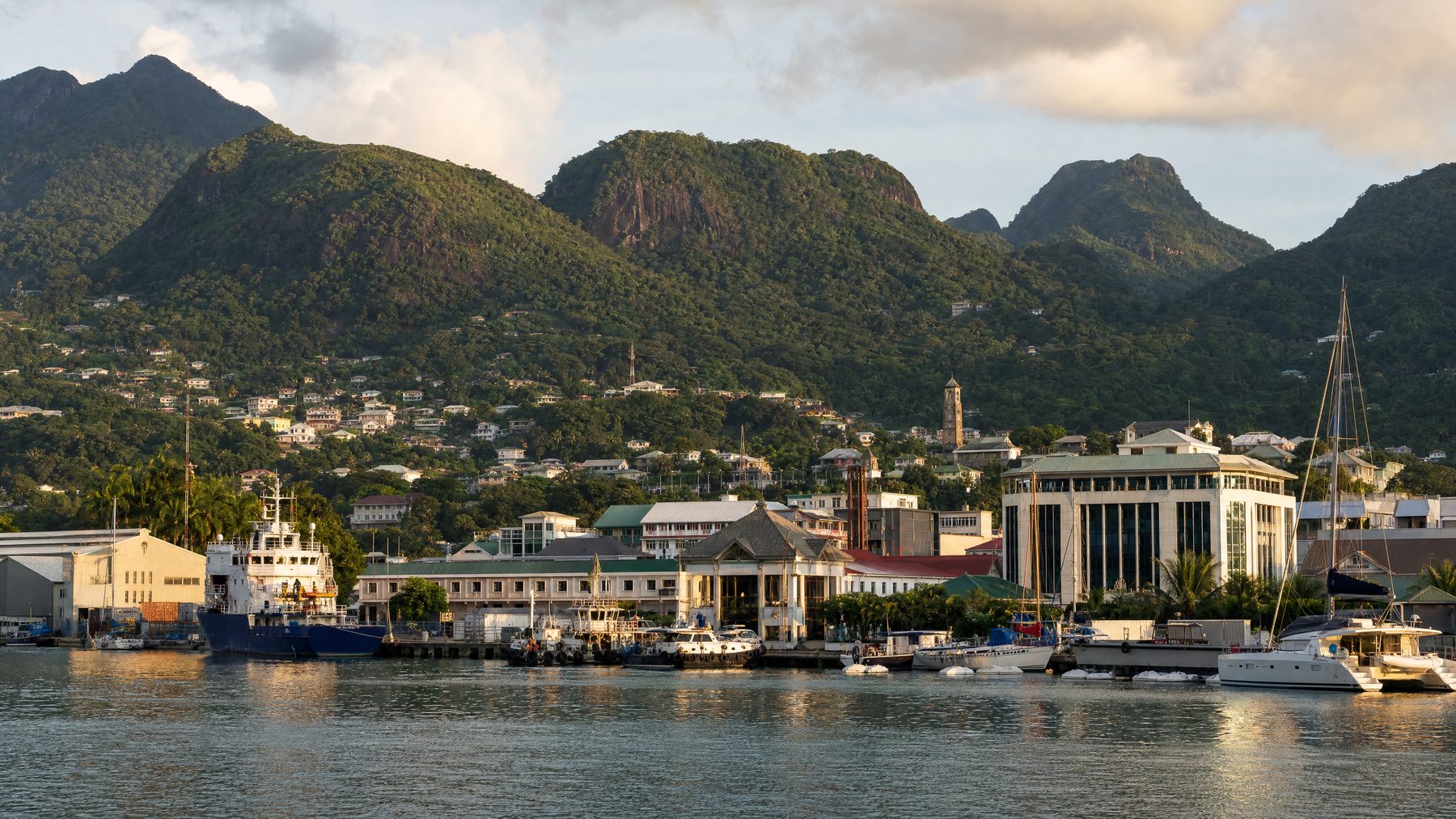
Seychelles is an archipelago of 115 islands in the Indian Ocean, located approximately 1,500 km east of mainland Africa, north of Madagascar, and south of the equator. It covers 459 km² of land area distributed across a 1.4 million km² maritime exclusive economic zone — making it one of the largest EEZs per capita in the world. The population is approximately 100,000. The capital, Victoria, on the main island of Mahé, is among the smallest national capitals in the world by population (~25,000) but functions as the country's commercial, governmental, and cultural centre.
Seychelles is the only country in Africa classified by the World Bank as a High Income Economy (since 2015), with GDP per capita of approximately USD 18,000–22,000 — driven primarily by tourism (more than 350,000 annual visitors against a 100,000 population), fisheries, and financial services. The country gained independence from the United Kingdom in 1976 and operates as a democratic republic within the Commonwealth.
The country recognises three official languages: Seychellois Creole (Kreol Seselwa, the everyday language), English (administration, business, education), and French (cultural and historical use). English is the universal language of business, government, banking, and most professional services — making Seychelles one of the more accessible Indian Ocean jurisdictions for English-speaking foreign investors and retirees.
The legal system is a mixed civil-common law system drawing from French Civil Code (substantive law) and English common law (procedural law and commercial practice). The Supreme Court of Seychelles is the principal jurisdiction. The currency is the Seychellois Rupee (SCR) — managed float, with approximately SCR 14 to USD 1 as a typical exchange rate.
On the tax side, Seychelles operates a territorial tax system — only Seychelles-source income is subject to local tax. Foreign-source income is generally exempt, subject to economic-substance conditions under the Economic Substance Act 2021 and related frameworks. Personal income tax on Seychelles-source income is progressive: 0% to SCR 102,666 (~USD 7,300), 15% on SCR 102,666 to SCR 1,000,000, 25% above SCR 1,000,000. There is no capital gains tax, no inheritance tax, no estate tax, no gift tax, and no annual wealth tax. Corporate tax is 15% on the first SCR 1,000,000 of taxable income and 25% above; banking, insurance, and telecommunications sectors face a top rate of 33%. VAT is 15% standard.
The flagship features for foreign investors are:
- ›Permanent Residence by Investment — USD 1,000,000 minimum investment in a qualifying Seychelles business, with 1+ year of residence (Investor Type 1) or 5+ year business association (Investor Type 2). Application fees: SCR 1,000 processing + SCR 350,000 approval if successful (~USD 25,000 total).
- ›Investor Visa / standard residence permits — for those investing below the PR threshold or seeking shorter-term residence.
- ›Citizenship by naturalisation after 11 years of legal residence (Citizenship Amendment Act 2013).
What to be aware of. The 2018+ tax reforms substantially tightened Seychelles' formerly blanket-exempt offshore framework. International Business Companies (IBCs) and other Seychelles entities are now subject to economic substance requirements under the Economic Substance Act 2021 — companies engaged in "relevant activities" (banking, insurance, fund management, finance & leasing, headquarters, shipping, holding company business, intellectual property, distribution and service centres) must demonstrate genuine substance in Seychelles. Foreign-source passive income remains exempt only when substance conditions are met. Seychelles remains on the EU's "grey list" (Annex II) as of late 2025 under monitoring; a comprehensive review with potential delisting decision is scheduled for February–March 2026. The Virtual Asset Service Providers Act 2024 introduced mandatory licensing for crypto-asset providers since 1 September 2024. Foreign property buyers face restrictions: a moratorium was lifted in early 2025, but purchases remain limited to designated areas subject to size and price thresholds.
II.
Putting Seychelles on the Map
Seychelles — Indian Ocean archipelago, north of Madagascar
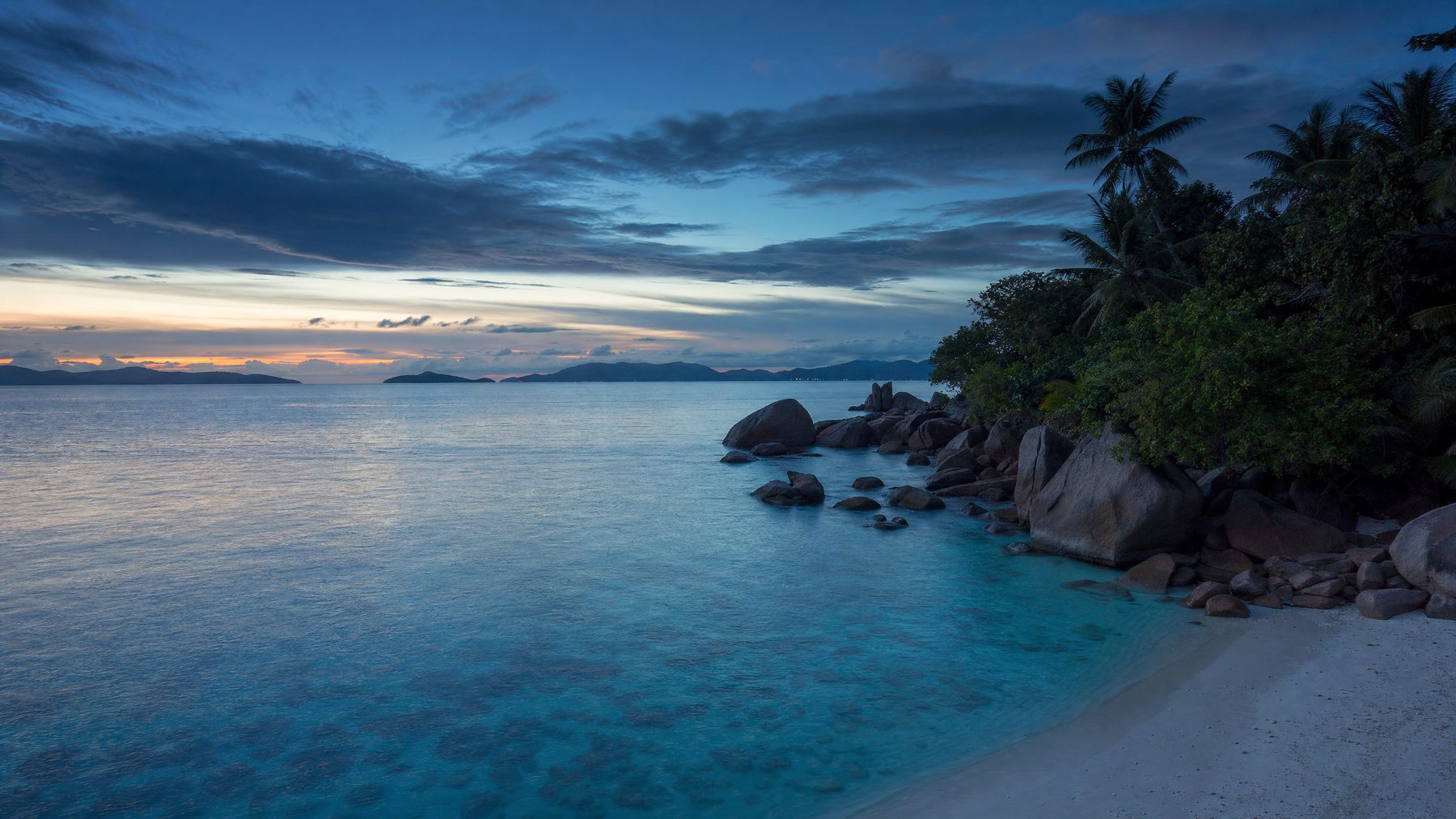
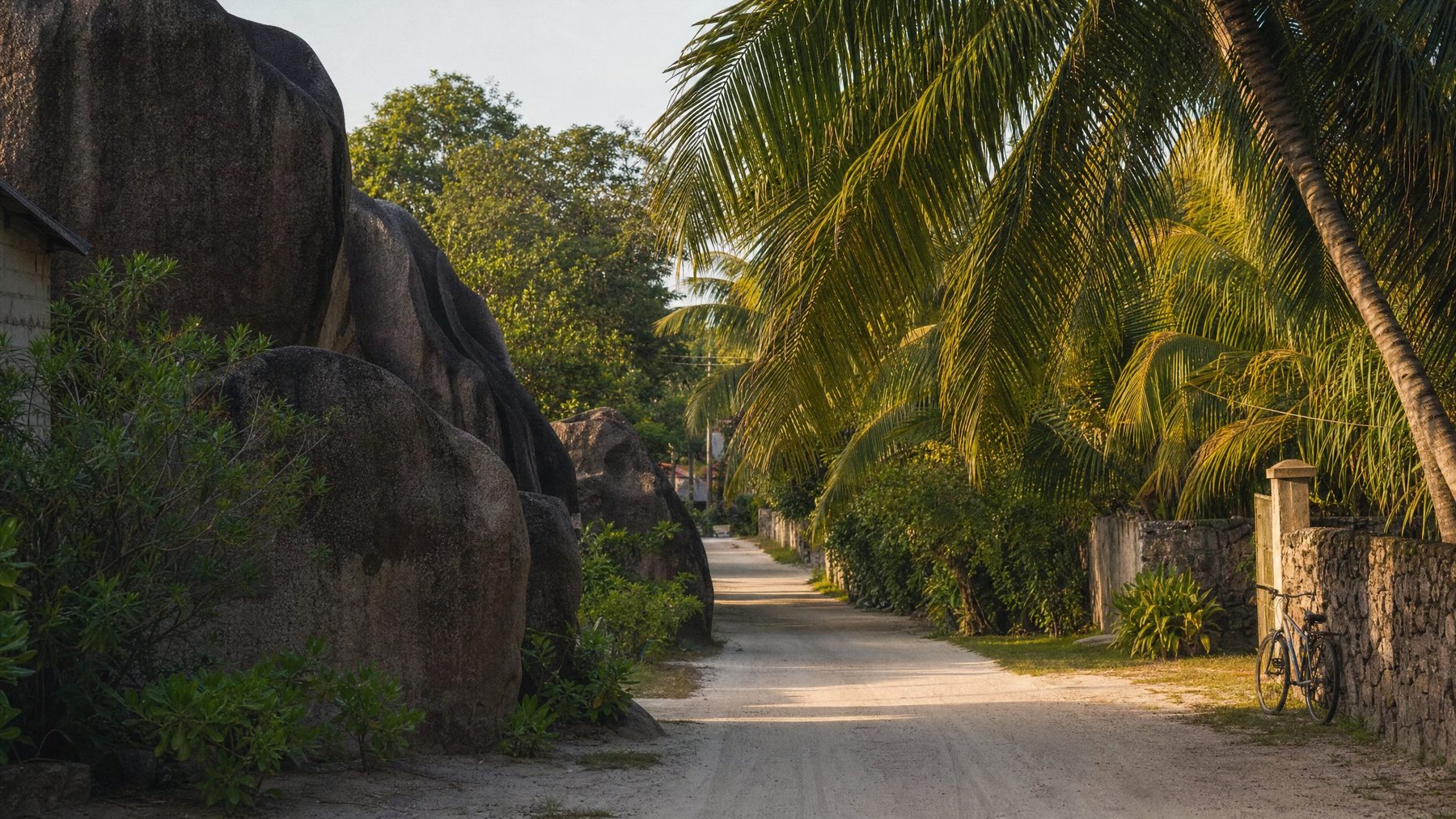
Seychelles arrives in the granite — the unique pink and grey granite boulders that line the famous beaches at Anse Source d'Argent on La Digue and Anse Lazio on Praslin, sculpted by millennia of wave action into shapes that have been photographed for tourism brochures since the 1950s. The country is geologically distinctive: most Indian Ocean islands are coral atolls or volcanic, but the principal Seychelles islands are granite outcrops of the African continental shelf — fragments of an ancient continent left behind when Madagascar drifted east 160 million years ago.
Mahé, the largest island (28 km long), contains Victoria, the international airport, the principal port, and approximately 90% of the population. The island is dominated by the Morne Seychellois (905 m) and the protected Morne Seychellois National Park, with steep granite mountains running the length of the island. Beaches include Beau Vallon (the principal tourist beach), Anse Major (accessible only by hiking trail), Petite Anse, and Anse Royale.
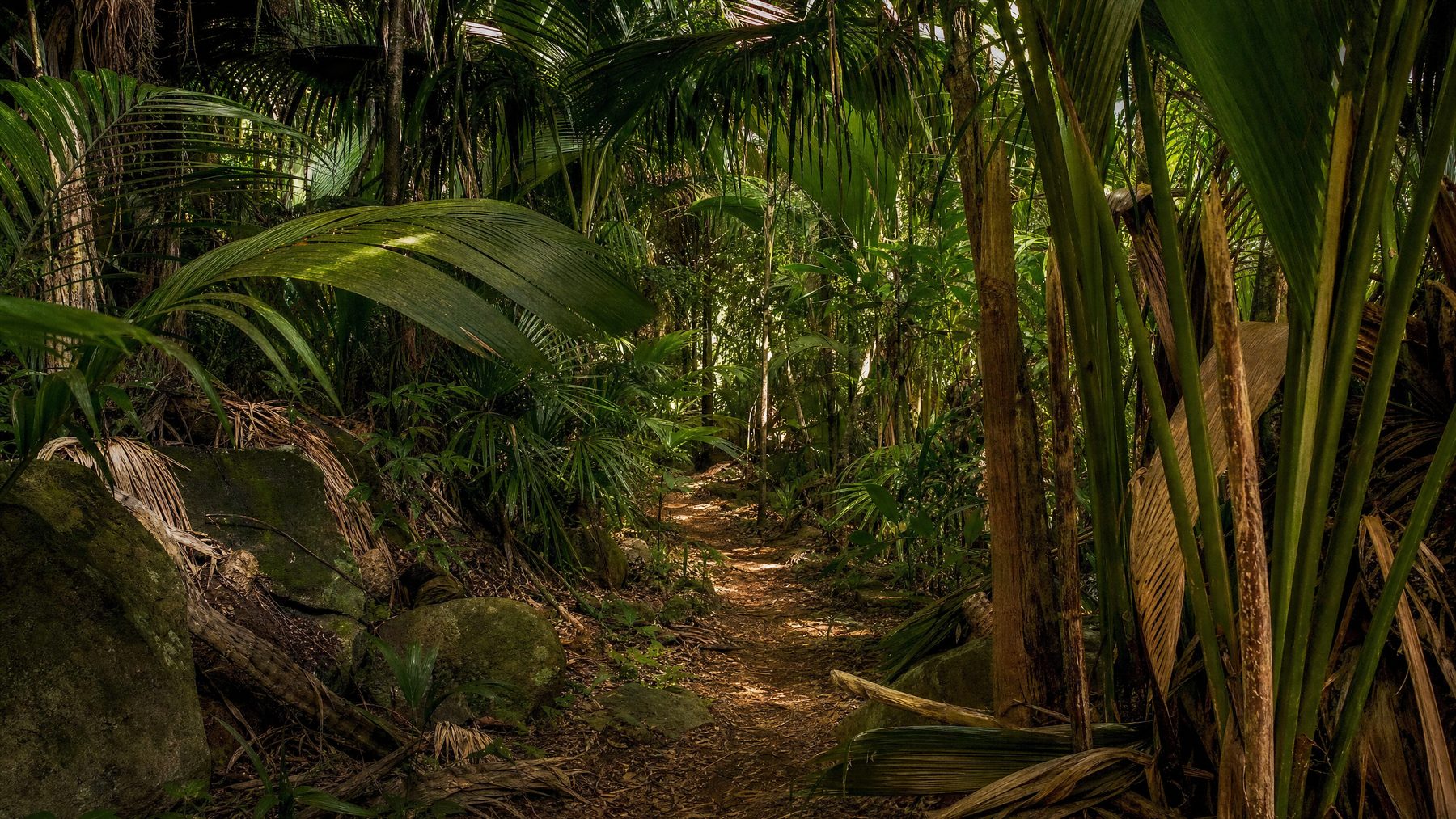
Praslin, the second-largest island (20 minutes from Mahé by inter-island flight, or 1 hour by ferry), is famous for the Vallée de Mai UNESCO World Heritage Site — a primeval palm forest containing the only natural population of the coco de mer, the giant double-coconut palm whose suggestively shaped seed (the largest seed of any plant in the world) has fascinated visitors since the 18th century. Praslin's Anse Lazio is regularly cited as one of the most beautiful beaches in the world.
La Digue, the third inhabited island, is small (10 km²) and has no airport — access is by 30-minute ferry from Praslin. The island is famously bicycle-only (with a few ox-carts and limited local vehicles); Anse Source d'Argent is the iconic granite-boulder beach. La Digue contains some of the most unspoiled tropical scenery in the Indian Ocean.
- ›The outer islands include Aride (a major bird sanctuary), Cousin (research-focused conservation island), Frégate (private resort island), Desroches (in the Amirantes group), and the Aldabra Atoll (a UNESCO site and the world's second-largest atoll, home to about 100,000 giant tortoises). The outer islands are mostly uninhabited or accessible only to scientific researchers and luxury resort guests.
- ›Critical geographic feature: Seychelles sits outside the Indian Ocean cyclone belt. Cyclones that affect Mauritius, Réunion, and Madagascar generally pass south of Seychelles, leaving the country largely free from the seasonal cyclone risk that dominates Caribbean and other Indian Ocean alternatives. This is a meaningful safety and insurance advantage.
- ›Connectivity is reasonable for a remote Indian Ocean archipelago. Seychelles International Airport (SEZ) on Mahé handles direct flights to Dubai (4 hours, Emirates), Doha (5 hours, Qatar Airways), Addis Ababa (4 hours, Ethiopian), Mumbai (4.5 hours, Air India), Johannesburg (6 hours, Air Seychelles), Frankfurt (10 hours, Condor seasonal), Paris (10 hours, Air France seasonal), Istanbul (8 hours, Turkish Airlines), Tel Aviv, and several European destinations seasonally. Direct connections to Asia and the Middle East are particularly strong, making Seychelles accessible from these regions without complicated routing. Connections to London or New York typically require a stop in Dubai, Doha, or Addis Ababa — total travel time 14–18 hours.
For HNW clients with Middle Eastern, African, or Asian commercial interests, Seychelles is genuinely well-positioned. For European clients, access is reasonable via Dubai or Doha. For Caribbean-experienced clients, the absence of cyclone risk and the granite-island geography is genuinely distinctive.
III.
What Others Say About Seychelles
"Anse Source d'Argent on La Digue is the most photographed beach in the world for a reason. The granite boulders look as if a giant has carefully arranged them, and the sand is the colour of old ivory. There are very few places left in the world where the marketing photographs are accurate."
— Travel writer, La Digue, 2023
"What I love about Seychelles after twelve years is that the territorial tax system actually works as advertised — provided you stay clean on substance. My foreign-source income is genuinely outside the Seychelles tax base, and the 28-DTA network is broader than most Africans realise."
— South African investor, Eden Island, 2024
"The granite of Seychelles is older than Africa. You can stand on a beach on Praslin and pick up a stone that is older than the continent itself. This is not the Caribbean — these are continental islands, geologically and culturally older than people realise."
— Geologist, Praslin, 2025
IV.
Tax Benefits: What Seychelles Has to Offer
Seychelles is one of the world's better-administered territorial-tax jurisdictions — combining genuine source-based taxation with a 28-DTA network, no capital gains/inheritance/wealth tax, English-speaking institutions, and an Indian Ocean location outside the cyclone belt. The 2018+ economic-substance reforms have raised compliance bars but legitimised the framework for serious HNW use.
- ›Territorial tax system — Seychelles-source income only — Seychelles operates a source-based tax system. Income arising in Seychelles is taxed; foreign-source income is generally exempt, subject to economic-substance conditions under the Economic Substance Act 2021. Foreign-source passive income (dividends, interest, royalties) by Seychelles-resident companies is exempt where substance conditions are met.
- ›0% capital gains tax — no general CGT on disposals of shares, businesses, real estate, or other assets. A major advantage over many neighbouring jurisdictions (Mauritius applies 15% CGT in some categories; Kenya, Uganda, and Tanzania all tax capital gains).
- ›0% inheritance, estate, gift, and wealth tax — wealth transfers between generations are entirely outside the Seychelles tax net.
- ›Personal income tax — 0% to SCR 102,666; 15% to SCR 1M; 25% above — Seychelles-source employment and business income only. Foreign-source income (received by Seychelles-resident individuals) is generally outside this framework provided proper structural setup.
- ›Corporate tax — 15% on first SCR 1M, 25% above — competitive within Africa and the Indian Ocean. SMEs with turnover below SCR 1M qualify for the simplified Presumptive Tax regime.
- ›Permanent Residence by Investment — USD 1,000,000 — under the Department of Immigration and Civil Status framework. Investor Type 1: USD 1M+ in a Seychelles business + 1 year of Seychelles residence. Investor Type 2: USD 1M+ in a Seychelles business + 5+ year business association (does not require 1-year prior residence). Application fees: SCR 1,000 processing + SCR 350,000 approval (~USD 25,000 total).
- ›Citizenship by naturalisation after 11 years — under the Citizenship Amendment Act 2013. 80%+ score in one of three national languages (Creole, English, or French) required at the Citizenship Qualifying Examination. Path to the most powerful African passport — visa-free access to 151 countries including the EU Schengen Area, the UK, Russia, China, Singapore, and Hong Kong.
- ›International Business Company (IBC) — 0% on foreign-source income — under the International Business Companies Act 2016. Subject to Economic Substance Act 2021 requirements for "relevant activities". For non-relevant-activity IBCs (clean trading or investment holding without specific regulated activities), substance test does not apply.
- ›28+ double tax treaties — including UAE, China, Singapore, Cyprus, Bahrain, Mauritius, Malaysia, South Africa, Indonesia, Vietnam, Thailand, Belgium, Luxembourg, and others. Significantly broader than Vanuatu (zero) or Caribbean CBI alternatives (typically 1-2 treaties).
- ›Outside the cyclone belt — meaningful safety and insurance advantage. Property insurance costs significantly lower than in Mauritius, Madagascar, Réunion, or Caribbean alternatives.
- ›OECD CRS-compliant since 2017 — fully integrated into international transparency frameworks. EU "grey list" (Annex II) under monitoring; potential delisting decision Feb–March 2026. FATCA-cooperative.
V.
Tax Rates at a Glance
The most important tax rates in Seychelles are as follows. Note that these have been simplified and should be used as general guidance only.
| Tax | Rate | Notes |
|---|---|---|
| Personal Income Tax — first SCR 102,666 | 0% | Tax-free threshold (~USD 7,300) |
| Personal Income Tax — SCR 102,666–1,000,000 | 15% | Middle bracket |
| Personal Income Tax — above SCR 1,000,000 | 25% | Top rate |
| Tax basis | Territorial | Seychelles-source income only |
| Foreign-Source Income | 0% | Subject to economic substance conditions |
| Capital Gains Tax | 0% | None |
| Inheritance Tax | 0% | None |
| Estate Tax | 0% | None |
| Gift Tax | 0% | None |
| Wealth Tax | 0% | None |
| Corporate Income Tax — first SCR 1,000,000 | 15% | Standard rate |
| Corporate Income Tax — above SCR 1,000,000 | 25% | Standard rate |
| Corporate Income Tax — banking/insurance/telecom | 33% | Higher-tier sectors |
| Forex license corporate tax | 1.5% | Specific licensed activity |
| Presumptive Tax (SMEs <SCR 1M turnover) | Simplified | Small business regime |
| IBC (foreign-source only) | 0% | Subject to Economic Substance Act 2021 |
| Withholding Tax — dividends to non-residents | 15% | Reduced by DTA |
| Withholding Tax — interest to non-residents | 15% | Reduced by DTA |
| Withholding Tax — royalties to non-residents | 15% | Reduced by DTA |
| VAT — standard | 15% | Most goods and services |
| VAT — zero-rated | 0% | Exports, basic foods, education, healthcare |
| Stamp Duty — property purchase | 5% | Of transaction amount (residents) |
| Property Tax | None | No general annual property tax |
| Permanent Residence by Investment | USD 1,000,000 | + SCR 350,000 approval fee |
| Investor Type 1 — residence requirement | 1 year | Prior to PR application |
| Investor Type 2 — business association | 5 years | Alternative qualification |
| Citizenship by naturalisation | 11 years | + 80% language exam |
| Tax residency threshold | 183+ days | Or domicile |
| DTAs | 28+ | UAE, China, Singapore, Cyprus, Mauritius, etc. |
| TIEAs | 11+ | Including Denmark, Finland, Germany, Netherlands, Sweden |
| CRS exchange | Since 2017 | Annual automatic exchange |
| EU AML status | Grey list (Annex II) | Under monitoring; review Feb-March 2026 |
Cryptocurrency and Crypto Assets
Seychelles has been one of the world's most prominent crypto-friendly jurisdictions — historically hosting a significant share of global centralised cryptocurrency exchanges (CoinGecko's 2023 study found ~20% of the top 30 exchanges were Seychelles-incorporated, including OKX, KuCoin, MEXC, Bybit, HTX, and BitMEX). The Virtual Asset Service Providers Act 2024, in force since 1 September 2024, introduced mandatory licensing for crypto-asset service providers — a significant regulatory tightening. Personal crypto disposals fall under general tax rules; with no general CGT, long-term holdings are typically tax-free. Foreign-source crypto income remains within the territorial-tax exemption subject to economic-substance conditions. For HNW crypto investors with substantial unrealised gains, the combination of zero CGT, the territorial framework, and the 28-DTA network makes Seychelles genuinely competitive — but post-2024 substance and licensing requirements raise the bar for active crypto-business clients.
VI.
Tax Residency: What Triggers It
Under Seychelles tax law, an individual is considered a tax resident if they meet the following:
- ›183-day rule: Physical presence in Seychelles for 183 or more days in a tax year. The principal trigger.
- ›Permanent home / habitual abode: Maintaining a permanent home in Seychelles or having Seychelles as the centre of personal and economic interests.
Tax residents are subject to Seychelles taxation on Seychelles-source income only under the territorial tax system. Foreign-source income received by a Seychelles tax resident is generally exempt, subject to economic-substance conditions and proper structural setup. Non-residents are taxed only on Seychelles-source income, generally subject to withholding tax mechanisms.
The Seychelles Revenue Commission (SRC) is the competent tax authority. Tax Identification Numbers are issued upon registration; annual tax returns are required for all residents and for non-residents with Seychelles-source income.
- ›Documentation matters. Establishing and maintaining Seychelles tax residency requires evidence: the relevant residence permit (Permanent Residence by Investment, Investor Visa, or other category), a registered lease agreement or property title, passport stamps demonstrating physical presence, utility bills, banking, and SRC tax registration.
- ›The territorial-tax framework requires careful structuring. Foreign-source income from genuine offshore activity (foreign investments, foreign businesses, foreign rental properties) is exempt. However, if a Seychelles resident operates an active business that generates "Seychelles-source" income (employment in Seychelles, business operating from Seychelles, services provided in Seychelles), that income is fully taxable at progressive rates. The structural distinction between Seychelles-source and foreign-source income is the central planning issue.
For HNW clients pursuing the territorial-tax framework, the practical structure is typically: maintain primary residence in Seychelles + 183+ days of presence + foreign investment portfolios and businesses held offshore + minimal local-source income generation. This approach combined with proper economic-substance structuring delivers the territorial-tax benefit cleanly.
VII.
Double Tax Treaties
Seychelles has concluded 28+ double tax agreements (DTAs) that are currently in force — one of the broader treaty networks among Indian Ocean and African jurisdictions.
Active DTA partners include:
- ›Bahrain
- ›Barbados
- ›Belgium
- ›Bermuda
- ›Botswana
- ›China
- ›Cyprus
- ›Ethiopia
- ›Guernsey
- ›Indonesia
- ›Isle of Man
- ›Jersey
- ›Kenya
- ›Luxembourg
- ›Malaysia
- ›Mauritius
- ›Monaco
- ›Oman
- ›Qatar
- ›San Marino
- ›Singapore
- ›South Africa
- ›Sri Lanka
- ›Eswatini (Swaziland)
- ›Thailand
- ›United Arab Emirates
- ›Vietnam
- ›Zambia
Tax Information Exchange Agreements (TIEAs) have been signed with: Denmark, Faroe Islands, Finland, Greenland, Guernsey, Iceland, India, Netherlands, Norway, Sweden, Switzerland.
The UAE-Seychelles DTA is particularly useful — the two jurisdictions have aligned reduced withholding rates and standard tie-breaker rules, making Seychelles-UAE planning structurally efficient for HNW clients with Gulf interests.
The China-Seychelles DTA supports Sino-African investment structures, often used for inbound Chinese investment into Africa via Seychelles holding entities (with appropriate substance).
The Singapore-Seychelles DTA complements Singapore's broader treaty network for Asia-Africa cross-border structures.
There is no DTA between Seychelles and the United States, the United Kingdom, Germany, France, Canada, or Australia. This is a meaningful structural limitation for HNW clients from these jurisdictions — meaning home-country source income flowing to a Seychelles resident faces full source-country withholding without treaty relief. However, since Seychelles operates a territorial tax system with foreign-source exemption, the absence of a DTA in these cases means the income is simply taxed at home-country source rates without double-taxation relief — there is no Seychelles-side tax stacking on top.
Seychelles is signatory to the OECD Multilateral Instrument (MLI) (signed 7 June 2017) and has implemented BEPS minimum standards. The Country-by-Country Multilateral Competent Authority Agreement (CbC MCAA) was signed 9 July 2019. The country participates fully in OECD CRS.
The existence of a DTA does not automatically resolve all tax conflicts. The treaty must be invoked correctly, residency must be properly established, and the specific provisions of each treaty must be reviewed for the income type and circumstances.
VIII.
Avoid Remaining Tax Resident at Home
Relocating to Seychelles does not automatically end your tax obligations elsewhere.
The most common triggers that can keep you tax-resident at home:
- ›Available dwelling: Any long-term residence that remains available for your use.
- ›Centre of vital interests: Family, business, social, and financial connections in your home country.
- ›183-day rule (home country): Spending more than 183 days at home triggers residency there.
- ›Extended unlimited tax liability (Germany — §2 AStG): Germany's erweiterte unbeschränkte Steuerpflicht under §2 AStG keeps German nationals taxable in Germany for up to ten years after departure if they move to a low-tax country. Seychelles' territorial tax system on foreign-source income (with 0% effective on foreign income for most HNW residents) IS classified as low-tax under §2 AStG, so the 10-year extended-liability framework applies for German nationals. This must be planned for in advance.
A genuine relocation to Seychelles requires that you actually live there — that your home is there, your daily life is there, and that you can demonstrate this with documentation.
The test is not where you are registered. The test is where you live. Proper advice before you move — not after — is essential.
IX.
Tax Considerations When Leaving Your Home Country
Before you relocate, you need to understand what tax consequences arise in your current country of residence at the point of departure.
Among the countries that levy a meaningful exit tax or deemed-disposal charge:
- ›Germany. Applies an exit tax on unrealised gains in shareholdings of 1% or more under §6 AStG. Seychelles is treated as a low-tax country under §2 AStG, so Germany's "extended unlimited tax liability" applies for up to 10 years after departure. There is no Germany-Seychelles DTA, so no treaty relief.
- ›United States. The "expatriation tax" under IRC §877A treats long-term residents and citizens as having sold all worldwide assets at fair market value on the day they relinquish citizenship or residency. There is no US-Seychelles DTA.
- ›United Kingdom. Statutory Residence Test (SRT) exit-date analysis required. No UK-Seychelles DTA, so no treaty relief.
- ›France. Exit tax applies to unrealised gains on securities and company rights above €800,000.
- ›Australia. Departing residents are treated as having disposed of most assets at market value on the date they cease to be Australian tax residents. CGT Event I1 applies.
- ›Canada. The "departure tax" deems most property to have been disposed of at fair market value on the date of emigration.
- ›South Africa. Exit tax applies to most worldwide capital assets. The South Africa-Seychelles DTA provides residence tie-breaker rules. Seychelles is a particularly relevant destination for South African HNW emigrants given the geographic proximity, treaty position, and territorial-tax framework.
Beyond exit tax, you may remain subject to limited tax liability in your home country after the move.
⚠ Obtain Local Tax Advice in Your Home Country. The information above provides a general overview of the departure tax rules that commonly apply when leaving high-tax jurisdictions. It is not legal or tax advice. The rules in your specific home country are complex, change frequently, and depend entirely on your personal circumstances. Before you take any steps to relocate, obtain written advice from a qualified tax adviser who is licensed in your home country and experienced in international relocations. A consultation with us is a good starting point — but it does not substitute for country-specific legal advice from a practitioner in your jurisdiction of departure. The cost of getting this wrong is almost always greater than the cost of getting proper advice upfront.
X.
Company Setup & Corporate Tax
Seychelles offers two principal corporate frameworks: standard domestic companies under the Companies Act 1972 (and 2024 amendments), and International Business Companies (IBCs) under the International Business Companies Act 2016.
The most common structures:
- ›Domestic Company (Companies Act): Standard onshore vehicle. Corporate tax 15% on first SCR 1M, 25% above. Used for businesses operating in Seychelles. Subject to standard reporting and annual filing requirements.
- ›International Business Company (IBC) under International Business Companies Act 2016: 0% corporate tax on foreign-source income (territorial). $150 government license fee. 24-hour incorporation. Single director/shareholder permitted. Corporate directors and shareholders allowed. Cannot trade locally, cannot own Seychelles real estate directly, cannot engage in banking/insurance/financial services without separate licence. Subject to Economic Substance Act 2021 for "relevant activities".
- ›Special License Company (CSL): Hybrid status combining IBC tax benefits with full DTA treaty access (within the 28-DTA network). Suitable for international holding structures, IP holding, and group treasury. Subject to substantive economic substance requirements.
- ›Limited Partnership (LP): Under the Limited Partnerships Act. Used for international fund structures, joint ventures, and specific holding arrangements.
- ›Trust: Under the Seychelles International Trusts Act. Used for wealth structuring, asset protection, and estate planning.
- ›Foundation: Seychelles Foundations Act 2009 framework. Used for international wealth structuring and philanthropic purposes.
- ›Mutual Fund / Investment Company: Under the Mutual Fund and Hedge Fund Act. Subject to FSA licensing and oversight.
- ›Securities Dealer / Forex License: Specific FSA licence; preferential 1.5% corporate tax rate.
The Economic Substance Act 2021 (ESA) is the central post-formation compliance obligation. IBCs and CSLs engaged in "relevant activities" — banking, insurance, fund management, finance & leasing, headquarters, shipping, holding company business, intellectual property, distribution and service centres — must demonstrate substance in Seychelles: staff, premises, expenditure, decision-making. Non-compliance triggers fines, automatic information exchange with foreign tax authorities, and potential strike-off. For pure trading IBCs, consultancy vehicles, or clean investment-holding entities, the substance test does not apply, but an annual non-applicability declaration is still required.
The Virtual Asset Service Providers (VASP) Act 2024, in force since 1 September 2024, requires mandatory licensing for any company providing crypto-related services from Seychelles. This is a major regulatory tightening for the formerly-permissive Seychelles crypto ecosystem.
Permanent establishment risk is the central warning. A Seychelles company that is effectively managed from another country may be treated as resident there for tax purposes. Genuine substance — directors, decision-making, accounting — must be present in Seychelles to obtain the intended tax treatment.
XI.
Who Should (and Shouldn't) Move to Seychelles
Section 11 is where the relocation decision becomes practical.
Good Fit
- › HNW investors seeking a clean territorial-tax framework with no capital gains, inheritance, or wealth tax — Seychelles delivers what it advertises when properly structured.
- › Clients with USD 1M+ to invest in a qualifying Seychelles business and the willingness to maintain genuine economic substance.
- › Indian Ocean / African / Middle Eastern HNW clients with regional commercial interests — Seychelles' location and DTA network (UAE, China, Singapore, Cyprus, South Africa) is genuinely useful.
- › South African, UAE, and Asian HNW emigrants seeking a stable, English-speaking, common-law-influenced jurisdiction with territorial tax treatment.
- › Crypto and digital-asset investors comfortable with the post-2024 VASP licensing framework.
- › Holding-company structuring for international groups — particularly those with India, China, UAE, Africa, or Southeast Asia exposure.
- › HNW retirees seeking Indian Ocean lifestyle outside the cyclone belt.
Poor Fit
- × Those who cannot meet the USD 1,000,000 PR investment threshold.
- × Clients seeking pure 0% on local income — Seychelles taxes Seychelles-source income at progressive rates up to 25% (33% for some sectors).
- × Clients without genuine economic-substance commitment — the post-2021 framework requires real activity, not nominee-only structures.
- × German nationals without proper §2 AStG planning — Seychelles is low-tax under §2 AStG; 10-year extended German liability applies.
- × US citizens expecting Seychelles status to eliminate US tax filing — US worldwide taxation continues; no US-Seychelles DTA.
- × Clients seeking metropolitan amenities — Mahé and Praslin are small islands with limited cultural and commercial scale.
- × Anyone seeking absolute privacy — Seychelles is fully CRS-compliant, FATCA-cooperative, beneficial-ownership-transparent.
- × Clients with primarily European business who need European-Seychelles DTAs — the treaty network is strong for Asia/UAE/Africa but limited for major Western European partners (no UK, German, French, Italian, Spanish, Dutch DTAs).
XII.
Visas and Residence Permits
Seychelles offers several pathways for foreign nationals.
- ›Visa-free entry: Citizens of EU/EEA, UK, US, Canada, Australia, and most Commonwealth countries can enter Seychelles visa-free for stays up to 3 months (extendable to 12 months). Sufficient for short-term visits but does not establish residence.
- ›Permanent Residence by Investment — flagship route: Under the Department of Immigration and Civil Status. USD 1,000,000 minimum investment in a qualifying Seychelles business. Two qualifying types:
- ›Investor Type 1: USD 1M+ investment + 1+ year of Seychelles residence prior to PR application.
- ›Investor Type 2: USD 1M+ investment + 5+ years of business association via direct investment (alternative to prior residence).
- ›Application fees: SCR 1,000 processing + SCR 350,000 approval if successful (~USD 25,000 total).
- ›Investor Visa (residence permit, lower threshold): Available to foreign investors below the PR threshold. Annual renewal; tied to specific business activity.
- ›Employment Permit (Gainful Occupation Permit, GOP): For foreigners employed by Seychelles employers. Tied to specific employer.
- ›Self-Employment Permit: For entrepreneurs establishing genuine businesses in Seychelles.
- ›Dependant Permit: For spouses and children of Seychelles residents.
- ›Retirement Permit: For older foreigners with sufficient passive income to support themselves.
- ›Student Permit: For students enrolled at Seychelles educational institutions.
Family inclusion under PR: spouse and children may be included via Dependant Permits.
The clean planning order is: (1) define the goal — PR-based long-term residence, investor pathway, retirement, or shorter-term presence; (2) coordinate qualifying business investment for PR pathway; (3) handle the application through the Department of Immigration and Civil Status; (4) plan for the 11-year naturalisation timeline if pursuing citizenship.
Visa and permit rules can change. Always verify current requirements with the Seychelles Department of Immigration and Civil Status or the Seychelles consulate in your country of residence.
XIII.
Path to Citizenship
Seychelles offers two paths to citizenship: standard naturalisation through long-term legal residence, and citizenship by descent (for those with Seychellois parentage). There is no direct Citizenship by Investment programme.
The standard naturalisation requirements under the Citizenship Amendment Act 2013:
- ›11 years of legal residence in Seychelles (cumulative)
- ›Not absent from Seychelles for a continuous period of 1 year or more without ministerial consent
- ›Not sentenced to imprisonment of 1 year or more under Seychelles laws
- ›80% minimum score in one of the three national languages (Creole, English, or French) at the Citizenship Qualifying Examination
- ›Not a prohibited immigrant
- ›Approval at the discretion of the Minister responsible for Immigration
Time on Permanent Residence by Investment, Investor Visa, Employment Permit, and other long-term residence frameworks all count toward the 11-year threshold.
Dual citizenship is permitted. Seychelles citizens can hold one or more other nationalities. No requirement to renounce existing citizenship.
For most HNW PR holders, the practical path is: (a) qualify for PR through USD 1M+ business investment; (b) maintain genuine residence for 11 cumulative years; (c) pass the language exam; (d) apply for naturalisation; (e) acquire Seychelles citizenship in addition to home-country citizenship.
The Seychelles passport is the most powerful African passport — visa-free or visa-on-arrival access to 151 countries including the EU Schengen Area, the United Kingdom, Russia, China, Singapore, Hong Kong, Japan, and most of Latin America and the Caribbean. Visa-free access to Schengen, the UK, China, and Russia simultaneously is a rare combination that few passports offer.
The 11-year timeline is longer than Caribbean CBI alternatives (4-6 months for Saint Kitts, Antigua, Grenada). For HNW clients prioritising fastest-citizenship, Caribbean is the better choice. For clients prioritising the strongest African/Indian Ocean passport with a credible naturalisation framework, Seychelles is the destination.
XIV.
Banking in Seychelles
Seychelles' banking sector is functional but compliance-heavy — the country has an established offshore financial services framework, but the post-2018 transparency reforms and 2021 Economic Substance framework have substantially raised the bar for account opening and ongoing compliance.
Major banks operating in Seychelles:
- ›MCB Seychelles: Mauritius Commercial Bank presence; full retail and HNW services
- ›Mauritius Commercial Bank (MCB) Seychelles, Bank of Ceylon (Seychelles), Habib Bank
- ›ABSA Bank Seychelles: South African ABSA presence
- ›Nouvobanq (Seychelles Savings Bank): Local commercial bank
- ›Al Salam Bank Seychelles: Islamic banking framework
- ›Bank of Baroda (Seychelles) Limited: Indian Bank of Baroda presence
Account opening for non-residents and Seychelles IBCs is the most friction-prone part of any Seychelles structure. Documentation requirements include valid passport, proof of address, KYC/AML questionnaire, detailed source-of-funds and source-of-wealth documentation, bank reference letter, business plan (for IBC accounts), and frequently in-person meeting in Victoria. Expect 6–12 weeks for retail accounts; 12–20 weeks for IBC and HNW accounts.
The banking sector has been subject to very heavy enhanced compliance scrutiny since 2018. Several offshore banks have closed or scaled back. Correspondent banking pressure has affected wire transfer processing times and costs. Multi-currency accounts (USD, EUR, GBP, ZAR, AED, SCR) are standard.
The country participates in OECD CRS automatic exchange since 2017. FATCA-cooperative under Model 1 IGA framework.
For Seychelles residents and IBC owners, the typical banking architecture is:
- ›Local Seychelles account — for the residence administration, local property, and IBC operations.
- ›Primary international booking centre — Mauritius (close geographic and DTA partner), the UAE (DTA partner), Singapore, Switzerland, the UK, or the US — for the bulk of investment portfolios.
Important: not all banks are compatible with all residencies. Source of wealth documentation must be impeccable. Multiple international private banks have specific protocols for Seychelles-resident clients.
Important: not all banks are compatible with all residencies. Some Swiss and Singaporean private banks have restrictions on clients resident in certain jurisdictions, and compliance requirements vary. Residency status, income profile, source of wealth, and business type all affect which institutions will accept you and on what terms. We help clients navigate this before they commit to any banking structure.
XV.
What Makes Seychelles Genuinely Attractive
Seychelles is attractive when judged as a complete relocation platform for clients who fit the profile.
- ›Genuine territorial tax system that works as advertised. Seychelles-source taxed; foreign-source exempt subject to substance. The post-2021 reforms tightened compliance but legitimised the framework — for HNW clients with proper substance setup, the territorial-tax outcome is real.
- ›Strongest African passport (after 11 years naturalisation). 151 visa-free countries including Schengen, UK, China, Russia simultaneously. Few passports globally offer this combination.
- ›28-DTA treaty network. Substantially broader than Caribbean CBI alternatives or Vanuatu (zero). Treaties with UAE, China, Singapore, Cyprus, Mauritius, South Africa, and key Asia-Africa-Middle East partners.
- ›Outside the cyclone belt. Real safety and insurance advantage. Property insurance is meaningfully cheaper than Mauritius, Caribbean, or other Indian Ocean alternatives.
- ›English-speaking, common-law-influenced institutions. Significantly easier for English-speaking foreign investors than Madagascar, Comoros, or French-tradition African alternatives.
- ›The lifestyle case is real. Granite-island geography, world-class diving, Vallée de Mai UNESCO Site, 115 islands of which most are uninhabited or near-pristine. Significantly more visually distinctive than most Caribbean alternatives.
- ›Strong direct connectivity to UAE, Africa, and Asia. Dubai, Doha, Mumbai, Addis Ababa, Johannesburg all under 6 hours direct.
- ›It rewards a specific profile. It suits HNW clients with USD 1M+ to commit, those with Indian Ocean / African / Middle Eastern / Asian commercial interests, and those willing to maintain genuine economic substance. It suits less well clients seeking pure-passport CBI without residence, those prioritising European travel, or those without USD 1M+ investment capacity.
- ›The honest framing matters. The 11-year naturalisation timeline is real. The economic-substance requirements are real. The EU grey-list status is real (delisting decision pending Feb-March 2026). The cost of living is import-heavy. Seychelles rewards clients who fit and is structurally suboptimal for those who do not.
XVI.
Cost of Living in Seychelles
Seychelles is moderately expensive by international standards — significantly cheaper than the UAE or Switzerland, comparable to or somewhat cheaper than Singapore, materially more expensive than Mauritius or most African alternatives.
Typical monthly costs for an internationally mobile professional or family in Seychelles (2026 planning ranges):
| Category | SCR/month | GBP/month | USD/month |
|---|---|---|---|
| 1-bed apartment, Mahé central | SCR 14,000–28,000 | £760–1,520 | $1,000–2,000 |
| 2-bed villa / townhouse, prime areas | SCR 28,000–56,000 | £1,520–3,030 | $2,000–4,000 |
| Premium villa, Eden Island / Beau Vallon | SCR 56,000–140,000 | £3,030–7,580 | $4,000–10,000 |
| International school (annual per child) | SCR 200,000–500,000 | £10,820–27,050 | $14,290–35,710 |
| Private health insurance (annual individual) | SCR 50,000–140,000 | £2,710–7,580 | $3,570–10,000 |
| Restaurant meal, mid-range (per person) | SCR 350–950 | £19–52 | $25–68 |
| Monthly groceries, single person | SCR 8,500–17,500 | £460–950 | $610–1,250 |
| Utilities and internet, apartment | SCR 3,500–7,000 | £190–380 | $250–500 |
- ›Comfortable single professional (no children): SCR 42,000–80,000/month (£2,270–4,330 / $3,000–5,710)
- ›Family of four with private schooling: SCR 95,000–210,000/month (£5,140–11,360 / $6,790–15,000)
These figures are planning ranges. Mahé central, Eden Island, and Beau Vallon are most expensive; outer-island and Praslin / La Digue living can be materially cheaper but with reduced infrastructure.
- ›Travel costs are a real factor. Direct flights to Dubai run USD 600–2,500; to Mumbai USD 500–2,000; to Frankfurt or Paris USD 800–3,500 (seasonal direct, otherwise via Dubai); to London via Dubai USD 1,000–3,500; to New York via Dubai USD 1,500–5,000+.
- ›Healthcare: Public healthcare available; private clinics in Victoria provide reasonable specialist services. For complex specialist care, residents typically travel to Mauritius, Dubai, Singapore, or South Africa. Comprehensive international health insurance is essential — Bupa Global, Cigna Global, Allianz Care, with premiums USD 3,500–10,000+ per individual annually.
XVII.
Buying Real Estate in Seychelles
Buying real estate in Seychelles is subject to specific restrictions for foreign buyers, with a moratorium on most foreign property purchases that was lifted in early 2025 under specific framework conditions.
For internationally mobile buyers, the main points are:
- ›Pre-2025 moratorium and post-2025 framework: From 2014 to early 2025, foreign property purchases were largely restricted. Following the 2025 reform, foreign purchases are permitted only in designated areas subject to size and price thresholds. Eden Island (a major dedicated foreign-investor development), specific tourism-development zones, and certain other approved locations are the principal foreign-buyer markets.
- ›Sanction regime: Foreign buyers must obtain government sanction for property purchases. Application processed by the Department of Lands. Approval is at ministerial discretion; thresholds and conditions vary by location.
- ›Transaction costs: Stamp duty 5% of transaction amount (residents); special foreign-buyer fees can be higher; legal fees 1–1.5%; agent commission 5–8%. Total buyer-side cost typically 10–15% for foreign buyers in non-designated areas; 7–10% in designated foreign-buyer zones.
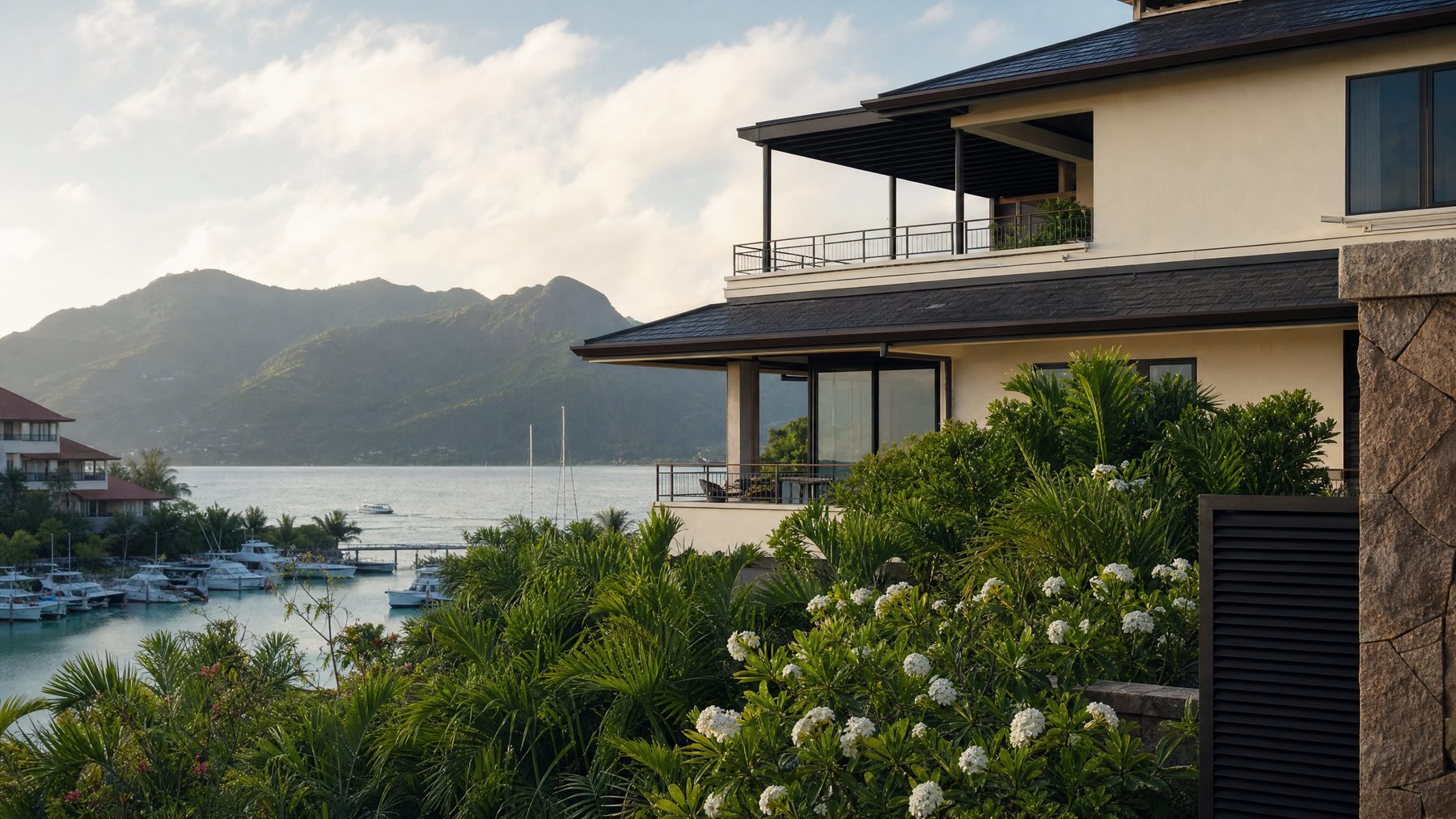
- ›Market and rental profile: Eden Island (a 56-hectare reclaimed development in St. Anne Bay) is the principal foreign-buyer market — modern villas and apartments with marina access, foreign ownership permitted. Beau Vallon (Mahé), Praslin, and La Digue have limited foreign-buyer availability. Rental yields run 4-8% gross.
- ›No annual property tax: Seychelles does not impose a recurring property tax, only the transactional stamp duty.
- ›Outside the cyclone belt: As noted, a meaningful insurance and safety advantage. Property insurance costs are significantly lower than Caribbean or Mauritius equivalents.
The practical approach for foreign Investor and PR holders is to focus on Eden Island or designated foreign-buyer zones for clean ownership; pursue 99-year leasehold for outer-island properties; or use a Seychelles-incorporated investment vehicle (with appropriate substance) for specific commercial property.
Transaction cost table (Seychelles):
| Cost item | Typical amount | Notes |
|---|---|---|
| Stamp duty | 5% | Residents; foreign buyers may pay more |
| Legal fees | 1–1.5% | Buyer's solicitor |
| Real estate agent | 5–8% | Often split |
| Foreign buyer sanction fee | Variable | Government discretion |
| Annual property tax | None | No recurring tax |
| Capital gains on resale | 0% | No general CGT |
| Property insurance | Lower | Outside cyclone belt |
XVIII.
Retiring in Seychelles
Seychelles is a credible Indian Ocean retirement destination for HNW clients seeking territorial-tax positioning, English-speaking institutions, and Indian Ocean lifestyle outside the cyclone belt.
There is no specific retirement visa for Seychelles. Retirees typically use:
- ›Investor Visa based on lower-threshold business investment for those not pursuing PR
- ›Permanent Residence by Investment (USD 1M+ in qualifying business) for HNW retirees with substantial commitment
- ›Retirement Permit (where available) for older retirees with sufficient passive income
- ›Long-term residence through specific category permits
For retirees with foreign pension income, the tax treatment is favourable:
- ›Foreign pension income kept offshore: Outside the Seychelles tax base under territorial framework
- ›Foreign pension income remitted/received in Seychelles: Generally outside tax base (territorial), provided structural setup is correct
Pension-source country considerations:
- ›UK state pension and most UK private pensions: No UK-Seychelles DTA; subject to UK tax under domestic rules. Seychelles imposes no additional tax on foreign-source pension under territorial framework.
- ›US Social Security: US citizens taxed worldwide; FEIE not applicable to pensions; no US-Seychelles DTA.
- ›German Rente: No Germany-Seychelles DTA; subject to German source-country withholding.
- ›South African pensions: SA-Seychelles DTA provides tie-breaker rules; useful for South African retirees.
- ›UAE end-of-service benefits, Australian super, etc.: Treaty-specific or domestic rules.
- ›Climate: Tropical — 24–32°C year-round, two distinct seasons (cooler/drier May–September, warmer/wetter December–March), high humidity, outside the cyclone belt.
- ›Healthcare: Public healthcare available with reasonable quality in Victoria. For complex specialist care, retirees typically travel to Mauritius (3 hours), Dubai (4 hours), Singapore (10 hours), or South Africa (6 hours). Comprehensive international health insurance with medical evacuation cover essential.
- ›Cost of living: see Section XVI. Comfortable single retiree budget USD 3,500–7,000/month; couple USD 5,500–11,000/month including private healthcare and travel.
- ›Community: Smaller than Caribbean expat communities but established — substantial South African retirement presence, growing UAE-emigrant community, smaller European (UK, German, French) and Asian (India, China) communities. Most expat retirees live on Mahé (Eden Island, Beau Vallon, Bel Ombre) or Praslin.
XIX.
US Citizens: What You Need to Know
US citizens and long-term green card holders are taxed by the United States on their worldwide income, regardless of where they live.
Key considerations for US citizens in Seychelles:
- ›Foreign Earned Income Exclusion (FEIE): US$132,900 for 2026.
- ›Foreign Tax Credit: Seychelles tax paid (territorial; foreign-source income exempt) provides limited offset for US citizens.
- ›No US-Seychelles DTA: No comprehensive treaty.
- ›No US E-2 treaty: Seychelles is not an E-2 country.
- ›FBAR (FinCEN Form 114): Required for Seychelles bank accounts >USD 10K.
- ›FATCA (Form 8938): Seychelles has FATCA cooperation.
- ›PFIC: Significant issue for non-US fund holdings.
- ›CFC and Subpart F: Form 5471 required for Seychelles IBC majority stakes.
- ›Self-Employment Tax: No US-Seychelles totalization agreement.
- ݤ877A Expatriation: Standard rules.
- ›OBBBA (One Big Beautiful Bill Act, July 2025): Made TCJA brackets permanent; raised QSBS Section 1202 cap to US$15M; raised federal estate tax exemption permanently to US$15M from 2026.
For US citizens, Seychelles is primarily a residence and Indian Ocean lifestyle option, not a US tax-elimination tool. US worldwide taxation continues; the territorial Seychelles regime provides no US-side benefit beyond limited FTC offset on Seychelles-source income.
US citizens considering Seychelles should work with a qualified US international tax adviser alongside local Seychelles counsel.
XX.
Correct Preparation
Before your move to Seychelles, a number of important questions need to be answered.
Do I need to give up my home country property?
Generally yes for clean tax-residence severance. Particularly important for German nationals — Seychelles is low-tax under §2 AStG, so 10-year extended German liability applies.
Should I pursue PR by Investment (USD 1M+) or shorter-term Investor Visa?
The PR pathway (USD 1M+ investment, plus 1-year residence or 5-year business association) is the standard HNW route. Shorter-term Investor Visa is the entry-level option for clients seeking minimum-commitment access.
How quickly can I open a bank account?
Seychelles bank account opening is the most friction-prone part of any Seychelles structure. Expect 6–12 weeks for retail; 12–20 weeks for HNW or IBC accounts. Have impeccable source-of-funds documentation ready.
What happens to my existing company?
Standard departure-tax considerations. For German nationals, §6 AStG exit tax applies for shareholdings ≥1%.
Do I need to set up a Seychelles company?
For PR by Investment: yes, the USD 1M+ investment must be in a qualifying Seychelles business. For non-investment residence: not necessarily. Seychelles IBCs are useful for offshore holding purposes — subject to Economic Substance Act 2021 compliance.
How much money should I transfer in advance?
For PR pathway, the USD 1M+ business investment is the central commitment. Additional working capital and lifestyle reserves should be transferred to support the qualifying business and personal residence.
What is the language situation?
Three official languages: Creole, English, French. English is universal in business, banking, and government. No language test for residence permits; the citizenship qualifying examination (after 11 years) requires 80% in one of the three languages.
What about the EU grey list status?
Seychelles is currently on the EU AML "grey list" (Annex II) under monitoring. A comprehensive review with potential delisting decision is scheduled for February–March 2026. Plan for potential changes in EU treatment of Seychelles-domiciled structures.
Deregistering from your home country
Standard deregistration processes. For German nationals, Abmeldung is mandatory; given §2 AStG, timing must be handled carefully.
XXI.
Automatic Exchange of Information (OECD CRS)
Seychelles participates in the OECD Common Reporting Standard (CRS), with automatic exchange of financial account information since 2017.
The country is signatory to the OECD Multilateral Convention on Mutual Administrative Assistance in Tax Matters and has signed the CbC MCAA (9 July 2019). FATCA-cooperative under Model 1 IGA framework.
CRS reporting follows tax residence, not nationality or citizenship. CRS reporting confirms the actual tax-residence position; it does not create new tax liabilities.
- ›EU AML status: Seychelles is currently on the EU "grey list" (Annex II) under monitoring, with potential delisting decision Feb-March 2026.
- ›US citizens are different. Affected by FATCA instead. Seychelles financial institutions identify US persons under FATCA procedures and report through Model 1 IGA framework.
Key point: CRS and FATCA are not problems for those who have relocated correctly. They are problems for those who have not.
XXII.
Further Relocation Formalities
- ›Immigration registration: Department of Immigration and Civil Status registration upon arrival.
- ›Tax registration: Tax Identification Number issued by the Seychelles Revenue Commission (SRC).
- ›Driving licences: International driving permits valid for short stays. After residence is established, exchange or apply for Seychelles licence. Seychelles drives on the left.
- ›Health insurance: Comprehensive international cover essential (Bupa Global, Cigna Global) — USD 3,500–10,000+ per individual annually.
- ›Importing personal effects: Household goods imported within 6 months of taking up residence may qualify for relief from import duty.
- ›Schools: International School Seychelles (Mahé), École Française, Independent School. Annual fees SCR 200,000–500,000+ per child.
- ›Annual compliance calendar: Annual SRC tax filings, business investment maintenance for PR, IBC compliance (Economic Substance Act 2021 declarations), residence permit renewals, health insurance renewals.
XXIII.
How We Help With Your Move to Seychelles
We offer comprehensive tax and legal support for your relocation to Seychelles. We coordinate with our network of Seychelles-licensed lawyers, accountants, real estate professionals, and bankers.
The results speak for themselves: we have helped over 100 entrepreneurs and business owners significantly reduce their tax burden through carefully planned relocations.
Our services typically include:
- →Tax advice on the consequences of relocating abroad
- →PR by Investment pathway (USD 1M+) coordination — Investor Type 1 vs Type 2 — with qualifying business identification and ongoing compliance
- →Investor Visa and shorter-term residence permit alternatives for clients below the PR threshold
- →Territorial-tax framework structuring — ensuring proper foreign-source / Seychelles-source income separation
- →Economic Substance Act 2021 compliance for IBCs and CSLs in "relevant activities"
- →Home-country departure tax analysis BEFORE relying on Seychelles residence — particularly for German (§6 AStG, §2 AStG 10-year extended liability), South African (exit tax), UK (SRT), and US citizens
- →Real estate strategy: navigating post-2025 foreign-buyer framework; Eden Island vs designated zones vs commercial property
- →Banking strategy: local Seychelles accounts plus primary international booking centre (Mauritius, UAE, Singapore, Switzerland)
- →Seychelles IBC, CSL, Trust, Foundation formation with appropriate substance
- →Coordination with home-country tax adviser, US international tax counsel (where relevant), and Seychelles Revenue Commission for ongoing compliance
- →Schooling, healthcare, insurance, lifestyle coordination
- →Annual compliance management; 11-year naturalisation pathway tracking
Our fees are generally billed on a time basis; fixed prices apply for certain services such as company formation and standard PR application coordination. As a first step, we recommend booking a consultation to discuss your plans — by phone, Zoom, or Signal.