Contents
- 1. North Macedonia: Country Overview
- 2. Putting North Macedonia on the Map
- 3. What Others Say About North Macedonia
- 4. Tax Benefits: What North Macedonia Has to Offer
- 5. Tax Rates at a Glance
- 6. Tax Residency: What Triggers It
- 7. Double Tax Treaties
- 8. Avoid Remaining Tax Resident at Home
- 9. Tax Considerations When Leaving Your Home Country
- 10. Company Setup & Corporate Tax
- 11. Who Should (and Shouldn't) Move to North Macedonia
- 12. Visas and Residence Permits
- 13. Path to Citizenship
- 14. Banking in North Macedonia
- 15. What Makes North Macedonia Genuinely Attractive
- 16. Cost of Living in North Macedonia
- 17. Buying Real Estate in North Macedonia
- 18. Retiring in North Macedonia
- 19. US Citizens: What You Need to Know
- 20. Correct Preparation
- 21. Automatic Exchange of Information (OECD CRS)
- 22. Further Relocation Formalities
- 23. How We Help With Your Move to North Macedonia
I.
North Macedonia: Country Overview
North Macedonia is a landlocked republic of approximately 2.1 million people in the western Balkans, bordered by Kosovo and Serbia to the north, Bulgaria to the east, Greece to the south, and Albania to the west. The capital is Skopje (population approximately 600,000). North Macedonia became an independent state in 1991 following the dissolution of Yugoslavia. It joined NATO in 2020 and has been an EU accession candidate since 2005; negotiations have progressed slowly but accession is expected in the 2030s.
North Macedonia adopted a 10% flat income tax on 1 January 2023, replacing a former progressive system. The same 10% rate applies to personal income (employment, self-employment, dividends, capital gains, rental income) and corporate profits. This is the joint-lowest personal and corporate income tax rate in Europe, matching Bulgaria. The Macedonian Denar (MKD) is pegged to the Euro at approximately 61.5 MKD = 1 EUR, providing effective currency stability without full Euro adoption.
Residents of North Macedonia are taxed on worldwide income; non-residents are taxed only on North Macedonia-source income. In practice, for foreign-source income, the planning benefit comes from establishing genuine North Macedonian tax residency and paying 10% flat on worldwide income — or, for those who remain non-residents, having zero North Macedonian tax on their foreign income.
North Macedonia has no inheritance tax on transfers between spouses and first-degree relatives (parents, children). There is no wealth tax. VAT is 18% (with reduced rates of 5% and 10% for specific categories).
What to be aware of: North Macedonia taxes residents on worldwide income — the planning benefit is the 10% flat rate, not zero tax. Social security contributions for employees add significantly to the combined burden on employment income (approximately 28% of gross salary). For company owners who draw a minimal salary and take profits as dividends at 10%, the effective rate is more competitive. The country is not yet an EU member — EU single market access, freedom of movement, and regulatory frameworks are not yet available. Skopje has serious air quality issues from November to February. The banking sector is less developed than EU alternatives.
2026 North Macedonia correction: North Macedonia’s tax position is built around 10% flat PIT and CIT, EU candidate status since 2005, NATO membership since March 2020, and the Macedonian Denar’s managed EUR peg. The former 10%/18% progressive PIT episode ended and the system reverted to flat 10% from 1 January 2023.
II.
Putting North Macedonia on the Map
North Macedonia — Western Balkans; landlocked; Skopje capital; Lake Ohrid UNESCO Heritage; EU candidate
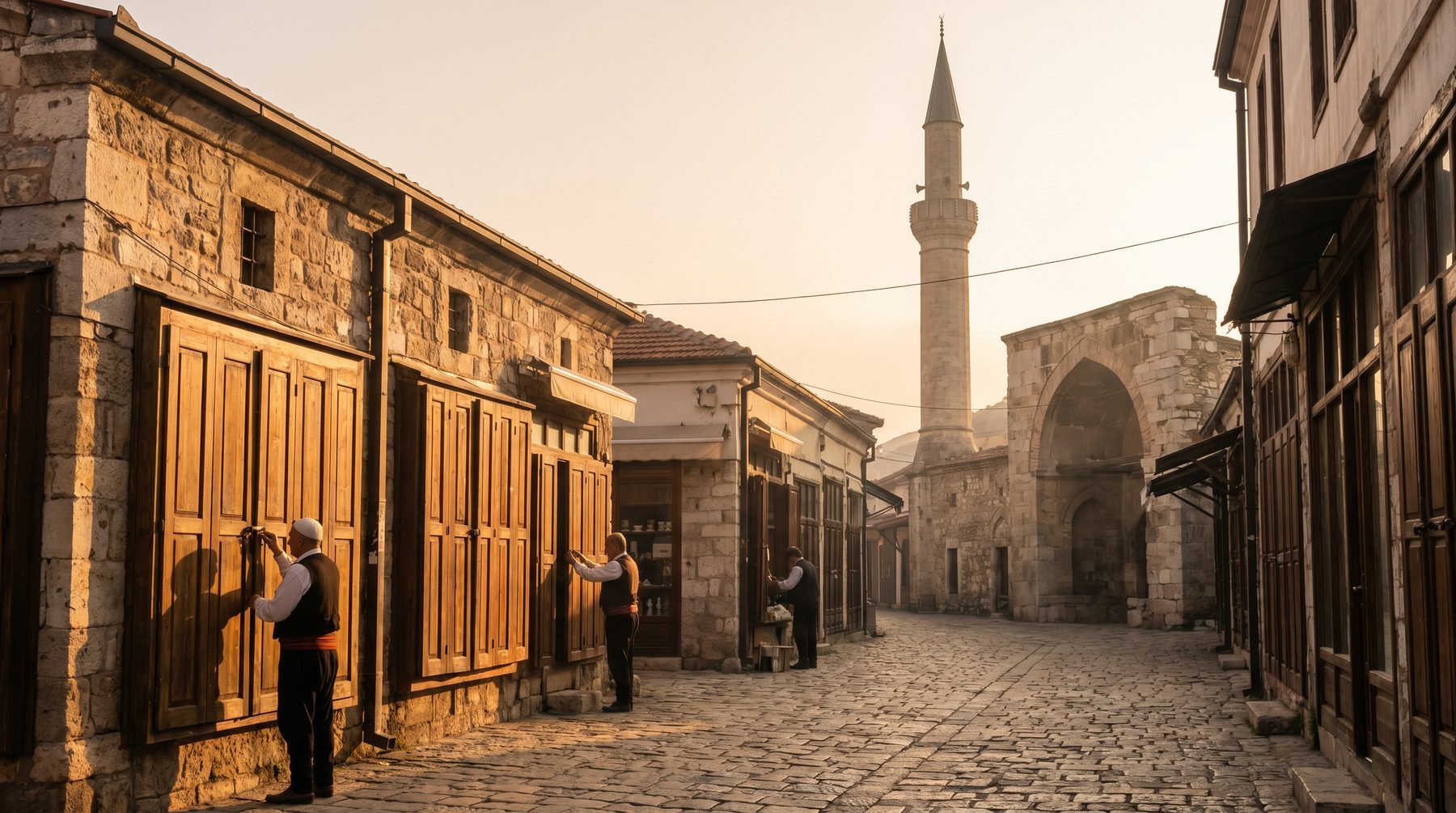
- ›Skopje is a city that has been reconstructed several times — most recently and most controversially through the "Skopje 2014" project, which filled the city centre with neo-classical statues, triumphal arches, and baroque facades of various historical figures. The result is a city centre that looks like a film set and functions rather well as one. The Old Bazaar (Čaršija) across the Stone Bridge is another story entirely: an Ottoman market district that has been trading continuously since the 12th century, with mosques, hans (caravanserais), and artisan workshops that open and close with the same rhythm they have maintained for centuries. The best baklava in the Balkans, according to persistent reputation, is made here.
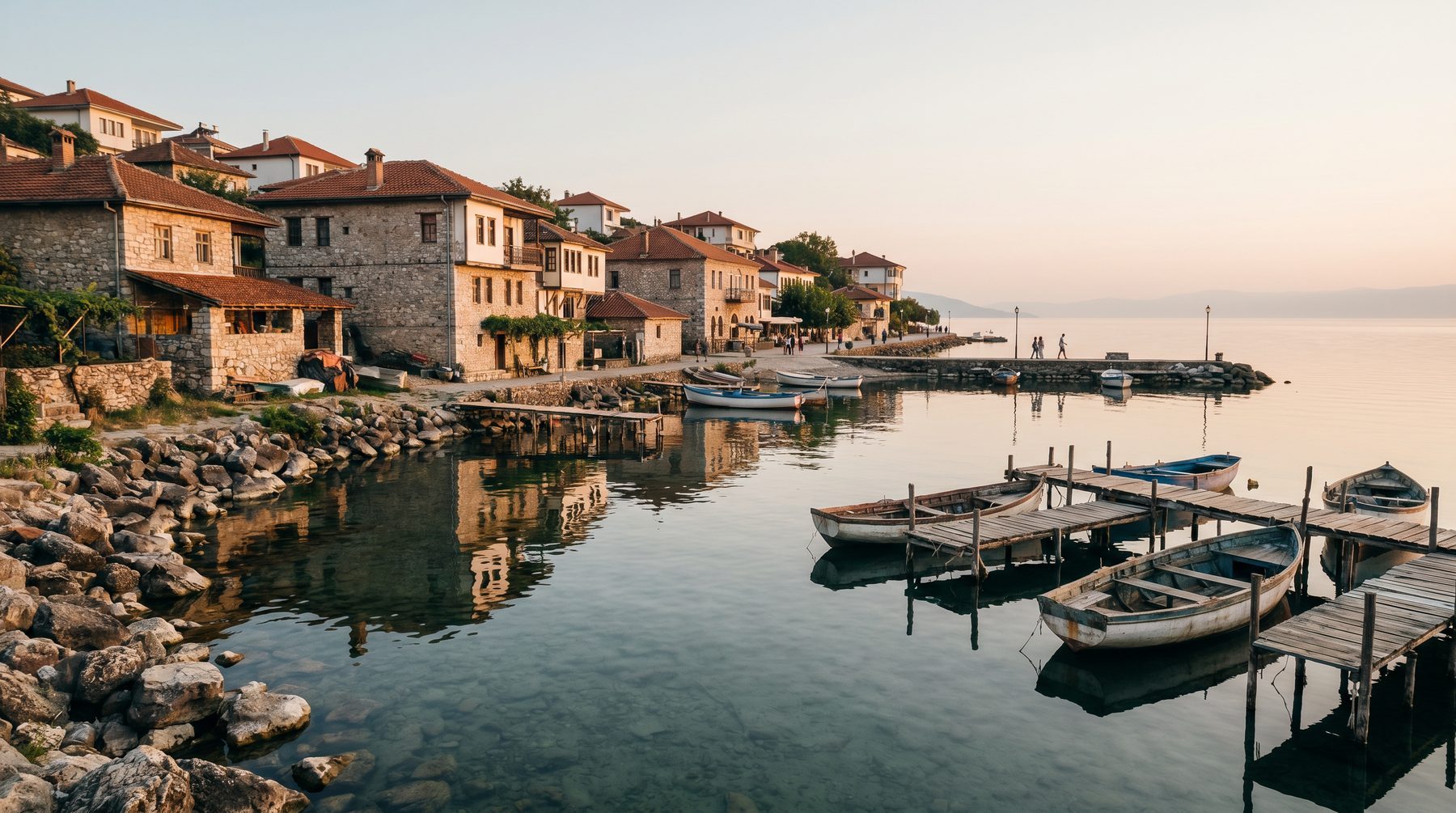
- ›Lake Ohrid in the southwest is where North Macedonia becomes the kind of destination that photographs travel further than the country's name. A UNESCO World Heritage Site — both natural and cultural — the lake sits at 695 metres above sea level, 34 kilometres long, up to 288 metres deep, and so clear that visibility extends to 22 metres in places. The town of Ohrid on its northeastern shore is a medieval city of Byzantine churches, Ottoman mosques, and Roman ruins on a hill above the water, with a waterfront promenade and restaurants that extend to the edge of the lake. Lake Ohrid is genuinely one of the most beautiful places in Europe; the relative obscurity of North Macedonia has kept it uncrowded in a way that comparable UNESCO sites in more prominent countries have not been for decades.
- ›Mavrovo National Park to the west contains the highest peaks in North Macedonia and the Zora ski resort — modest in scale but functioning, and used primarily by Macedonians and Albanians who don't need to fly to the Alps. The gorges and forests of the park are excellent hiking country in summer.
Sofia is 3 hours by road. Thessaloniki is 2 hours. Belgrade is 4 hours.
III.
What Others Say About North Macedonia
"Ohrid is the kind of place that ruins you for anywhere else. The water, the mountains, the churches on the hillside, the fish at the lakeside restaurant — you eat and look at the lake and you understand why people have been coming here for 2,000 years."
— Rick Steves, travel writer and broadcaster, Rick Steves' Eastern Europe, 2018
"Skopje is the city that other cities should visit before judging it. Arrive with no expectations and you find a place that rewards patience, particularly in the Čaršija, which is the most authentic Ottoman market district left in the Balkans."
— Pico Iyer, travel writer, The Art of Stillness, 2014
"North Macedonia is the most underrated country in Europe. The landscape is extraordinary, the food is excellent, the wine is good, and no one knows about any of it."
— Andrew Eames, travel writer, The Balkans Explored, 2022

IV.
Tax Benefits: What North Macedonia Has to Offer
North Macedonia operates one of the simplest and lowest-rate tax systems in Europe: a flat 10% on personal income (since 1 January 2023), a flat 10% on corporate income, a flat 10% withholding tax on outbound payments (reducible under 50+ DTAs), VAT 18% standard with reduced 10%/5% bands, and NO wealth tax. Inheritance and gift tax exempts 1st-degree heirs entirely (spouse, children, parents); 2nd–3rd degree heirs face 2%–5% municipality-set rates, but only on property above an average-annual-salary threshold. Capital gains on real estate are exempt after 3 years if the taxpayer lived in it, or 5 years for inherited property. The Technological Industrial Development Zone (TIRZ) regime offers 10 years of 0% corporate income tax + 0% employee PIT for qualifying enterprises in target sectors. NATO member since 2020, EU candidate since 2005 (the longest pending), Pillar Two QDMTT NOT implemented.
- ›10% flat personal income tax — applies to virtually all income types: employment, self-employment, royalties, IP rights, rental, capital, capital gains, insurance income, and others. Reverted to flat 10% from 1 January 2023 after a brief 2019–2022 experiment with a progressive 10%/18% scale; 15% rate applies only to gambling/games of chance.
- ›10% flat corporate income tax — among Europe's lowest CIT rates; applies to North Macedonian-resident companies on worldwide income, non-residents on PE-attributable income only. Pillar Two QDMTT NOT implemented as of 2026.
- ›Inheritance and gift tax — 1st-degree heirs EXEMPT — spouse, children, and parents inherit/receive gifts free of inheritance tax. 2nd-degree heirs at 2%–3%; 3rd-degree at 4%–5% (municipality-set ranges). Tax applies only if value exceeds the average annual salary in North Macedonia (per State Statistical Bureau).
- ›0% wealth tax, low municipal property tax — no annual wealth tax; municipal property tax 0.10%–0.20% of assessed value; real estate transfer tax 2%–4%.
- ›Capital gains on real estate — generous exemptions — exempt if sold after 3 years from purchase AND lived in for ≥1 year prior; exempt if sold after 5 years for inherited/gifted property (or 3 years if the taxpayer lived in it); exempt for spousal transfers and divorce-related sales; exempt for denationalisation property and long-term government securities held >2 years.
- ›TIRZ (Technological Industrial Development Zones) — 10-year CIT holiday + 0% employee PIT — qualifying enterprises in target sectors (manufacturing, technology, BPO) benefit from 0% CIT for the first 10 years, 0% PIT for employees, 0% VAT on intra-zone supplies, 0% customs duties on equipment and inputs. Among Europe's most aggressive special-zone regimes.
- ›VAT 18% standard / 10% / 5% with broad exemption list — residential rental, banking/financial services, insurance, games of chance, and education are VAT-exempt. VAT registration threshold MKD 2,000,000 (~€32,500).
- ›WHT 0%/10% on dividends, interest, royalties to non-residents — reducible under 50+ DTAs (often to 5% on dividends with substantial holdings, 0% on certain inter-company dividend flows). Branch profit transfers carry NO branch remittance tax.
- ›EU candidate since 2005, NATO member since 2020, EUR-pegged Denar — North Macedonia is the longest-pending Western Balkans EU candidate (accession negotiations opened in 2022 after the lifting of bilateral vetoes); NATO member since 27 March 2020; Macedonian Denar (MKD) maintains de-facto EUR peg via managed float, providing currency stability.
V.
Tax Rates at a Glance
| Tax | Rate (2026) | Notes |
|---|---|---|
| Personal Income Tax — most income types | 10% flat | Since 1 Jan 2023 |
| Personal Income Tax — gambling | 15% | |
| Capital Gains Tax | 10% | Within general 10% PIT (with real estate exemptions) |
| Capital Gains — real estate (3 years + lived in) | 0% | Exempt |
| Capital Gains — real estate (5 years for inherited) | 0% | Or 3 years if lived in |
| Capital Gains — securities | 10% | From 1 Jan 2023 (postponed period ended) |
| Inheritance / Gift Tax — 1st degree | 0% | Spouse, children, parents EXEMPT |
| Inheritance / Gift Tax — 2nd degree | 2%–3% | Municipality range |
| Inheritance / Gift Tax — 3rd degree and other | 4%–5% | Municipality range |
| Inheritance/Gift Tax — threshold | Above average annual salary | State Statistical Bureau |
| Wealth Tax | 0% | None |
| Annual Property Tax | 0.10%–0.20% | Municipal |
| Real Estate Transfer Tax | 2%–4% | Municipal |
| Corporate Income Tax | 10% flat | |
| TIRZ (Special Economic Zone) — CIT exemption | 0% | First 10 years for qualifying enterprises |
| TIRZ — Employee PIT exemption | 0% | |
| Pillar Two QDMTT | Not implemented | As of 2026 |
| WHT — dividends to non-residents | 0% / 10% | Reducible under DTAs |
| WHT — interest to non-residents | 0% / 10% | |
| WHT — royalties to non-residents | 0% / 10% | |
| WHT — service fees | 10% | |
| Branch profit remittance | 0% | No branch remittance tax |
| VAT — standard | 18% | |
| VAT — reduced (intermediate) | 10% | Certain goods/services |
| VAT — reduced (basic) | 5% | Basic foods, public services |
| VAT — exempt | 0% | Residential rental, financial services, insurance, education |
| VAT registration threshold | MKD 2,000,000 (~€32,500) | |
| Tax residency triggers | 183 days in 12 months OR permanent home | |
| Currency | MKD | Pegged to EUR via managed float |
| EU Status | Candidate (since Dec 2005) | Longest pending Western Balkans candidate |
| NATO | Member (since March 2020) | |
| DTAs | 50+ | Including DE, FR, IT, UK, ES, RU, CN, CH, AT |
| Special expat regime | NONE | 10% flat already low |
VI.
Tax Residency: What Triggers It
North Macedonian tax residency is triggered by spending 183 or more days in North Macedonia during a calendar year, or where North Macedonia is the primary place of residence (permanent home).
Residents are taxed on worldwide income at the 10% flat rate. Non-residents are taxed only on North Macedonia-source income. For those who establish genuine North Macedonian tax residency, the 10% flat rate applies to all worldwide income — which is the planning benefit: replacing a 40–50%+ home-country rate with 10% flat.
Key point: North Macedonia taxes residents on worldwide income at 10%. The benefit is the rate — not a territorial exemption or a zero-tax position. For high earners transitioning from Germany (47.5% top combined rate), UK (47% combined), or France (55%), moving to 10% flat is a material improvement. For those whose income is primarily passive (dividends, interest), consider whether the 10% rate plus social contribution structure is genuinely more efficient than alternatives like Georgia (1% for IT entrepreneurs) or Dubai (0%).
VII.
Double Tax Treaties
North Macedonia has approximately 43 active DTAs — a comprehensive network for a small Balkan state, covering Germany, UK, Austria, Netherlands, Italy, France, Switzerland, Poland, Czech Republic, Hungary, and most European economies.
- ›The Germany-North Macedonia DTA is the most important for DACH-region nationals. German dividends paid to North Macedonian residents benefit from treaty-reduced withholding. German statutory pension income (Rente) paid to North Macedonian residents is typically taxable in North Macedonia — at the 10% flat rate, compared to German progressive rates reaching 42%.
- ›The UK-North Macedonia DTA governs UK-source income for British nationals. UK pension income and investment income flowing to North Macedonian residents are covered by the treaty.
- ›The Austria-North Macedonia DTA is relevant given the Balkan corridor connecting Vienna to Skopje and the significant Austrian professional presence in North Macedonia's growing economy.
- ›The Switzerland-North Macedonia DTA provides treaty-reduced withholding on Swiss-source income for North Macedonian residents.
- ›The US-North Macedonia DTA is in force — one of the more complete treaty relationships for a small Balkan state, covering dividends, interest, pensions, and tie-breaker rules.
The 43-DTA network is consistent with North Macedonia's EU candidate status and its trajectory toward accession standards.
2026 DTA update: North Macedonia has 50+ active DTAs including Germany, France, Italy, UK, Spain, Russia, China, Switzerland, Austria, Netherlands, Belgium, Sweden, Turkey, Ukraine, and most regional and Western European partners. This is strong treaty coverage relative to the country’s size.

VIII.
Avoid Remaining Tax Resident at Home
North Macedonia taxes its residents on worldwide income at the 10% flat rate. The planning benefit — replacing a home-country rate of 40–50% with 10% — only applies once home-country tax residency has been genuinely severed. North Macedonia's 40-DTA network provides a reasonable bilateral framework, but the home-country departure must be completed under home-country domestic rules.
For German nationals, the §6 AStG exit tax on shareholdings of 1% or more applies at departure. The Germany-North Macedonia DTA is in force. For British nationals, the SRT exit date must be established. The UK-North Macedonia DTA provides tie-breaker rules. For Austrian nationals, Austrian domestic exit provisions apply and the Austria-North Macedonia DTA governs the bilateral relationship.
IX.
Tax Considerations When Leaving Your Home Country
Before you relocate, you need to understand what tax consequences arise in your current country of residence at the point of departure. These rules vary significantly by country and must be assessed individually — there is no universal answer.
Many countries impose an exit tax or deemed disposal charge when a tax resident leaves. This typically applies to unrealised capital gains on shares, business interests, real estate, or other assets — taxing you as if you had sold everything on the day you departed. The rules differ widely: some countries apply this to all assets above a threshold, others only to substantial shareholdings or business interests. Some have look-back periods that can catch you even after you have left.
The timing of your departure, the structure of your assets, and the sequence of any business disposals all have material consequences. In some cases, restructuring assets before departure — or deferring the move by a few months — can make a significant difference to the tax outcome.
- ›Germany. The §6 AStG exit tax on shareholdings of 1% or more applies at departure. German dividends paid to North Macedonian residents benefit from DTA-reduced withholding under the Germany-North Macedonia DTA. German statutory pension income flowing to North Macedonian residents is governed by the DTA residence principle — typically taxable in North Macedonia at the 10% flat rate.
- ›United Kingdom. SRT exit date. CGT on departure. The UK-North Macedonia DTA provides treaty protection and tie-breaker rules for dual-residency cases.
- ›Austria. Austrian domestic exit tax provisions apply. The Austria-North Macedonia DTA governs Austrian-source income. Given North Macedonia's proximity and the Balkan corridor connecting Vienna to Skopje, the Austrian tax authority is familiar with North Macedonia residency claims.
- ›United States. US worldwide taxation applies. The US-North Macedonia DTA is in force. The 10% North Macedonian flat rate generates a Foreign Tax Credit against the US liability on income taxed in both jurisdictions.
⚠ Obtain Local Tax Advice in Your Home Country The information above provides a general overview of the departure tax rules that commonly apply when leaving high-tax jurisdictions. It is not legal or tax advice. The rules in your specific home country — Germany, Austria, Switzerland, the UK, the US, or any other jurisdiction — are complex, change frequently, and depend entirely on your personal circumstances: your nationality, the nature and location of your assets, your business structure, your family situation, and the timing of your departure. Before you take any steps to relocate, obtain written advice from a qualified tax adviser who is licensed in your home country and experienced in international relocations. A consultation with us is a good starting point — but it does not substitute for country-specific legal advice from a practitioner in your jurisdiction of departure. The cost of getting this wrong is almost always greater than the cost of getting proper advice upfront.
X.
Company Setup & Corporate Tax
A North Macedonian DOOEL (Друштво со ограничена одговорност — limited liability company) is the standard vehicle. Minimum capital: minimal (MKD 1). Formation time: 2–4 days. Foreign ownership: 100% permitted.
10% corporate tax on all profits. On full distribution to shareholders: 10% corporate + 10% personal dividend tax = approximately 19% effective combined rate on fully distributed profits. Compare: UK ~54% combined; Germany ~47.5% combined; France ~47.5% combined.
Is a local company always the right answer? Not necessarily.
For entrepreneurs with global client bases, a foreign operating entity (US LLC, Singapore company, UAE company) combined with North Macedonian personal residency (10% personal rate on dividends received) may be more efficient than routing everything through a Macedonian DOOEL.
- ›US LLC: No US corporate tax for non-US persons. Income flows to the individual at 10% personal rate.
- ›Singapore company: 17% with SME exemptions. Dividends to North Macedonian resident at 10% personal rate.
- ›UAE company: 0% corporate. Dividends to North Macedonian resident at 10% personal rate.
Learn more about our company setup services →
Permanent establishment risk: A foreign company is not a magical solution. If the company is effectively managed from your country of residence, or if staff, sales activity, or day-to-day control are located there, local tax authorities may still tax the profits locally. Structure follows substance. Genuine management, banking, contracts, and operational substance in the foreign jurisdiction are essential.
2026 corporate update: North Macedonia applies 10% flat CIT to resident companies and PE-attributable income of non-residents. DOO is the principal limited-liability form, AD is used for larger enterprises, and TIRZ can provide 0% CIT for 10 years, 0% employee PIT, 0% intra-zone VAT, and 0% customs duties on inputs. Pillar Two QDMTT is not implemented as of 2026, and there is no branch remittance tax.
XI.
Who Should (and Shouldn't) Move to North Macedonia
Section 11 is where the relocation decision becomes practical. North Macedonia can be an excellent fit for some profiles and a poor fit for others; the decisive question is whether the tax rules, lifestyle, residence requirements, banking, healthcare, and family situation point in the same direction.
Good Fit
- › International entrepreneurs and investors whose income structure actually benefits from North Macedonia’s tax and residence rules.
- › Remote professionals and business owners who can move their centre of life genuinely, not merely change an address on paper.
- › Families or individuals who value North Macedonia’s lifestyle, geography, safety profile, and cost structure as part of the overall decision.
- › People willing to handle local banking, residency, healthcare, and administration properly rather than improvising after arrival.
- › Those who understand that relocation is a full tax-residency project, not a holiday with a lower tax rate.
Poor Fit
- × Those who cannot genuinely spend enough time in North Macedonia to support a defensible tax-residence position.
- × People who need a zero-friction, Western-European administrative environment from day one.
- × US citizens who expect the move to eliminate US tax filing, FBAR, FATCA, or citizenship-based taxation.
- × Those with income, companies, or family ties that keep them clearly taxable in their previous North Macedonia.
- × Anyone choosing the jurisdiction only because it sounds attractive online, without testing housing, banking, healthcare, and lifestyle fit.

XII.
Visas and Residence Permits
Visa-free entry for EU, UK, US, and most Western nationals for up to 90 days. Temporary residence permit: For stays beyond 90 days. Main routes include employment, company registration (DOOEL formation), property ownership, or family reunification. Registering a DOOEL is the most common route for freelancers and digital entrepreneurs — once registered as a company director, you can apply for a temporary residence permit based on business activity.
2026 residence update: residence routes include temporary residence for employment, family, study, and business; permanent residence after five years of continuous lawful residence; citizenship by naturalisation typically after eight years, or five with Macedonian heritage; and visa-free entry for many nationalities up to 90 days in 180.
XIII.
Path to Citizenship
North Macedonian citizenship by naturalisation: 8 years of continuous legal residence. Language (Macedonian) and knowledge requirements. North Macedonia permits dual citizenship. Macedonian passport: visa-free access to approximately 124 countries — EU accession will significantly improve this.
XIV.
Banking in North Macedonia
Major banks: Komercijalna Banka, Stopanska Banka (NBG Group), NLB Tutunska Banka, Halk Banka. Denar accounts are standard; EUR accounts available. Account opening for residents with a DOOEL company is accessible. International wire transfer functionality is adequate. Wise and Revolut are widely used among the expat community for foreign income receipt.
For a relocation to North Macedonia, the local account is normally the operational account: rent, utilities, cards, domestic transfers, local tax or residence registrations, and evidence that the move is real. It should not automatically become the main wealth-management account unless the local banking system offers the depth, multi-currency capability, private-banking service level, and long-term stability required for the client's assets.
Account opening in North Macedonia should be treated as a compliance exercise, not as an administrative formality. Expect passport checks, proof of address, residence or visa documentation where applicable, tax-identification details, source-of-funds evidence, and sometimes in-person attendance or a local phone number. The easiest applications are those where the residence story, income source, and banking purpose are consistent before the first form is submitted.
Where to hold your main accounts
For internationally mobile individuals in North Macedonia, primary banking outside North Macedonia for significant assets; Macedonian accounts for local operations and living expenses.
- ›Bulgaria — Sofia is 3 hours away; Bulgarian banks are EU-regulated with SEPA access
- ›Germany / Austria — for DACH-region clients
- ›Georgia (Caucasus) — secondary account, easy non-resident opening
Learn more about our offshore banking services →
Important: not all banks are compatible with all residencies. Some Swiss and Singaporean private banks have restrictions on clients resident in certain jurisdictions, and compliance requirements vary. Residency status, income profile, source of wealth, and business type all affect which institutions will accept you and on what terms. We help clients navigate this before they commit to any banking structure.
XV.
What Makes North Macedonia Genuinely Attractive
North Macedonia is attractive when it is judged as a complete relocation platform, not as a slogan. The point is not that North Macedonia is perfect for everyone. The point is that, for the right person, the combination of tax position, residence practicality, lifestyle, geography, banking, language, and long-term stability can produce a genuinely coherent base.
- ›Low-cost Balkan base with European proximity. North Macedonia is attractive because it offers low costs, simple living, Balkan access, and a tax environment that can be efficient for the right structure.
- ›The lifestyle case is not cosmetic. Skopje and Ohrid provide the main lifestyle anchors: one urban and practical, the other scenic and slower. Costs remain far below most of Europe.
- ›It can function as a real operating base. For regional entrepreneurs, remote workers, consultants, and retirees, the country can function as a quiet low-overhead base.
- ›It rewards the right profile. It suits people who want Europe-adjacent life without EU prices or complexity.
- ›The attraction has to be handled honestly. The market is small, infrastructure is uneven, and international connectivity is limited. The attraction is cost and simplicity, not global scale.
XVI.
Cost of Living in North Macedonia
North Macedonia is one of the lower-cost European bases. Skopje and Ohrid are the main foreigner-relevant markets, and both remain affordable by EU standards.
Typical monthly costs for an internationally mobile professional or family in North Macedonia (2026 planning ranges):
| Category | MKD/month | GBP/month | USD/month |
|---|---|---|---|
| 1-bed apartment, desirable area | MKD 33,520–73,420 | £450–1,000 | $600–1,300 |
| 2-bed apartment / small house | MKD 67,830–140,790 | £950–1,950 | $1,200–2,450 |
| International school (annual per child) | MKD 109,730–351,980 | £1,500–4,800 | $1,950–6,200 |
| Private health insurance (annual individual) | MKD 19,950–71,820 | £250–1,000 | $350–1,250 |
| Restaurant meal, mid-range (per person) | MKD 1,140–3,140 | £0–50 | $0–50 |
| Monthly groceries, single person | MKD 14,360–35,110 | £200–500 | $250–600 |
| Utilities and internet, apartment | MKD 6,380–19,150 | £100–250 | $100–350 |
- ›Comfortable single professional (no children): MKD 79,800–159,600/month (£1,100–2,200 / $1,400–2,800)
- ›Family of four with private schooling: MKD 199,500–370,500/month (£2,750–5,050 / $3,500–6,500)
These figures are planning ranges, not promises. The actual budget in North Macedonia depends heavily on housing quality, neighbourhood, school choice, healthcare needs, car ownership, travel frequency, and whether you are trying to live like a local or maintain a Western expatriate standard.
XVII.
Buying Real Estate in North Macedonia
Buying real estate in North Macedonia can be useful for lifestyle, residence planning, and long-term anchoring, but it should not be treated as a simple shortcut to tax residence. Property is a factual tie; it can support a relocation story when used properly, but it can also create tax, inheritance, financing, and exit issues if bought before the wider plan is clear.
For internationally mobile buyers, the main points in North Macedonia are:
- ›Ownership rules: Foreigners can buy apartments and buildings, while land ownership depends on reciprocity, residence status, and structuring.
- ›Transaction costs: Transaction costs are low by European standards, but cadastral checks, notary process, and municipal documentation matter.
- ›Market and rental profile: Skopje and Ohrid are the main markets for foreign lifestyle buyers; smaller towns can be illiquid.
- ›Residence and tax angle: Property can be inexpensive, but buyers should verify title, building permits, utilities, seismic/build quality, and realistic rental demand.
The practical approach is to decide first whether the property is primarily for living, residence support, rental yield, asset protection, or lifestyle. Those are different purchases. A good real estate decision in North Macedonia begins with title due diligence, tax-residence planning, inheritance review, and a realistic exit strategy — not with glossy developer brochures.
Transaction cost table (North Macedonia):
| Cost item | Typical amount | Notes |
|---|---|---|
| Transfer tax | 4% | Typical property transfer tax |
| Notary fees | ~0.5% | Approximate |
| Agent commission | ~3% | Typical |
| Typical total buyer costs | 7–8% | Indicative total |
XVIII.
Retiring in North Macedonia
Retiring in North Macedonia can make sense for the right profile, but it should not be reduced to a simple tax headline. The real question is whether the country gives you the right combination of residence security, pension treatment, healthcare access, cost of living, climate, and day-to-day comfort. A retirement move is harder to reverse than a business relocation, so practical quality of life matters as much as tax.
For retirees considering North Macedonia, the main points are:
- ›Residence route: The practical route is usually the ordinary temporary residence based on income, accommodation, and insurance is usually the practical route. This should be confirmed before making property commitments or moving assets, because a pleasant destination is not useful if the residence basis is weak.
- ›Pension income: Foreign pension taxation depends on treaty and residence position; local tax rates can be modest. The decisive point is often not only local tax, but whether the pension-paying country continues to tax the pension at source.
- ›Healthcare: Private healthcare in skopje is affordable but specialist depth is limited compared with western europe. Retirees should arrange private insurance or a clear local healthcare pathway before arrival, especially where pre-existing conditions are involved.
- ›Cost of living and lifestyle: Very low cost of living, mountains, lakes, and a quiet balkan lifestyle. The country can work well where the retiree’s lifestyle expectations match the local rhythm rather than an imagined expatriate brochure.
- ›Climate and practical fit: Continental climate with hot summers and cold winters. Climate, language, bureaucracy, transport, and access to family often decide whether the move remains attractive after the first year.
North Macedonia should therefore be assessed as a full retirement platform, not merely as a tax jurisdiction. The best candidates are retirees who have stable foreign income, good health coverage, a realistic view of local bureaucracy, and a clear plan for where they will live, how they will receive care, and how their pension will be taxed both locally and at source.
XIX.
US Citizens: What You Need to Know
US citizens and long-term green card holders are taxed by the United States on their worldwide income, regardless of where they live. Relocating to North Macedonia does not end US tax obligations — it changes the picture, but does not eliminate it.
Key considerations for US citizens in North Macedonia:
- ›Foreign Earned Income Exclusion (FEIE): US citizens who qualify as bona fide residents of North Macedonia or pass the physical presence test can exclude a significant amount of foreign earned income from US federal income tax. This applies to wages and self-employment income — not passive income such as dividends, interest, capital gains, pensions, or rental income.
- ›Foreign Tax Credit: Income tax paid in North Macedonia can generally be credited against US tax on the same income, reducing or eliminating double taxation. The credit is particularly important for income not covered by the FEIE and for taxpayers whose income exceeds the annual FEIE threshold.
- ›Treaty position: Treaty relief between the United States and North Macedonia is limited or fact-dependent. Before relying on any treaty position, US citizens should confirm the current treaty status and the exact income category with a qualified US international tax adviser. A treaty does not automatically remove US filing obligations, and most treaties contain savings-clause rules that preserve US taxation of citizens.
- ›FBAR: US persons with bank accounts in North Macedonia exceeding $10,000 in aggregate must file FinCEN Form 114 (FBAR) annually. Failure to file can carry severe penalties, even when no tax is due.
- ›FATCA: US citizens may also need to report foreign financial assets on Form 8938. Banks in North Macedonia may separately identify US account holders under FATCA procedures and report account information through the relevant channels.
- ›Social Security and self-employment tax: The FEIE reduces income tax but does not automatically eliminate US self-employment tax. Whether US Social Security tax applies depends on employment status, entity structure, and any applicable totalization agreement.
US citizens considering North Macedonia should work with a qualified US international tax adviser alongside local counsel. The interaction between US tax law and North Macedonia tax law is manageable, but it requires careful planning before the move, not after the first filing deadline arrives.
XX.
Correct Preparation
Recommended steps: 1. Home-country departure tax analysis. 2. Visit Skopje and Ohrid for an extended stay. 3. Register a DOOEL — provides the basis for temporary residence. 4. Apply for temporary residence permit. 5. Open Macedonian bank account. 6. Obtain personal tax number (EMBG). 7. Notify home-country tax authority.
XXI.
Automatic Exchange of Information (OECD CRS)
North Macedonia does not appear as a participating jurisdiction in the OECD's CRS-by-jurisdiction implementation table. A North Macedonian bank holding your accounts is therefore not reporting under the standard OECD automatic exchange framework that applies in CRS jurisdictions. This is a factual observation, not a marketing point. North Macedonia is not a secrecy jurisdiction, and the absence of CRS reporting does not extinguish tax obligations anywhere else. It simply means CRS is not the relevant transparency channel for accounts held there.
This is the moment most people draw the wrong conclusion — because most people misunderstand how CRS works in the first place.
The common assumption is that CRS follows nationality. It does not. CRS follows tax residence. A Swedish passport does not trigger Swedish reporting. A German passport does not trigger German reporting. What matters is where you are tax resident at the moment your bank performs its due diligence — not the country on your passport, not the country you used to live in, not the country where your family still pays tax.
Once you understand that, the North Macedonia picture becomes clear. A Swedish citizen who has genuinely become tax resident in North Macedonia is not reportable to Sweden through North Macedonian channels for two independent reasons: CRS would not point to Sweden anyway, because Sweden is not the country of tax residence; and North Macedonia is not operating as a CRS reporting jurisdiction in the first place. The real question is upstream of both points: does Sweden, or any other prior country, still regard the individual as tax resident under its own domestic rules? That is what determines tax exposure.
CRS creates transparency, not tax liability. The two are routinely confused. Even in a non-CRS jurisdiction, an unfinished or sloppy departure leaves your previous country in a position to tax your worldwide income — regardless of whether information is being exchanged automatically. The genuine risk is not the data flow. The genuine risk is a badly executed exit.
US citizens sit outside this framework entirely. Americans are not principally affected by CRS. They are affected by FATCA and by US citizenship-based taxation. Banks outside the United States — including in North Macedonia — generally identify US persons and report account information through FATCA channels to the IRS, regardless of where the individual is tax resident. For Americans, the passport really does follow you. For everyone else, it does not.
Key point: Neither CRS nor North Macedonia's non-participating status is a substitute for proper tax-residency planning. The decisive question is upstream: have you genuinely exited your previous tax residence, and have you built a defensible North Macedonian position? CRS follows tax residence where it applies. FATCA follows US-person status. Domestic tax-residency rules still decide who is allowed to tax you.
XXII.
Further Relocation Formalities
Upon establishing residence in North Macedonia, you will need to obtain a EMBG / tax registration where required from the competent local authority. This is required for most financial and legal transactions in North Macedonia, including opening bank accounts, signing contracts, registering with tax authorities, and dealing with public offices.
You will also need to obtain or complete the relevant North Macedonian residence permit card process once your residence status has been approved. This document or registration record becomes your practical proof of residence in North Macedonia and is usually required for banking, telecom contracts, utilities, leases, property transactions, and day-to-day administrative matters.
- ›Driving licences from most countries are accepted only for a limited period after arrival. Once you become resident in North Macedonia, you should verify whether your licence can be exchanged directly or whether a local medical certificate, translation, theory test, or practical test is required.
- ›Health insurance should be arranged before arrival unless you are immediately covered by a local public system. In many cases, private international cover is the safest bridge solution while residence, employment, or social-security registration is still being completed.
- ›Importing personal effects should be planned before shipping anything to North Macedonia. Household goods may qualify for relief when imported shortly after taking up residence, but customs paperwork, inventory lists, timing rules, and vehicle-import duties can make late or informal shipping expensive.
- ›Proof of address and banking are often linked. Banks, telecom providers, and government offices may require a lease, utility bill, local address certificate, or residence registration before they will open an account or complete onboarding.
- ›Ongoing local compliance should not be treated as an afterthought. Calendar reminders for residence renewals, tax registrations, local filings, health-insurance renewals, and address updates help prevent administrative problems that can later undermine the tax-residency position.
XXIII.
How We Help With Your Move to North Macedonia
We offer comprehensive tax and legal support for your relocation to North Macedonia. We follow a proven process — and where North Macedonia requires specialist local input, we involve appropriately qualified local tax, legal, immigration, and banking advisers on the ground, while remaining responsible for overall coordination.
The results speak for themselves: we have helped over 100 entrepreneurs and business owners significantly reduce their tax burden through carefully planned relocations. Careful planning, thorough advice, and comprehensive support are our standard. Legally sound structuring within the framework of international tax law is our highest priority.
Our services typically include one or more of the following:
- →Tax advice on the consequences of relocating abroad: analysis, projections, assessments
- →Home-country departure tax analysis
- →DOOEL incorporation and residence permit
- →Banking introductions
- →10% flat rate planning — optimising salary vs dividend structure
- →Coordination between your home-country adviser and your North Macedonia professional team
Our fees are generally billed on a time basis; fixed prices apply for certain services such as company formation.
As a first step, we recommend booking a consultation to discuss your plans — by phone, Zoom, or Signal. Together we find the best approach and establish contact with our local partner. As project coordinator, we keep all the threads in hand that are necessary for the successful implementation of your plans.